All posts by Travis Allen

Travis Allen has been playing Magic on and off since 1994, and got sucked into the financial side of the game after he started playing competitively during Zendikar. You can find his daily Magic chat on Twitter at @wizardbumpin. He currently resides in upstate NY, where he is a graduate student in applied ontology.

The Tool We Need and Probably Deserve Too

By: Travis Allen

In the field of MTG finance (a name I find myself disliking more with each passing day) we focus on finding the cards before they get big. Scour MTGO dailies for growing trends, identify EDH cards before they blow up, pinpoint combo pieces that will get broken, recognize when a card is at the bottom of a valley. All of these, done well, will put you in a position to be profitable. Cards will be obtained for some number of dollars, and a few weeks or months later, they’ll be worth double, triple, or even ten times what you originally paid. Pop the champagne. 

We as a community tend to focus very hard on this part of the process – figuring out what cards are going to rise in value, so that we may obtain them before they do. Understandably so, of course. It’s the most difficult part of the entire profit cycle, which means it deserves attention, and it’s also the sexiest.

The latter half of the process is getting rid of cards after they’ve risen in value. I discussed this topic to some extent awhile ago when I had jumped in on Ghaves a week before he quadrupled in value. In short, it’s a lot tougher for this to be profitable than it may seem at first blush.

It is with this postulate that I today encourage anyone that is reasonably involved with buying and selling cards to consider a TCGPlayer seller account. Creating an account is simple, using the website isn’t too painful, effort required of you is no more than PucaTrade or Deckbox, and most of all, it provides a convenient avenue for outing your specs.

I’ll tell you right off the bat: there are better solutions out there. Members of the community that have made a full-time job of trafficking in Magic have no hesitation speaking ill of TCG from a seller’s perspective. I will not discount these concerns. Like eBay, TCG bends over backwards to protect the buyer. It is far easier to find people willing to use your system to make money rather than spend it, so their incentive is to keep the buyers happy, not the sellers. It’s not that they don’t care about vendors, but we are undeniably second to the people actually spending money. This leads to buyers usually receiving the benefit of the doubt in nearly all situations. There’s a ten day wait on receiving funds as well. If you’ve got a bankroll this isn’t much of an issue, but not everyone has that luxury. The UI is a bit clunky, with it taking far more clicks than it seems should be necessary to view and close orders, an issue compounded by the fact that their servers seem to take at least five seconds to respond to any request, made even more dumbfounding by the fact that I live within two hours of their offices. They take north of 11% of each sale you make, depending on how much the sale is for. (My own history shows an order total of $5.98 paying a 19% fee, and a $294 order paying an 11% fee.) This isn’t a totally unreasonable amount, as you’ll pay 10% at eBay plus PayPal fees, but it’s hardly any better.

So why, if there are so many complaints regarding TCG, do I recommend anyone that buys more than one or two cards each month with the intent of flipping them open a seller’s account? The easiest answer is that you get to sell for TCG prices.

When I discussed flipping Ghave, one of the limiting factors was the buylist values. $5 was the highest offering, which barely covered my investment. Meanwhile, over on TCG he was in the $10 range. At the time that wasn’t an option to me so I was stuck facing buylists, eBay, or finding private sales. With a TCG account, I’d get to tap into that $10 retail price tag. Suddenly my spec would have been far more profitable. Even if I wasn’t greedy and listed at $8 or $9 instead of the $10 to $11 others had him at, the margin would have been large enough for a healthy profit.

It’s frequently discussed in regards to specs that you never get to sell them for retail. You buy in at retail, and then after the card spikes, you have to sell at buylist or below retail. But with a TCG account, this is no longer the case. You buy in at TCG low, and when you decide it’s time to move your cards, you get to sell at TCG low. Selling via TCG doesn’t get rid of all the fees or inconveniences of other methods, but rather, it raises the price you get to sell your product for. This is why, for the average person looking to move a few playsets of Ghostway, it’s a preferable venue.

The volume of cards I’ve sold after adopting the use of TCG have increased dramatically. eBay is really your only other open market option, and the demand of shipping every single card with tracking information drastically cuts into your profit margins. Selling expensive cards on eBay is mostly fine, but Ghaves or Skullbriars or Past in Flames sucks out loud. Moving my operation to TCG I’m now able to list cards under $10, something I wasn’t comfortable doing with eBay. People are much less scammy on TCG, meaning you get to use plain white envelopes for smaller sales. This opened the door to putting far more cards from my binder up for sale. That Rafiq or promo Honor of the Pure been gathering dust in your binder, and you want the space? Pick up a Soulfire Grand Master last night and you want to ship it before it falls further? Onto TCG it goes.

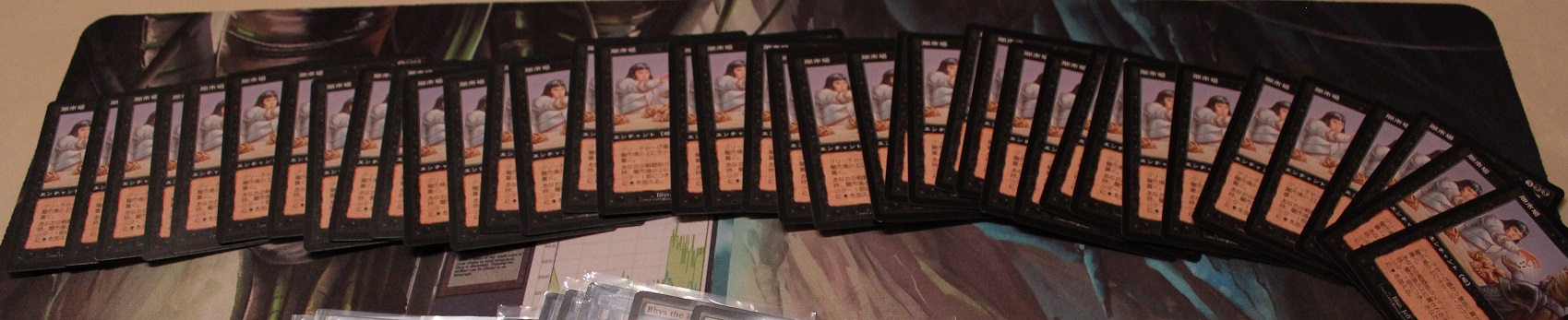
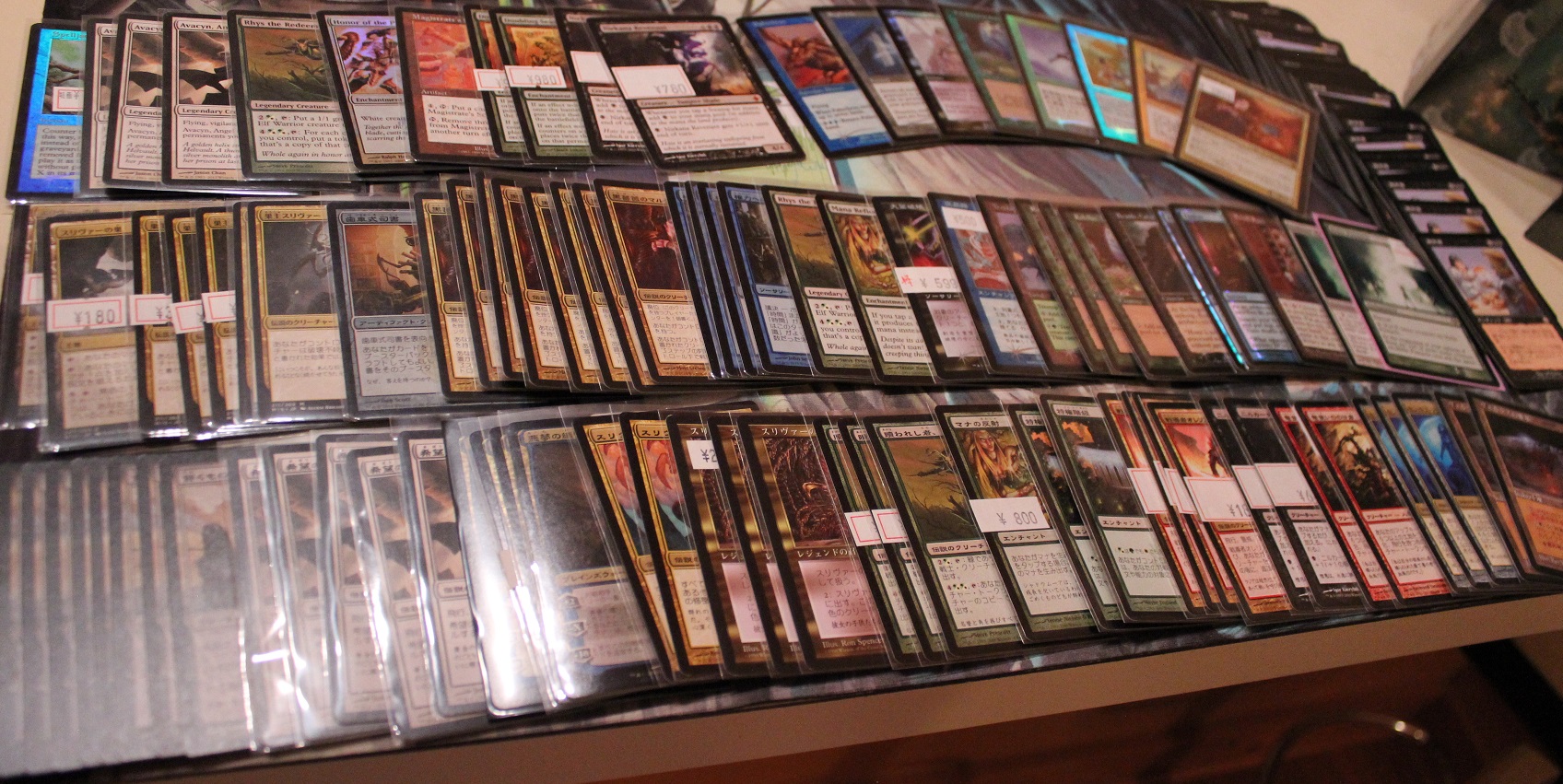
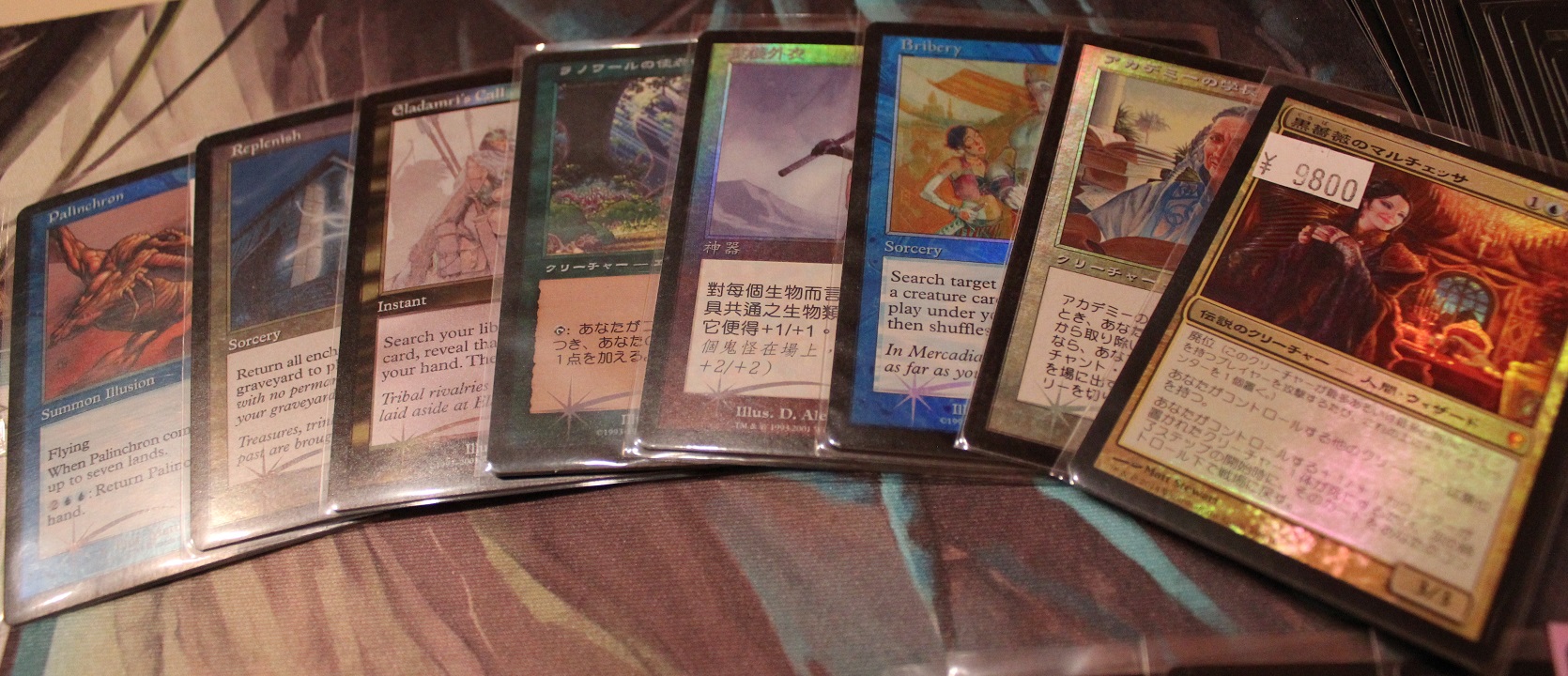
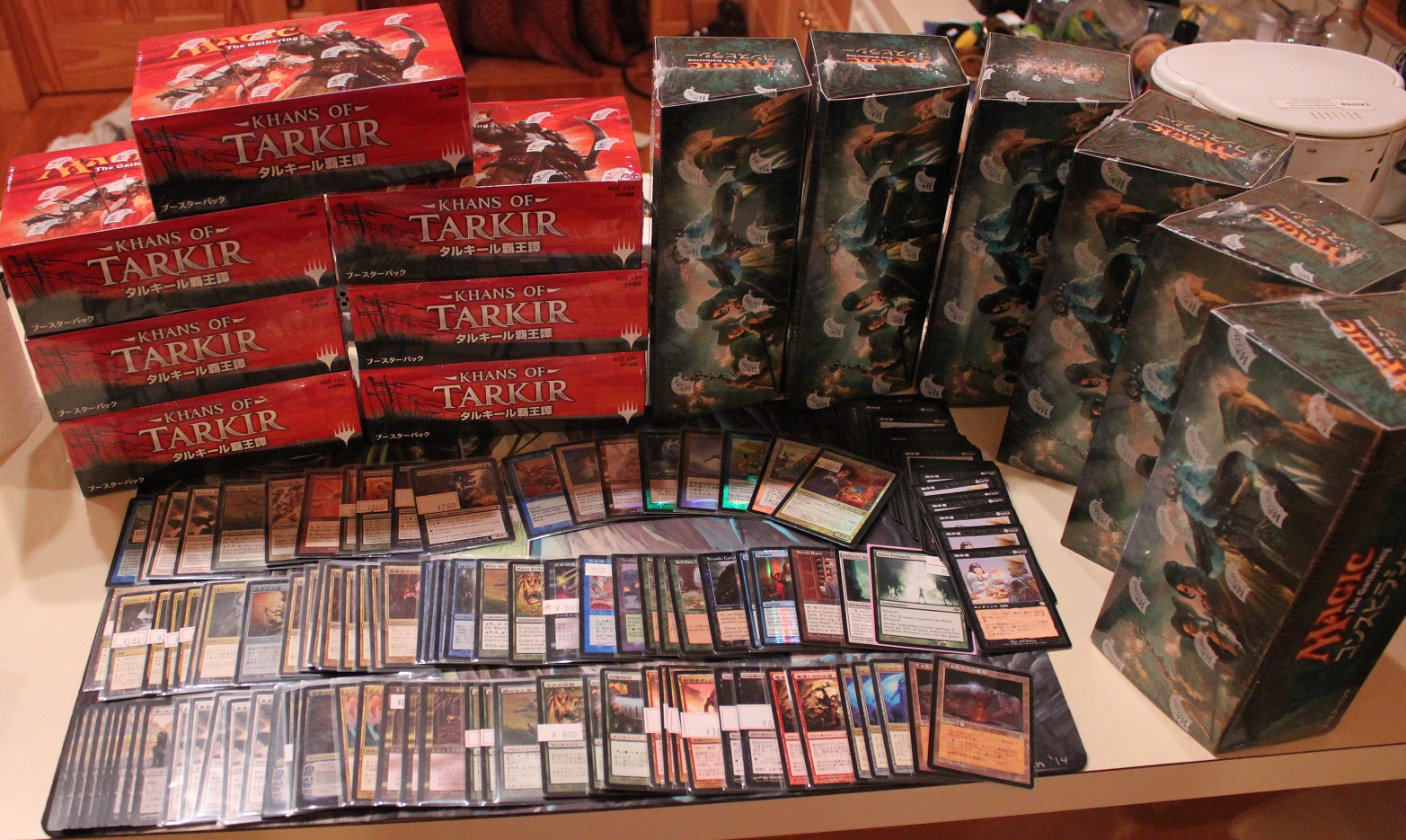
What really drove me to discuss this today was a feature recently added. Foreign cards can now be listed, a major boon to both customers and vendors. When I returned from Japan I brought back thirty-eight Japanese Black Markets. Up until now I’ve had no reasonable way to sell them. With foreign support having been added, I can now list my Black Markets, and all the other Japanese product I brought back. It’s great for people that end up with foreign product in their possession, and it’s great for people that wanted foreign product in their possession, a challenging goal if SCG didn’t have what you were looking for.

It’s important for people buying and selling to know what’s available to them on both sides of the process. Knowing how to move your cards is just as valuable, or perhaps more, than knowing which ones to pick up. I’m not shilling for TCG, I didn’t get paid by them, and I have no vested interest in their company. They provide a service that is quite valuable to people that do this type of thing frequently, and it’s helpful to be aware of it as an option. It isn’t flawless, and there are options with better returns, but those options usually involve running a store, or at least a case in a brick and mortar, which aren’t reasonable for people that don’t want this to be a full-time job. If you’re a mid-level actor in this market, TCG provides you an acceptable venue to sell at retail or near-retail prices.


Lockbox

By: Travis Allen

A few days ago GP Seville wrapped up. It was a Standard GP over in the south of Spain. While looking through the top eight, I was fairly impressed with the diversity. It consisted, in no particular order, of GR Devotion, Jeskai Tempo, Mono-G Devotion, UB Control, Junk Aggro, Junk Midrange, UW Heroic, and Sidisi Whip. That’s an undeniably diverse format, something for which WotC should congratulate themselves. Building a Standard format that has that many competitive decks is difficult, a feat made more impressive when you consider that what constitutes the top layer has been changing from week to week.

Browsing through the lists from place one to ninety, over 10% of the field, I was pleasantly surprised by the number of Whisperwood Elementals to be found. I spoke highly of them in my set review several weeks back, and after hearing that they had jumped to $12 in Japan, I snapped up all the copies left on eBay under $6. It wasn’t long before the US market caught up – preorder prices on TCG hit nearly $15. That was in the week ahead of release though, and I still didn’t have my copies. I couldn’t list what I didn’t have in hand, and by the time the actual cards reached me, the price had fallen to $6 again. I wasn’t behind per se, but the price wasn’t high enough to sell yet. Since then prices on Whiserpood have started to creep back up after a solid performance at Seville, and while he hasn’t really broken through much to the US yet, I expect his popularity to gain on this side of the Atlantic.

Ideally I should have a number in mind that I’d like to get out. If I bought in for $6 each, what do I have to sell copies for to be happy? Is it $8? $10? $15? While considering how greedy I could be, a solemn fact once more foisted itself on me. There’s a pretty hard limit to just how expensive Whisperwood Elemental can be, and it’s determined by the rest of the cards in the set. 

The core concept we’re looking at today is how card prices are influenced by being the current in-print set. It’s a very simple idea, really. An open pack can’t be, on average, more valuable than a sealed pack. What does that mean, and what are the ramifications?

Figuring out the average value of a pack is simple. Add up the values of each rarity independent of each other, average it out across the number of that type of card, then multiply by the expected number you would find in a pack. For instance, if the average value of a rare in Fate Reforged is $1.91, and you know there’s an 87% chance of a rare being in a pack, then an average pack has an average rare value of $1.6617. Add in the common, uncommon, and mythic average values, and you have the value of a pack.

Once you understand the average value of a pack, you know the average value of a box. If a pack’s average is $2.18, then the average box is worth $78.48. That average box price – that $78.48, or whatever number is appropriate for a particular set at a particular time – is roughly how much in value you will open in a box. It’s not a hard number, of course. Some boxes will have two or three Nexus’, and other boxes will have a foil Ugin. It all evens out in the end though.

What if the average pack isn’t in the low two dollar range? What if there are gobs and gobs of $10 rares that drive the average pack value up to $4? Now a box’s value is $144. If that set is old – say, Innistrad – so be it. The boxes in the market are all that’s there, and they’re subject to normal rules of supply and demand, just like any normal card. But what if the set is in print, such as Fate Reforged is today?

If you’re a vendor and Fate Reforged boxes are $144, you are not wasting any time jumping on the horn and ordering piles and piles of boxes from WotC. WotC will sell you nearly limitless boxes of current sets, and they’ll do it all for somewhere in the neighborhood of $70 to $80 a box. You’ll crack boxes that cost you $70 and sell the singles for $140. That represents one hell of a profit, so you’ll scoop up as many as possible. And you’ll keep ordering them and cracking packs, until it’s not profitable to do so anymore. And so will every other store. And eventually, the market will be flooded with packs, and those packs won’t be worth an average of $4 anymore.

As more and more product is entering the market, more and more of each card is becoming available. No card, now matter how good it is, can maintain a $10 price tag if you put millions of them into the wild. As the market gets flooded with boxes, card values will keep dropping, until eventually the average pack isn’t $4 anymore, it’s back to the low $2 range again. Average boxes will drop from $144 to $80 again, people will stop buying them, vendors will stop ordering them, and new copies of cards will stop entering the market. Equilibrium. (Probably an awesome card in an Animar TL deck, by the way.)

Of course, we’re operating in an imperfect system. Taxes and shipping costs and manual labor all add inefficiencies to the system, as does time for boxes to move from one point to another. All the players needing a given card won’t suddenly have access to it because a store somewhere in a twenty mile radius just cracked a pack. The system isn’t perfect, and so the numbers won’t be either. Occasionally the average value of a pack may be twenty cents too high for a week or two while the supply catches up. This is simply the nature of a physical market.

When a set is out of print, there’s nothing to stop prices from getting out of control. That’s why Future Sight boxes are $700. While a set is in print, though, vendors will just keep ordering boxes as long as it’s profitable to do so. And with WotC willing to pump out as many boxes as stores are willing to buy at $70 or so, the average price of a box is chained to that value. With box values essentially mandated by WotC, it holds average pack prices steady, and therefore holds the total value of singles steady.

With average pack prices of an in-print set constrained, there’s only so much value that can be opened. You can’t have twenty-five $10 rares, and you can’t have eight $30 mythics. That would push pack values too high, which we just saw will self-correct. As cards find the price the market will bear, the entire rest of the set is shaped around it. Consider Ugin, currently a little over $30. Ugin is that expensive because demand is so high. Standard, Modern, Legacy, EDH, casual – everyone wants to be casting eight-mana Planeswalkers these days. Knowing that, we can look at Whisperwood Elemental and start to understand what his price potential is. If tomorrow everyone realizes Whisperwood is the second best mythic in the set and demand begins to rise, his price will go with it. Pack values would rise, and we already figured out what happens in that scenario.

We know that the market basically requires boxes to be worth roughly $80 each, and that has an impact on all the singles in the set. If market demand for Ugin is over $30 and Monastery Mentor is $20+, that’s going to suck up a lot of value for the other cards in the set. You simply can’t have $25 Tasigurs, because that would mean a box is too valuable. If a few cards in a set are expensive, it creates a limiting effect on the price of the cards that share a booster pack with it. Thus, my Whisperwood Elementals have a theoretical price ceiling by virtue of being in the same set as Ugin, Monastery Mentor, and Tasigur.

This works the other way as well, although we see it less often. Dragon’s Maze was a pretty godawful set, with very few cards people had any interest in. Voice of Resurgence was far and away the best card, and it fell off rapidly after that. Boxes couldn’t really be any cheaper than $80, since that’s what vendors had to pay for them, but with no other desirable cards in the set, that meant Voice of Resurgence had to carry that price tag on his own, which is how we ended up with $60 Voices at one point. When a single mythic is the only good card in a set, it’s going to carry most of the cost of a box on its own.

There are a few practical outcomes from all of this.

  • Within two or three weeks of a sets release, boxes will always fall to the same price of around $80ish. (So long as WotC keeps selling them to stores for around $75.)
  • If the singles within the set ever become too valuable, stores will start cracking packs to sell in their case, increasing supply and thus lowering prices.
  • When a handful of cards have high price tags, it will suppress the price of all the other cards in the set.
  • If there’s only very few good cards in a set, they’ll carry the weight of the box price on their own.

Applying this to Fate Reforged, we see that Ugin is holding strong at $30 and Monastery Mentor looks to be stable at $25 for now. With those two sustaining large price tags, there won’t be too much value in a box left to assign to cards like Whisperwood and Tasigur. In fact, that’s really the only reason Tasigur is as cheap as he is. If he was in Dragon’s Maze he would have been a $25 rare.

I keep looking at cards in Fate Reforged and thinking “that card could be worth twice that,” but then I have to remember that if I think that about twenty different cards, none of them are actually capable of rising that much in price. Even though all of these cards are quite strong and could be $15+ in other sets, when you put them all into a set together it limits the price of all. Keep this in mind when considering how much cards in Fate Reforged could conceivably rise in the near future. And just as importantly, keep it in mind for when Fate Reforged is off the printers – at that point WotC won’t be keeping the price of a box chained to $80 and the sky’s the limit.


Another Million Billion Faeries, Please

By: Travis Allen

What’s old is new again.

Let’s begin by looking at some statistics to get a feel for the metagame at large.

Top 8:
3 Abzan Midrange
2 Burn
2 UR Twin
1 Amulet Bloom

18+ Point (6-4 or better) Modern Decks
30 Abzan Midrange 26%
17 Burn 15%
15 Infect 13%
8 Affinity 7%
6 UR Twin 5%
5 Amulet Bloom 4%
4 Scapeshift 3.5%
4 GR Tron 3.5%

So that I don’t have to repeat myself over and over, keep in mind the following blocks are NOT eligible for reprint in Modern Masters 2: Innistrad, Return to Ravnica, Theros, Khans of Tarkir.

The Results Are In

It doesn’t come as a surprise to many that Abzan, aka Nu-Jund, was the most important archetype of the event, even if it didn’t actually take home a trophy. When it constitutes a quarter of the room on Saturday and nearly half of the top eight, plenty of excellent Magic players recognized that it has a very high power level. That’s not surprising either, considering it gets to play some of the strongest cards in the format.

 Most of the Abzan lists were very similar. Liliana of the Veil, Tarmogoyf, Abrupt Decay, Tasigur, Siege Rhino, and Lingering Souls make up the core of the deck. Sprinkle Scavenging Ooze, discard, maybe a few more removal spells. Shake well and serve tepid at a lifeless soiree where half the attendees are on so many prescription drugs they are incapable of experiencing emotion.

Tarmogoyf is completely saturated in value at this point. I can’t find copies at less than $190, and even then there aren’t many below $200. If any card is going to be reprinted in Modern Masters 2, it’s Tarmogoyf. Stay well away here. Liliana is also quite pricey, having risen to $80, with a floor of $85-$90 just a day or two ahead of the PT. With the Regional PTQ reprint already well-known, it seems unlikely that she’ll make another appearance this year. We know that she was originally in the file for M15 and was pulled for power level reasons. Wizards was looking for a reprint venue, and I’m assuming the promo is what they landed on. Assuming that’s true, we probably don’t see her again this year.

Abrupt Decay is likely the best bet from this deck. Copies are still floating in the $10-$12 region, which I find hard to believe is the correct price for the premier removal spell in both relevant eternal formats. Tiny Leaders growing in popularity recently also bodes very well for a card that will destroy any non-land card in the format. Looking back at Maelstrom Pulse it doesn’t look like it ever got much more expensive than $15, but I can’t find data all the way back to Alara. Other than that, I can’t think of any piece of removal that’s ever consistently sat at $20. No other piece of removal has ever been so prominent though, especially one with no other printing. I’d assume $15 is the cheapest real price for this card, and numbers pushing $25 wouldn’t surprise me in the least. The only thing that scares me here is a reprint somewhere. I’m not saying it will show up in Standard, but Wizards has a way of sneaking cards into places you wouldn’t have guessed it. Tectonic Edge showing up in the recent Commander product, for instance. I don’t fault anyone for stockpiling Abrupt Decays right now, just be aware that Wizards is also aware of how real this card is.

Lingering Souls has been printed four times. (Three of those reprints after I bought eighty or ninety copies.) Without even more reprints this will eventually hit $2, but we’re a ways away from that.

Siege Rhino and Tasigur are jumping into Modern with both feet, but the supply on these guys is still growing. They also feel exactly like the type of card Wizards knew ahead of time would be popular and wants to make available – how many supplementary products has Courser of Kruphix shown up in at this point? Two? The laws of supply and demand should keep the prices on these two suppressed for at least a little while longer. Revisiting them will be our goal around MM2/MTG:Origins. At that point drafting will have dried up, people’s attention will be elsewhere, and we’ll be entering the seasonal lull.

Expanding our perspective to some other G/W/B decks, we see some other hot numbers. Wilt-Leaf Liege is $30 now. Unsurprising as it’s from one of the least-printed Modern-border sets in Magic, and it’s exactly the type of card aspiring players want to use so they can “get” all those jerks playing Liliana of the Veil. A price tag this high is only possible because of the extremely low quantity available. One reprint will crash the value here.

Alongside Wilt-Leaf we saw a lot of Voice of Resurgence and Gavony Township. Voice’s future in Modern was tenuous in the eyes of many, with Pod finally having been shown the door after long overstaying its welcome. This weekend the little elemental that could proved that he (she? it?) has what it takes. Prices are hanging around $15, and as we get further from Dragon’s Maze, I wouldn’t be surprised to see this break $20, especially with Twin being as popular as it was. Gavony Township also came out in force, and strikes me as having a real future. John Stern’s Friday feature match showcased just how silly the card is in concert with mana dorks and Lingering Souls tokens, two types of cards that are never going out of style. As a rare from Innistrad it’s got a fair bit of supply, so I don’t think we see it rush towards $10, but it could easily be $5 by year’s end. Take a look at the four pages of 18+ point decks – there were a lot of Townships.

Burn made up the next most popular archetype in day two, a fact that makes only Lee Sharpe and other libertarian sociopaths happy. In fact, the first Modern feature match of the Pro Tour was a burn mirror, with commentary by Rashad. This is the Magic coverage equivalent of burying the lede.

Side note: I can’t fathom why Wizards keeps putting Rashad in the booth. Every single Pro Tour, without fail, my feed is filled with people pleading to have him removed from coverage. I understand that he started GGS Live, and I respect that. He seems like a very pleasant individual and I’m sure he’s a great guy to be friends with. The problem is that he is just in over his head at these events. When compared to the commentating of even the mediocre Randy Buehler, Rashad is clearly outclassed. Given that Wizards tends to listen to their playerbase, all I can imagine at this point is that he’s got a contract.

The most exciting card in burn (and I use the word exciting very, very liberally) is Eidolon of the Great Revel. Vexing Devil is over $9 and that’s entirely on casual demand. I’d imagine Eidolon has comparable casual demand, and is also the second best red card in both Modern and Legacy to boot. Follow that up with the fact that he’s from Journey to Nyx and you’ve got a real winner on your hands. Goblin Guide, the other premier red burn spell in eternal formats, is a good $20, and would possibly be higher if people weren’t expecting a MM2 reprint. I see Eidolon breaking $10, perhaps even in this year, and $20 by the end of 2016 is on the table without a reprint. Beyond Eidolon, little in these decks is exciting, whether from the perspective of a player or investor.

Infect, like burn, is a pile of barely-playable commons and a handful of rares. Wild Defiance isn’t played in enough numbers to move the ticker more than a dollar or two, and isn’t even necessarily the best choice for the deck. I’m staying away. What I do like from this deck is Inkmoth Nexus. It was in an event deck, but it’s still only got a single printing. Infect has been growing in Legacy at the hands of Tom Ross, and with this many copies in Modern, it may have cemented itself as a solid tier 1.5 contender. Given how hard infect is to put in Standard, I’d say this is safe for at least several months. With so much of the deck relatively inexpensive, all the value will be shoved into the few rares that round out the package. Noble Hierarch is saturated and also slated for MM2, and the rest of the manabase is old news. Inkmoth Nexus is the card best positioned to gain on Infect’s success. It could technically appear in MM2, but I doubt it. Putting in Inkmoth means including Infect as a draft strategy. I’m guessing Wizards doesn’t want to go down that path quite yet.

Affinity had a rather poor showing, likely due in part to the soup de jour midrange deck now having access to white, and subsequently Stony Silence, a stone-cold killer of weird metal hats. With Metalcraft confirmed for MM2, I’m staying the hell away from this entire deck, with the sole exception of Inkmoth Nexus.

As the winner of the whole shebang one would assume UR Twin is well positioned to pick up some value dollars, but like half of Abzan and most of Affinity, everything is pretty well saturated at this point. I’m a bit surprised Splinter Twin is “only” about $17, but that may be due to expectations of a MM2 reprint. Most appealing in the deck is Snapcaster Mage. He’s crept up towards $35 after a fall to nearly $25 a few months ago, and I expect that trend to continue. Without a reprint this year, which I wouldn’t count on, I suspect he’ll be $50 by year’s end.

What was clearly the breakout deck of the event, Amulet Bloom, garnered a remarkably odd reaction from the market given both the success and screen time it got. Amulet still hasn’t managed to crack $8, and Hive Mind is still under $4. Both of those are solid gains, but if you had asked me last week to predict the price of each if the deck took second at the Pro Tour, I would have told you they’d be much more expensive than they are. Are we finally seeing the Magic community at large start to wisen up? Is it because the deck is so damned tricky to pilot that Gerry T called it the most difficult deck he’d ever played? I’m not sure. It’s also possible that sometime within the next week people decide that those prices are just too low and they end up bought out. It did happen with Azusa after all, who is now nearly $50 a copy on TCG. This isn’t too surprising given the exceptionally low supply available, combined with her utility in both EDH and TL. Prime Titan picked up two bucks or so, but has otherwise similarly reacted with restraint. If the titans don’t show up in MM2 I like him as a trade target. $20 each isn’t hard to imagine.

Worth considering is the possibility that some component of this deck gets banned. While I don’t believe it’s possible to win on turn one, you can end the turn with your opponent at something like four life while you have multiple karoo lands and a titan in play. Turn two wins are possible and turn three wins are reasonably common without disruption. Considering Wizards wants this to be a turn four format, I’d say the deck is pretty heartily in violation of a major rule of the format. Technically Wizards does let decks capable of faster wins exist – Goryo’s Vengenace can turn one you and is still legal, and Storm and go off on turn three – but it has to be infrequent and inconsistent, even without disruption from the opponent. With no disruption from the other side of the table, Bloom can fire on turn three somewhere in the neighborhood of 20%-50% of the time I’d guess. I’m not entirely sure what they’d ban if they did hit something, but my best guess is Summer Bloom itself. Everything else in the deck is capable of doing something else interesting, and Azusa is far more fragile than Bloom, while the card Summer Bloom is essentially just a combo piece at this point. Its also miserable to watch go off, as Cohen’s multiple ten-minute turns were proof of. I’m not sure it’s too fast, or too powerful, or takes too long of turns, but it does seem to hit on all three metrics that Wizards is not a fan of.

I don’t know. Maybe they do hit it, maybe they don’t. I know the deck will be under the microscope now more than ever after that performance.

While we’re on the topic of Amulet Bloom, I’m compelled to mention that you should 100% be shipping any Leyline of Sanctities, a card often found in the sideboard of combo decks. Sanctity is the card I least want to have to own a playset of, but am forced to if I want to play filthy combo decks. Both Sanctity and Fulminator Mage have absolutely no business being as expensive as they are, and are easily reprintable in many places.

Where does all of this leave us?

Well…I’m selling. Nearly everything. Tarmogoyfs, Lilianas, Affinity staples, Twin pieces, Vendilion Clique, Wilt-Leaf Lieges, Gavony Townships. There’s a few reasons.

The first reason is the most obvious one: Modern Masters 2. We have no clue what’s in it other than Emrakul, Etched Champion, and some Metalcraft cards. Popular opinion is that Tarmogoyf will reappear, and quite possibly Dark Confidant and Vendilion Clique as well. Beyond those three big targets, there’s still piles and piles of Modern staples that are viable such as Goblin Guide, Bloodghast, Arcbound Ravager, and more. You don’t need to remind me that the first Modern Masters run ended up pushing prices up on several key cards, such as Tarmogoyf and Cryptic Command. With a stated print run four times greater than the first MM though, I’m not sure that’s going to happen this time around.

My second, more general reason for wanting to shift so many cards is that beyond MM2, there are reprint haymakers everywhere. For instance, I had about fifty or sixty Tectonic Edges I had piled up from purchasing collections, and was planning to out them this month. Then they showed up in the Commander decks this past fall, which I never expected. Oh, whoops. There goes $300 in profits. Courser of Kruphix showed up in two supplementary products, as did Hero’s Downfall. Between Event Decks, Clash Packs, and Commander precons, there’s always something around the corner waiting to bite your specs in the ass. I’m particularly concerned about two-color cards later this year. A few paragraphs back I was talking about Wilt-Leaf Liege and Gavony Township. Township in particular looks so good as a spec, but consider the last few years of Commander decks. First there was wedges, then shards, then mono-color. We’re set up for two-color Commander precons this year, and Gavony Township and Wilt-Leaf would fit very well into the GW one. Those thirty or fifty or one hundred Townships you had picked up for between $1 and $3, expecting them to hit $5 to $6? Not if they’re in an EDH precon buddy.

This may sound odd with MM2 on the horizon, but another reason I’m looking to move a lot of product and avoiding buying into any cards from this Pro Tour is because I expect that we’re at peak Modern excitement right now. Remember last year when Scalding Tarns hit $100 ahead of a Modern GP that was right before the start of the Modern PTQ season? I held on, expecting the PTQ season to push the fetches and many other Modern staples even higher. Rather than keep climbing, they crashed, and Tarns are just $60 now. More and more, it seems like Modern is a format not driven by competitive seasons or waves of interest, but rather single events that stir everyone into a frenzy, and then interest crashes afterwards. Yeah we’ll hit MM2 in a few months and that will get people talking about the format, especially with three Modern GPs immediately following MM2’s release, but then what? Nothing to really drive demand again until next February at the following Modern Pro Tour. Remember, there’s only one of those a year now. The average player might get to a single Modern GP this year. Beyond that, where is he or she going to play? There’s no Modern PTQ season, and something like 87% of North American PreTQs are Standard. Even if WotC takes the reins on that, most players are only going to have local store events and maybe one or two SCGs to play much Modern.

Tie this concern that we’re at the peak of Modern’s excitement right now into the fact that January and February tend to be the highest tide for Magic cards in general, and you can see that we’re probably in the 95th percentile of any given card’s price for the year on over 90% of the Modern index.

I’m not foolish enough to ignore the fact that some cards will still manage to climb. Liliana is reasonably well positioned, and I wouldn’t be surprised at all to see her crest $100 or more during the MM2 hype. Snapcaster is similarly well-positioned. Those are only possibilities though – neither is guaranteed. What if Liliana falls to $60 between now and June, and the MM2 spike only brings her back up to $75? Without a doubt, there will be Modern cards that gain value throughout the year and make people money. Those cards will be the minority though, and most will be lower in three months or six months than they are now. If your portfolio is diverse, the answer here is to move most of your product, take your profits, and look for greener pastures. Yes, you may miss on $120 Lilianas or $90 Scalding Tarns. But you’ll hit on $30 Wilt-Leafs, and $70 Confidants, and $200 Goyfs, and $70 Cliques, and plenty of other cards that will collectively lose a lot more money than the few cards that gain in price.

I’m not selling everything. I’m holding onto my Snapcasters, as that’s safe enough that I consider it worth the risk. I’ve still got a bunch of Goryo’s Vengeances and Through the Breaches, and lots of Scars fastlands. Perhaps against my better judgment, Vengevines remain stashed. I’ve got a bunch of other stuff under $10 that I’m holding onto as well because their prices haven’t yet risen enough to be worth selling, and if they get reprinted I don’t stand to lose that much on each. After a quick count, the number of Modern-legal cards in my spec box worth at least $10 that I’m holding onto is five, and there are probably more than fifty or sixty unique cards in there.

A point of clarification: all the prior advice is through the lens of investing, in one capacity or another. If you’re looking to play Kibler’s GWb deck, don’t hesitate to pick up the Wilt-Leaf Lieges. If you want to play Affinity, trade for Arcbound Ravagers. You shouldn’t feel bad about grabbing a playset of anything you actually want to play with, save perhaps Tarmogoyf. This is a game first and a trading platform second. If you want to play with certain cards, buy the cards. If your only goal is to make money, why are you here and not in the stock market?

Springjack Pasture

I’ve told you that I don’t like holding onto anything worth double digits and that I’m looking for greener pastures. Exactly what are those cards?

Scavenging Ooze: Relatively low print run, even with the Steam promo. Was all over the place this weekend in Abzan decks, and anything that makes green mana is likely to want some number of copies. At $5 or so a copy, this could be an easy double up. 

Eidolon of the Great Revel: Way underpriced for how good this card and burn in general are in Modern and Legacy. I’m slightly worried it shows up in a clash pack or something, but even then I’m not sure it will be enough to stunt growth. After I move some of the pricier things I’ve still got kicking around, I may drop some cash on these guys. 

Thalia, Guardian of Thraben: I said last week it feels underpriced, and I still feel that way. 

Khans Fetches: Most of these are at or near their lifetime floors. I’m trading for these all day long. They’re the closest thing we have in Magic to currency other than, well, currency. As for purchasing… 

Foil Khans Fetches: Return to Ravnica shocks were (universally?) the cheapest they were within a few months of release. Make no bones about it, the buy-in here is damn expensive. The upside is that all of them could gain 15%-50% of value within a year, all with basically no fears of loss in price. 

Crazy Specs: This topic was broached recently. The short version is that if you miss, you don’t lose much, and if you hit, it more than makes up for your misses. Take for example Faith’s Reward, of which I currently have around 100 copies. I paid $.25 each, for a total of $25. If it completely tanks and is reprinted eight times, they’re still worth $.10 each and I lose $15. If it hits it big and they reach $8, I just made enough to cover having missed on other specs several times over. You can’t do this with just any card – you have to find ones that are in low supply with high power level. It’s not for everyone, but when you hit, you hit hard. Another one I’ve picked up a lot of? Magus of the Bazaar. 

Rattleclaw Mystic: Buy-a-Boxes rarely miss. When Theros rotates we lose Sylvan Caryatid, Voyaging Satyr, and Elvish Mystic. 


Sliver Hive(lord): Guaranteed risers that are reasonably safe from reprints, and cheap to boot. 

Modern has become far too financially volatile a format for me to want to have any large investment in right now. With a major reprint outlet a few months away and very little else driving players at the local level to become emotionally and financially invested in Modern, I’ll sit out for a bit. It feels sort of odd since it’s been such a large percentage of my investment strategy for the past two years, but for now it’s time to leave it be. Maybe this August after all the MM2 price swings settle down I’ll revisit it. 

I’ve no doubt plenty of people will disagree with my strategy and calls here, but I don’t mind. When people are talking about how they slam dunked Abrupt Decay or Liliana it will be easy to feel like I sold out early. What’s important to remember is that we see the highlight reel when people hit home runs, but we won’t be hearing from the guys who lost hundreds of dollars after going deep on Gavony Township when it’s printed in Commander decks later this year. Rather than chase cards with big price tags and big targets on their head, I’m going to avoid being greedy and instead go after cards with low risk profiles that are less sexy. 

Except for Magus of the Bazaar. That’s sexy.



Modern Pro Tour Watch 2015

By: Travis Allen

This was originally shaping up to be a rather bland Pro Tour. With Treasure Cruise having completely overtaken Modern, resulting in massive shifts in the metagame, it was looking like we were going to get an answer to a question nobody really wanted to ask: “what’s the best Cruise deck?” Thankfully Wizards saved us from this outcome, and in fact gave us more than we could have hoped for.

I’m sure at this point you’re probably sick of reading about the ban list changes, and that’s fair. Sell Grave-Trolls and Worldgorgers, buy everything, blah blah. You’d think it was the only thing that happened in Magic that week. Yet it would be foolish to ignore the fact that we haven’t yet fully felt their implication. Since the announcement there’s been a paucity of Modern events. We’ve seen a handful of dailies, two SCG Modern Premier IQs, and a lot of untested lists posted on Reddit. With very little in the way of results, and some of the world’s best brewers keeping quiet until after the Pro Tour, there’s no way to truly know what is possible in a post-Cruise, post-Pod world. For three glorious weeks we get to pretend Seance is playable and anyone can win any event with any seventy-five, so long as there’s a megathread about it somewhere.

Seven days from now reality will rear it’s uninvited head once again, reminding people that Cranial Plating is still legal, Thoughtseize is still the fun police, and Snapcaster Mage targeting Cryptic Command is why you quit this bullshit format the last time.

Since Khans of Tarkir released card prices have been out of whack, and they’re just now starting to re-align with what we would expect. While Liliana isn’t $40 anymore, plenty of cards still have room to grow, and the Pro Tour results this weekend are going to be a big part of it. Let’s run through some of the cards to watch this weekend.

Liliana of the Veil
Now: $75
Post-Tour Potential: $90-$100

Liliana was a card I pointed to a few days after the B&R update as a definite gainer. She’s at her best when she’s grinding your resources into dust, which is damn near impossible in a Cruise-infested meta. Now that the fear of your opponent top-decking Ancestral Recall is gone she’s back in a big way. Before the update there were copies as low as $45 on TCG. As of Tuesday afternoon, you’re looking at $75 each on TCG. Clearly people were not waiting for the results of the PT to roll in; they knew she was going to be good again and they didn’t want to wait.

For just under two months she was $90 on MTGPrice, and for about eight months she was at least $80. We’re close to those numbers again, so there’s not too much room for her to grow, but I think we could definitely see a higher ceiling than last time. If Abzan decks featuring Thoughtseize, Tarmogoyf, Liliana, and Siege Rhino make as strong a showing as is to be expected, that will at least account for a $5-$10 bump in price.

Where she stands to really gain is during the Modern Masters II boom. We know that Innistrad doesn’t fall within the range of MM2 sets, so she’s safe from a reprint there. We also know there are going to be promos distributed at regional PTQs, but those are going to be in very limited numbers relative to the Modern-playing population. With that RPTQ printing on the horizon, I highly doubt we see more copies this year. Between the possibility that Abzan takes over Modern, a near-zero likelihood of more copies entering the market this year, and another explosion in Modern interest thanks to the upcoming MM2 release, I’d say $100 is well within reach.

Vengevine
Now: $20
Post-Tour Potential: $30-$40

Now that Golgari Grave-Troll is on the loose there’s renewed interest in funneling a stream of creatures into your graveyard again. If this strategy is successful, it’s almost definitely going to include Vengevine. He’s been relatively quiet in Modern for the last few years, but that’s been more of a result of the metagame than a lack of power. Deathrite Shaman meant that any Vengevine strategy was DOA for quite some time, and if it wasn’t DRS suppressing the thing from little shop of horrors, it was decks like Birthing Pod flat out being a better choice. Pent up demand for Vengevine to be relevant has already driven his price from $15 to $20 in the last two weeks since the update. There’s more to this than just fevered dreams of madmen, too: this past weekend two Dredge decks placed in tenth and twelfth at the SCG IQ, each running a full set.

If anyone shows up on camera at the Pro Tour and puts a Vengevine into their graveyard, he gains $5. If it actually wins a few games, we could easily see this break $30, and $40 isn’t out of the question in the short-term. Original copies are now several years old, and with the only other printing a limited-run WMCQ promo, there will be a real constraint on copies if there’s a spike in demand. Remember, though, that Zendikar is on the table for MM2. It’s hard to predict whether a card like this will be reprinted or not, but if there’s a large spike due to PT fervor, ship hard and ship fast. Take the guaranteed money instead of being unnecessarily greedy.

Bloodghast
Now: $10
Post-Tour Potential: $20

As goes Vengevine, so goes Bloodghast. It’s hard to imagine one showing up without the other. Bloodghast has been treading water around $8-$10 for awhile now, and it feels like it’s juuust on the edge of spiking. Any camera time at the PT could cause a buy-out. Like Vengevine though, Bloodghast is liable to be reprinted in MM2, and he seems much more reprintable than Vengevine is. Regardless of what happens this weekend, I’d sell all my excess copies after the Pro Tour.

Snapcaster Mage
Now: $30
Post-Tour Potential: $50

Remember this guy? He sort of disappeared a few months ago. Don’t worry though, he may have been forgotten, but he’s not gone. Unlike Liliana though, Snapcaster didn’t suffer as much after Khans, nor has he rebounded after the update. One may think that this means he wasn’t impacted by Cruise, and therefore his price won’t budge much. One may be wrong.

Even if Snap didn’t take a price hit, the decks he performed well in certainly did. UWR lists were beaten into submission by the brutal efficiency of Cruise. Now that that’s all behind us, I expect UWR decks to come back in a meaningful capacity, just as they were prior to Khans. With them will come a surge in the number of Snapcasters played, which will only help his price. The fact that his price didn’t drop over the last three months mostly indicated that players were unwilling to accept the fact that he was irrelevant, which kept his price shored up. A meaningful return to the metagame would simply increase the strength of people’s beliefs.

What really stands to serve Snap well this time around is that like Liliana, he too is out of contention for MM2. With no reprint visible on the horizon, his price may spiral out of control. That isn’t to say we won’t see him again at all this year, but we know that it at least won’t be there. He’s been $40 in the past, and there’s no real reason he couldn’t be again. PT excitement could well push him towards a $50 price tag in the near future, and I wouldn’t be surprised to see that price be relatively sticky for a format staple.

Primeval Titan
Now: $12
Post-Tour Potential: $20-$30

Amulet Combo is most likely to drive Titan towards $30, although there could be other vehicles that get him there as well. In Amulet decks he’s a consistent four-of, and central to the strategy. If only Amulet wants him in Modern, maybe he’s in the $20 range. If it turns out some other deck is in the market for that effect as well, he could clear $25 without a reprint.

Amulet Combo is no joke, by the way. It won this past weekend’s SCG IQ, and recently put up three 4-0 results in a Modern daily. Matthias Hunt had a good run with it a few Pro Tours ago as well, which caused the initial run on Amulet of Vigor. If the pilots can find a reliable way to beat the metagame, this deck is very capable of winning the whole shebang. On that note,


Amulet of Vigor
Now: $3
Post-Tour Potential: $5-$8

Hive Mind
Now: $2
Post-Tour Potential: $5-$10

One is the card the deck is named after, and the other has become the de-facto irreplaceable alternate win condition. Amulet already had its day in the sun and spiked to $10 after the deck’s previous performance, but there’s no reason it couldn’t double in value from here. Hive Mind never saw much of a price bump, but if the deck performs well again, I’d be surprised if this didn’t hit at least $7 or $8. Hive Mind is a very unique card that is just begging to destroy any format with Pacts. It’s currently a solid win condition in a format where you have to pay six for it. Imagine some sort of enabler that sneaks it into play on turn three or four? Pfft. Rocketship.

Abrupt Decay
Now: $10
Post-Tour Potential: $15-$20

Abrupt Decay has been a solid investment for over a year at this point. Possibly the best removal/utility spell in both Modern and Legacy, it’s a wonder this is still only $10. It’s been creeping up for months, little by little, and with Abzan poised to dominate the PT metagame, the time for a true price correction may be due. Even better is that Return to Ravnica falls well outside of the realm of MM2.

I don’t know if this will be the event that pushes Decay up towards $20 where it probably belongs, but it’s certainly possible. If it does break $15, I’ll be considering selling my extra copies. I can’t shake the feeling that Wizards wants to reprint Decay this year but maybe that’s an unwarranted fear.

Restoration Angel
Now: $7-$10
Post-Tour Potential: $15-$20

I don’t need to sing the praises of Restoration Angel; you’re all well aware. Instead, let me point out the newcomer in the room, Siege Rhino. Boy that would be one hell of a card to blink in response to a Path, wouldn’t it?

Knight of the Reliquary
Now: $5-$6
Post-Tour Potential: $10+

We’re now two years past the third printing of Knight of the Reliquary. She’s lost some of her former $20 glory, but there’s no reason she couldn’t reclaim some of it. I’m not exactly sure what shell will be best suited to take advantage of her abilities. A list with Dredge elements would certainly supercharge her stats. Perhaps it will be a more traditional Zoo list. I don’t know where we’ll see her, but I know that she’s only got one direction go head from here.

Thalia, Guardian of Thraben
Now: $4
Post-Tour Potential: $10+

Prime Poobah Jackass of the H8BEARZ clan in both Modern and Legacy. You’re legally allowed to hit anyone that casts this turn two on the play. Any deck with real camera time featuring Thalia should be a catalyst for an overdue price correction. Remember the entire Innistrad block is outside of the MM2 range, which means there is no event on the horizon that would keep her in check.

Geist of Saint Traft
Now: $20
Post-Tour Potential: $30+

As UWR lists are back in vogue with the departure of cruise, so too is Geist. He’s already up from a low of $12 or $13, so there’s less gravy on this train at this point than there was before. Still, a strong performance in a deck like Tribal Zoo or a UWR tempo deck would send him above $30. He’s the WMCQ promo this year, but I don’t see that doing too much to dampen a spike should he perform well at the PT. What seems more likely to be a drain on his success is the growth of Liliana and Thoughtseize decks that have been absent the last several months. Nothing is as debilitating as your turn three Geist being met with a turn three Liliana.

Grove of the Burnwillows
Now: $35-$40
Post-Tour Potential: $45-$50

GR Tron plays both Karn and Oblivion Stone in Modern. Guess which card is both of those, and is already making an impact in Standard and Legacy? Everyone’s favorite ancient dragon Ugin, of course. Tron is the most immediately obvious home for Ugin in Modern, and the work he does there is no joke. Tron always picked on Jund in the past, and the ability to slam Ugin on turn four to clear out Tarmogoyfs and Lilianas in a way that the deck couldn’t before is just savage.

Most of the other pieces of the deck already seem to be value-saturated. Karn and Oblivion Stone are already at basically lifetime highs, Wurmcoil was just reprinted, and Emrakul is on the horizon in MM2. Grove was over $50 this past fall, and a top eight performance could very well get it there again.


Goryo’s Vengeance and Through the Breach

Will a better Dredge enabler finally break one of these two cards? Turn one Thought Scour flipping a GGT, turn two dredge GGT into Griselbrand, cast Vengeance, alt-cast Fury of the Horde is a potential two turn win. Is this the year???