There’s about to be a whole lot going on in Magic, with the Star Trek preview incoming, but there’s even more on the horizon!
The calendar year has about ten weeks left, give or take, and we’ve got a lot of Secret Lair drops/releases happening before we turn the page to 2027.
Some of the details are confirmed, and some of the dates are a little hazy, but let’s get into what’s left on the schedule, including Monday’s release.
The rest of this content is only visible to ProTrader members.
Cliff (@WordOfCommander at Twitter and BlueSky) has been writing for MTGPrice since 2013, and is an eager Commander player, Draft enthusiast, and Cube fanatic. A high school science teacher by day, he’s also the co-host of the MTG Fast Finance podcast. If you’re ever at an event and you see a giant flashing ‘CUBE DRAFT’ sign, go over, say hi, and be ready to draft.
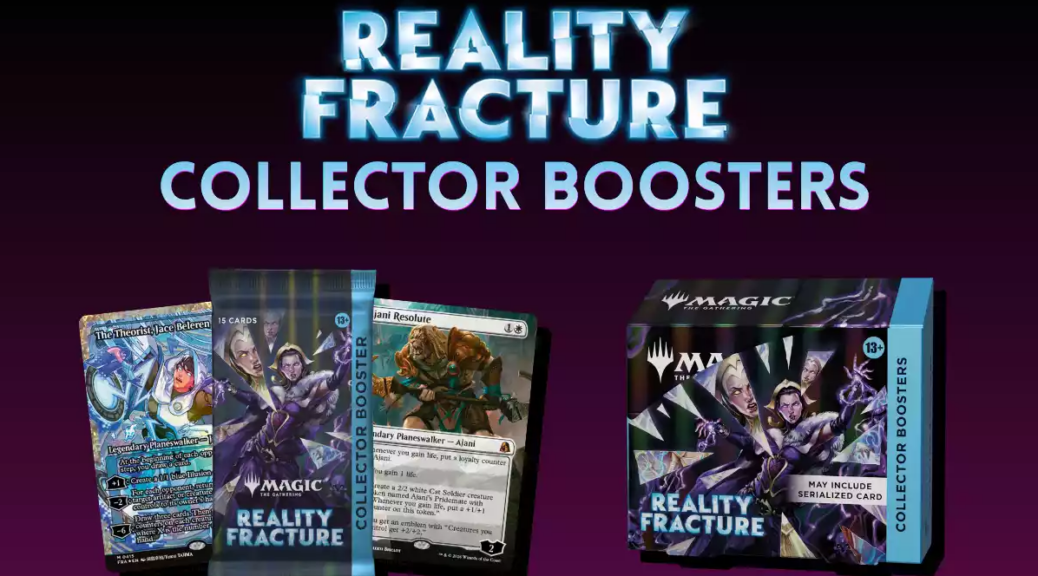
Two weeks ago, in the Mana Math, I broke down the percentages and arrived at a number for how many Collector Boosters there are for Reality Fracture. Six million Collector Boosters out there, nearly double the amount there were for the first Lord of the Rings expansion in 2023.
So if there were 3.3 million packs then, and 6 million now, what happens if we extrapolate the sets in between?
And once we have a print run, we can unlock so many more numbers!
So let’s journey down a path of estimations, albeit good ones, and figure out what we can learn from a print run.
There have been 24 sets with Collector Boosters between Lord of the Rings and Reality Fracture. We have two endpoints, and it’s pretty straightforward to calculate the steps along the way if it was a smooth, linear progression.
Set
Date Released
Approx # of CB packs
Lord of the Rings
06/2023
3.3 million
Commander Masters
08/2023
3,408,000
Wilds of Eldraine
09/2023
3,516,000
Lost Caverns of Ixalan
11/2023
3,624,000
Ravnica Remastered
01/2024
3,732,000 (Actually this was 3.2 million packs, according to WotC.)
Murders at Karlov Manor
02/2024
3,840,000
Fallout
03/2024
3,948,000
Outlaws of Thunder Junction
04/2024
4,056,000
Modern Horizons 3
06/2024
4,164,000
Assassin’s Creed
07/2024
4,272,000
Bloomburrow
08/2024
4,380,000
Duskmourn
09/2024
4,488,000
Foundations
11/2024
4,596,000
Innistrad Remastered
01/2025
4,704,000
Aetherdrift
02/2025
4,812,000
Tarkir: Dragonstorm
04/2025
4,920,000
Final Fantasy
06/2025
5,028,000
Edge of Eternities
08/2025
5,136,000
Spider-Man
09/2025
5,244,000
Avatar: The Last Airbender
11/2025
5,352,000
Lorwyn Eclipsed
01/2026
5,460,000
Teenage Mutant Ninja Turtles
03/2026
5,568,000
Secrets of Strixhaven
04/2026
5,676,000
Marvel Super Heroes
06/2026
5,784,000
The Hobbit
08/2026
5,892,000
Reality Fracture
10/2026
6 million
So many steps along the way!
As I do a lot of math for Magic, this is pretty straightforward: Difference between the start and end is 2.7 million, divided by 25, gives us roughly 108,000 more packs each time.
We need to give a caveat here: it’s highly unlikely that there was a smooth transition over the last three years. Incremental progress is possible, but it’s much more probable that there were bigger jumps every so often. Could have been quarterly, could have been every half year. I put it on the table above but I want to reiterate that Ravnica Remastered is a known number at 3.2 million packs, since they told us that you were 1% to get any serialized and there are 64 serialized cards with 500 copies each. I’m content with the average rate of progress here as my metric for all the sets, but I want to reiterate that this is an estimate, not a piece of hard data.
There were 20 mythics and 60 rares in Wilds of Eldraine, and there are 25 mythics and 65 rares in Reality Fracture. More Collector Boosters (nearly double!) means more copies of cards in the world. There’s more players, or at least we’re told that there is player growth, but that’s still a boatload of Collector Boosters filled with regular-frame cards (foil and nonfoil) and the proportion hasn’t grown at the same rate as the print run.
So for regular-frame rares and mythics, it seems clear that there’s more of those for new sets than there were for older sets. I’ll be looking into these numbers more closely in the future.
Having the print run does give us a very intriguing number, though: Once the odds for a specific card have been calculated (something I’ve done for literally every set that has Collector Boosters) and we have a number for the print run, now we have an estimate for how many copies there are of each card.
Have another table, this time focused on one specific type of card. (as an example, this is the number of copies for Dragonscale Scalding Tarn, not for all five fetches.)
Card/Set/Treatment
Estimated Print Run
Estimated # of copies
WOT Confetti Foil
3,516,000
3,981
REX Emblem Variants (LCI Bonus)
3,624,000
953
OTP Textured Foil
4,056,000
2,704
BLB Raised Foil Anime
4,380,000
7,633
DSK Fracture Foils (English)
4,488,000
1,346
FDN Mythic Mana Foils
4,596,000
4,325
TDM Dragonscale Fetchland
4,920,000
9,840
FIN Neon Chocobo
5,028,000
3,016
EOS Galaxy Foil Poster Mythic Rare
5,136,000
2,568
SOA Silver Scroll JPN Mythic Rare
5,676,000
8,705
Some of these numbers surprise me, and I want to think about them. The Textured Foils from OTP are likely the outlier in terms of rarity vs. price, with some of these available for under $20. I’m really surprised to see that there’s about 10k of each Dragonscale fetchland out there, considering the price, but we’re definitely looking at a confluence of ‘things that are commonly played’ and ‘the best creature type’ plus ‘unique foiling’.
Four thousand of each confetti foil from Eldraine’s Enchanting Tales seems about right, especially three years later. Same with the REX emblem cards, as we knew these were very difficult to get from packs even at the beginning.
The Chocobos are perhaps the biggest surprise for me here, as each of them are around two grand and there are more than twice as many of those as there are of the Duskmourn Fracture Foils.
Again, I want to reiterate the data that’s brought us here, and the chain of estimations. We’re pretty confident in the six million number for Reality Fracture CBs, and I plotted a linear graph from Lord of the Rings to the present. With that estimated print run, and the previous work I’ve done in the Mana Math series, I’m confident in these being good estimates, but far from perfect or precise.
Cliff (@WordOfCommander at Twitter and BlueSky) has been writing for MTGPrice since 2013, and is an eager Commander player, Draft enthusiast, and Cube fanatic. A high school science teacher by day, he’s also the co-host of the MTG Fast Finance podcast. If you’re ever at an event and you see a giant flashing ‘CUBE DRAFT’ sign, go over, say hi, and be ready to draft.
We’re a week plus a weekend away from one of the most loaded Superdrops we’ve had in a while, eight set of cards that are almost all amazing.
Is some of the IP forty years old? Absolutely, but when it’s done right, it’s done RIGHT.
To balance that, we’ve got a great beginning of another Miku-like set over time, so climb in and let’s go.
A quick word on the tables I’ve made: I look for special versions, not just regular-frame reprints. Sometimes those aren’t everything, but they are what I care about most as a reference. I’ve also got the EDHREC numbers, which are useful but not perfect. Tons of decks are built without EDHREC posting info, so don’t treat it as the only data that matters.
Speaking of data: We don’t know what the print run of these Lairs are, not even in relation to each other. If I knew which one would sell out first, I would tell you to buy that like mad. In the absence of such data, I’m left to estimate what the demand will be based on the art and the use rate of the card.
STA Showcase $1 STA Showcase Foil $1 STA Showcase Etched $1 STA Mystical Archive Foil $1 STA Mystical Archive Etched $1
Trinisphere
29.6k decks
SLD Borderless $34 SLD Borderless Rainbow Foil $33 V09 From the Vault: Exiled Foil $36 MPS Kaladesh Inventions Foil $159
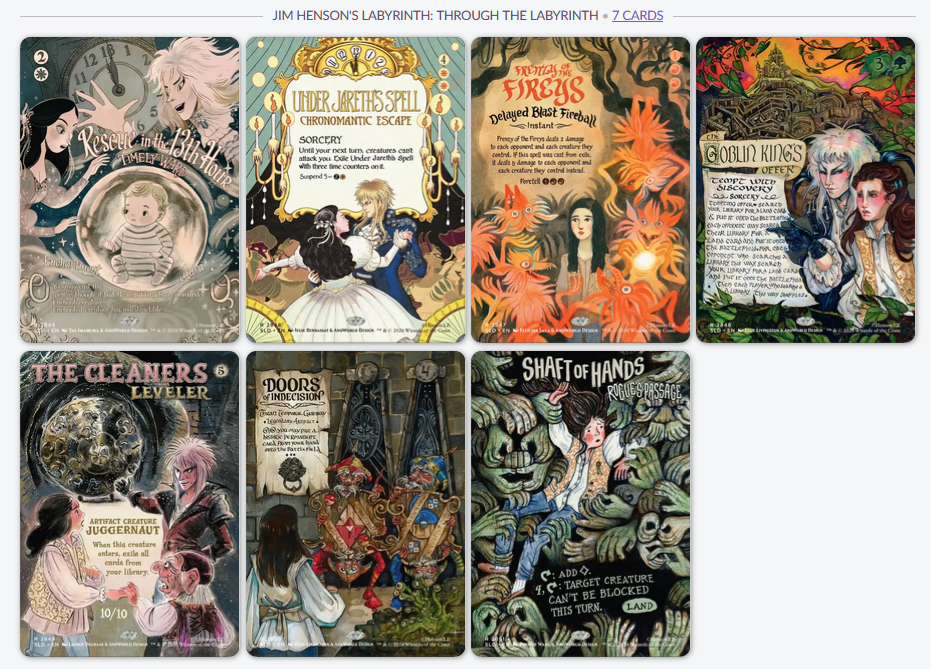
I want to be careful here, because Labyrinth was a film I liked a lot as a kid. I’ve been super dismissive of other IPs that I didn’t like, and I don’t want my fondness for this one to push me where I wouldn’t otherwise go.
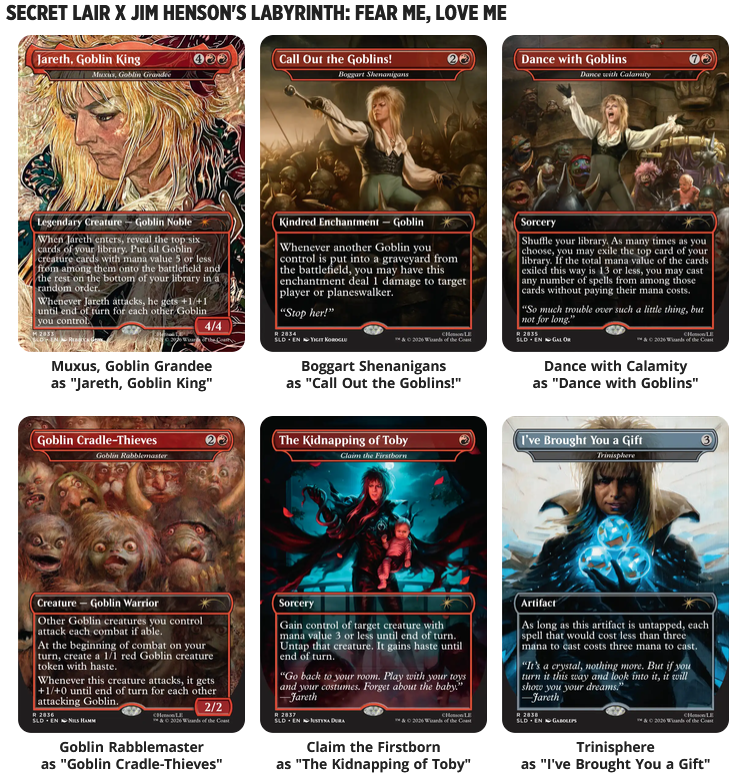
That said, this has a lot going for it. The special Muxus is Wizard of Barge, and matches the Goblinstorm deck perfectly, so that version went wild. Trinisphere is a time-honored play in combo decks, and is underplayed in Commander. We’re competing with the Fallout Boy version, not the Invention, and so this Lair sets a great tone with a Muxus and a Sphere that ought to mature nicely.
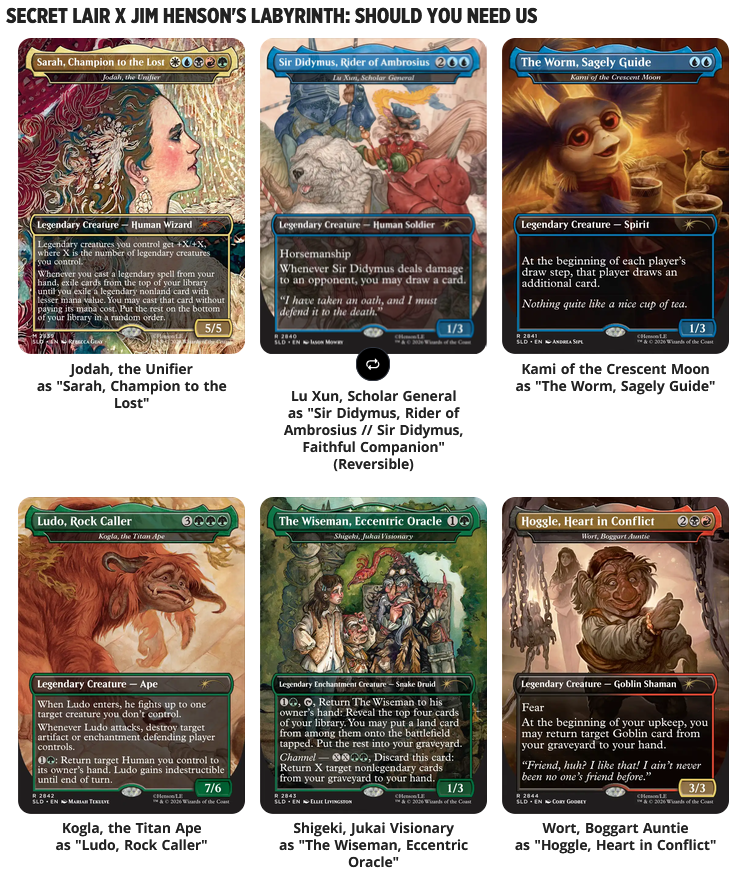
Jodah’s got a couple of sweet versions, from Spongebob to Showcase and an Amano Warrior of Light. Rebecca Guay was allowed to do the Jareth/Sarah pair, and I imagine this is phenomenal to look at, especially in foil.
Jodah decks can contain any amount of goodness, and I like all of these except for Wort. Wort has needed a new printing, and looks like a great Dump Week target for Goblin decks. Lu Xun is such a wonderful throwback to P3K, and being reversible is a sweet bonus. This drop should do well over time.
This drop is incredibly heavy on the reprint equity, giving several cards their first truly special version, and this sort of unique art tends to age well over time. The expensive Rogue’s Passage is from a subset of rare SLD drops five years ago, in addition to other borderless versions from the Hobbit drop and the Dwarf Fortress.
Tempt with Discovery is a fantastic Dump Week target, and if you’re not playing it in your favorite green deck, you’re missing out.
I like this drop a lot too, and I anticipate all three selling out in the morning of the drop.
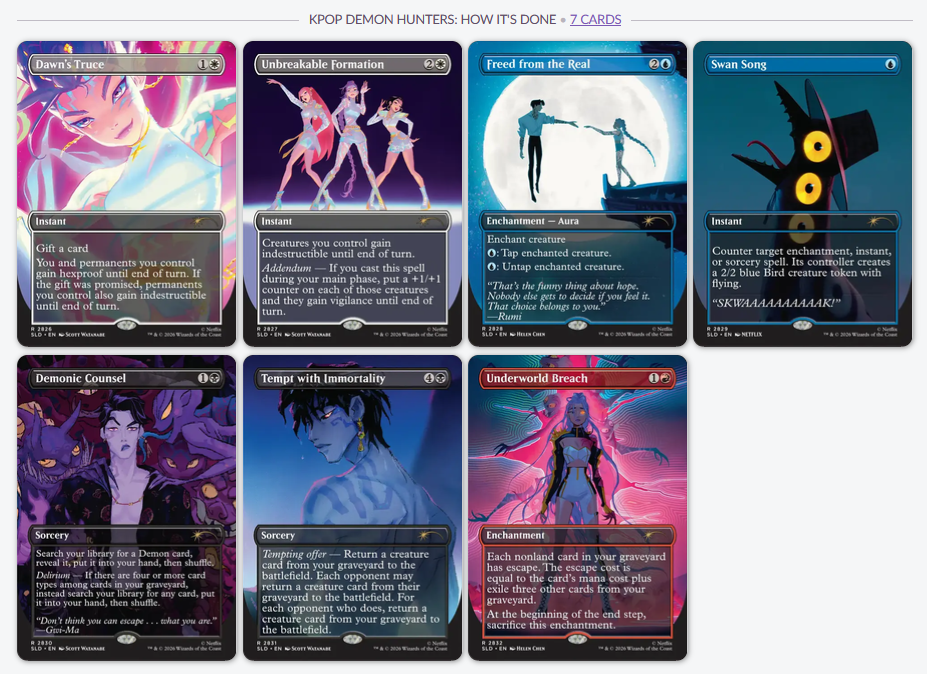
That’s right, the K-Pop Demon Hunters are finally on Magic cards, and they are starting with a banger. (How it’s done is the best song, by far!) The inclusion rates on these cards, except the last two, are the sort of thing I love to see.
This Tempt is bad, but Breach is a nice surprise. It’s banned in every Constructed format except for Vintage, it’s a Game Changer in Commander, and the price of the raised foil still hasn’t gotten to the $100 price of entry when it was on the site forever.
What’s most appealing about this set of cards is this quote from the press release: “The drop captures the award-winning film’s vibrant world and high-energy fandom, as fans discover the best way to seal the Honmoon. And this may not be the last appearance from HUNTR/X and the Saja Boys; they have a habit of showing up wherever the fans are… “
So my plan here is to buy a metric ton of this drop, and not sell any of it till we get to the finale. We don’t know how many drops, or how long it’ll take, but the Miku drops taught us patience. My personal favorite bit of speculation: We’re going to get a Lair for each of the biggest songs, so hold out till we get to ‘This Is What It Sounds Like’ or an official statement.
Card Name
EDHREC Count
Special Printings
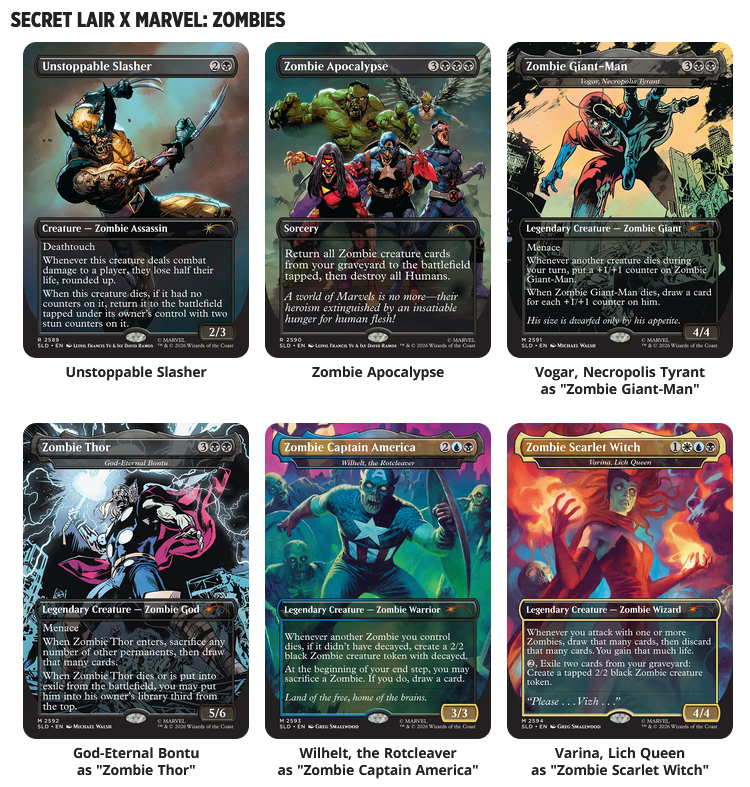
Unstoppable Slasher
104k decks
DSK Showcase $5 DSK Showcase Foil $7
Zombie Apocalypse
52.9k decks
SLD Borderless $8 SLD Borderless Foil $9
Vogar, Necropolis Tyrant
6.08k decks
No non-regular frame printing
God-Eternal Bontu
47k decks
SDCC 2019 Borderless $31
Wilhelt, the Rotcleaver
37.2k decks
MIC Extended Art $16 SLD Borderless $19 SLD Borderless Foil $24 SLD Retro Frame Foil $118
Marvel Zombies is one of the best-looking drops ever. I already have a Varina deck, and I’m playing all of these but Vogar. I wanted this to be Rot Hulk, but Hulk is too much of a name break for that to happen. Zombies are a top tribe, and with excellent Commanders to choose from, these all ought to do very well over time. Buy lots of this drop.
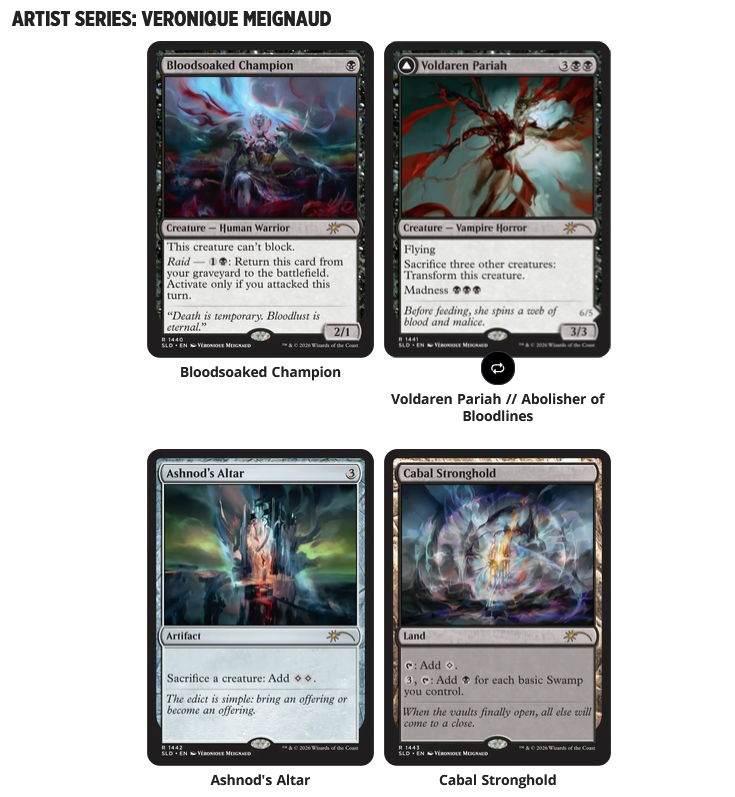
*getting on my soapbox* I thought we were done with the boring-frame Secret Lairs! We had Ian Miller, whose Artist Series was borderless with translucent text boxes. Kieran Yanner had a BANGER of an Artist Series. We haven’t had this lameness since Phil Foglio in Summer 2025! This art deserves to be given more space to work with, these flowing looks need more emphasis! Ugh.
My expectation is that this is the lowest print run, and lowest interest of the Lairs on the board this time. Stronghold is good but not great, Altar has a couple printings, and if no one buys it then this might get pricey but the outlook isn’t good.
My guess is that the Mirrodinsanity drop has such a low buy rate, being as old as it is, that people have been scraping and saving to get their copies. Now it’s time to get in quantity and I have a deep suspicion that this sells out very quickly indeed. These look super cool, and will play super cool, and have lots of room to grow under their predecessor. You’ll be glad you bought in here.
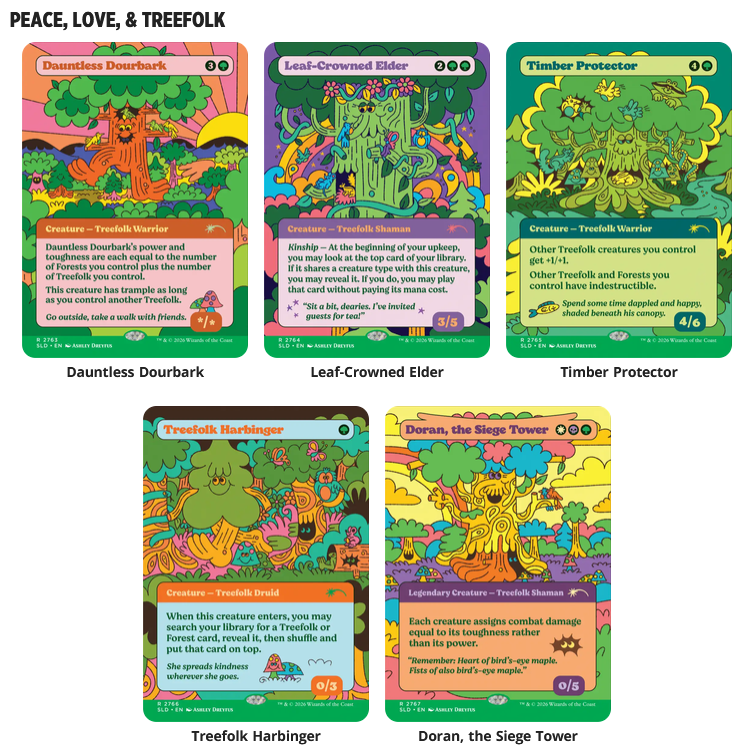
Another staple of Secret Lair is a drop that gives a good commander and several of its best inclusions. Here’s Doran, the big-butt-brigade commander for Abzan. Leaves out blue, but gains black as opposed to Arcades in Bant. These are all cards you should play if you have a Doran deck, and while the art is a little silly, it’s still very enjoyable and plays well together. This won’t have huge growth right away, but something will happen to make it pop eventually.
We’ve got bundles but don’t get your hopes up: The all-foils is $0 off, as is nonfoil. Everything bundle is a mere $20 off. I won’t be bothering.
Maze of Ith at $199 of purchases is nice, but that will struggle to stay a $10 card.
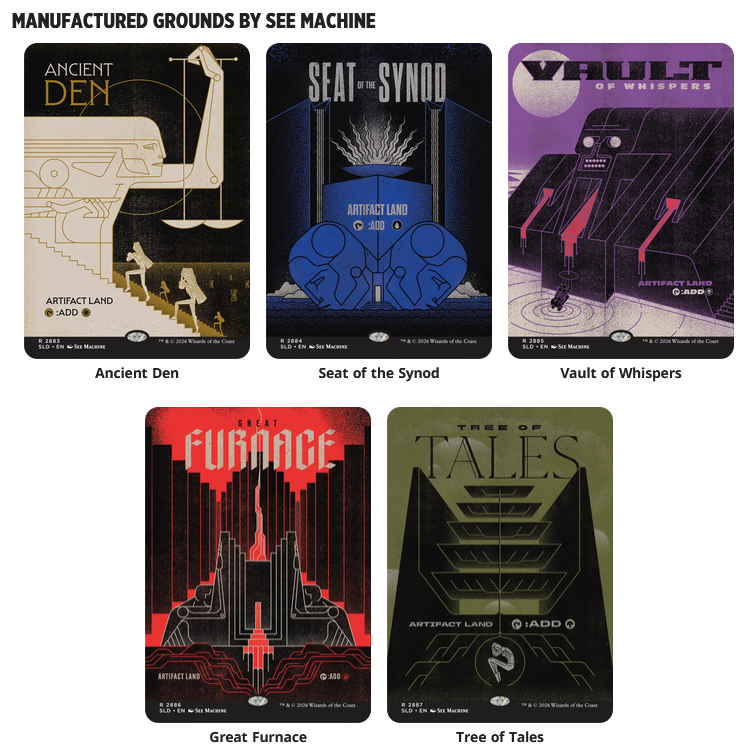
So overall, I want to buy all of the Labyrinth lairs, K-Pop Demon Hunters, Artifact Lands, and Marvel Zombies. I’m less enthused on the Treefolk and I’m just down on poor Veronique Meignaud’s Artist Series. It’s pretty rare for me to want to get six of eight drops.
If you want to talk about the cards, or the choices, please reach out on social media or the ProTrader Discord, and good luck in the queue!
Cliff (@WordOfCommander at Twitter and BlueSky) has been writing for MTGPrice since 2013, and is an eager Commander player, Draft enthusiast, and Cube fanatic. A high school science teacher by day, he’s also the co-host of the MTG Fast Finance podcast. If you’re ever at an event and you see a giant flashing ‘CUBE DRAFT’ sign, go over, say hi, and be ready to draft.
Here we are, for the sixth time this year, figuring out how many packs you need to open in order to get the exact card you want.
Lucky for you, I happen to have that information, no matter the card. Want a nonfoil Sculptor’s Stronghold rare? Done. Interested in Fracture Foils? Gotcha covered.
Even, dare I admit it, the highly-desired Facet Foils and the Headliner.
So let’s go on a journey to the center of the math, and get to the best stuff!
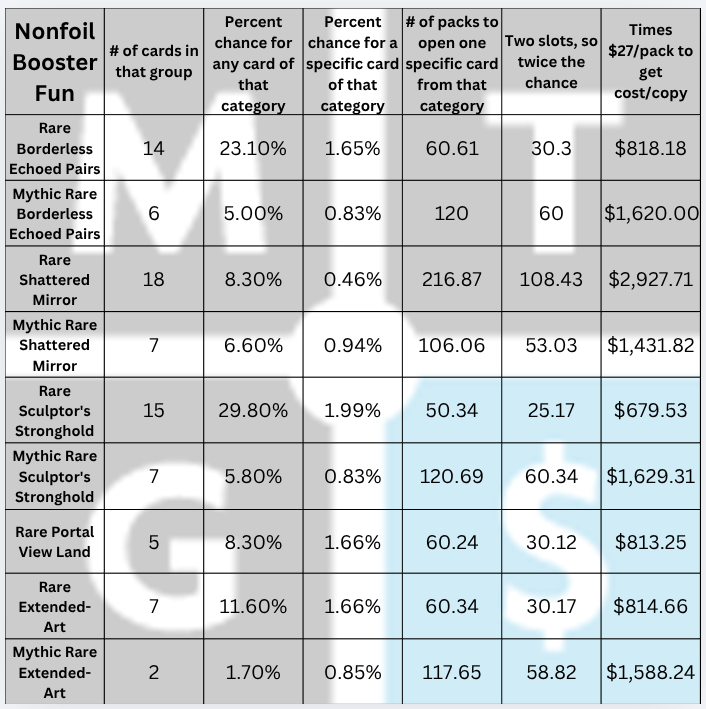
There’s three slots that we’re most interested in: Two Booster Fun nonfoils, for double the chances, and the big-money, many-whammy slot with all the foil versions.
First, the two nonfoil slots, combined for ease of calculations:
I have to admit, I keep track of the toughest pulls per set on a spreadsheet, but I don’t have a separate category for the easiest. Needing 25 packs to get a specific special-frame rare is quite low. There’s going to be a LOT of some of these, and will likely represent some excellent spec opportunities once they hit bottom.
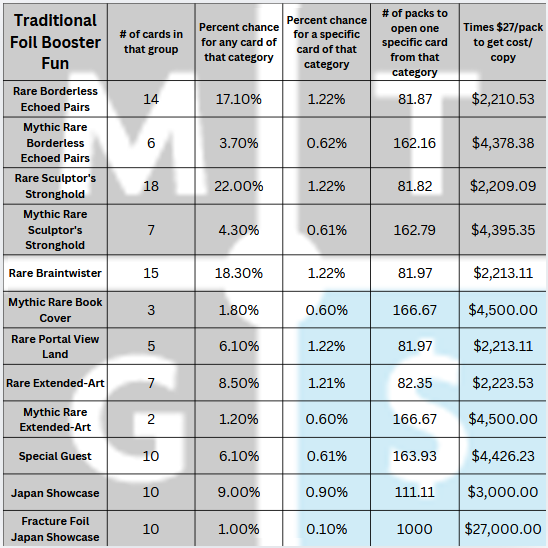
Now, let’s review the drop rates for most of the foils!
Aside from the Fracture Foils, this is looking like a set where things are pretty easy to open. None of these frames/arts are super-difficult to pull, and so prices ought to stay reasonable. However, this set isn’t Duskmourn. We’ve got categories to go, above and beyond the Fracture Foils.
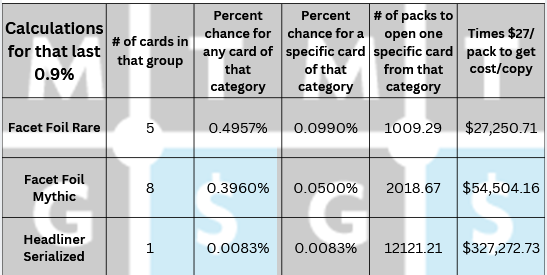
Now let’s get into the realm where I start estimating, based on profits, likely percentages, and other circumstantial data in order to get an approximation of how difficult something is to open. Just to review, for the Facet Foils and the Headliner, here’s what Wizards’ official post says:
A facet foil rare (less than 1%) or mythic rare (less than 1%) shattered mirror card
There are approximately 6,000 copies of each rare facet foil shattered mirror card available.
There are approximately 3,000 copies of each mythic rare facet foil shattered mirror card available.
Facet foil shattered mirror cards can appear in Collector Boosters of any language, but the cards will always be in English.
A serialized double rainbow foil Bloodline Recollector appears in less than 1% of Collector Boosters.
There are 500 serialized versions of Bloodline Recollector that can appear in Collector Boosters of any language. The card will always be in English.
The facet foils plus the headliners is 54,500 cards. If that’s 0.9% of all Collector Booster packs, then we can apply a little algebra to figure out what each of those is in relation to each other. I’ll spare you the specifics here, but I worked out what the drop rate is for each of the three categories:
It’s awfully nice to get an exact number for hunting the serialized cards, but from this, we also get an overall print run of 6,050,500 Collector Booster packs, which from here on I’m going to round down to six million.
I want to take a beat and talk in detail here about this number. First, it’s true that I’m operating off of an assumption that Wizards’ numbers are spot on. This is data that they are required to list, and while the laws governing this area are a bit murkier than digital loot boxes/gacha games, physical packs need to have posted information about what could be inside. Wizards doesn’t make it easy, either, because they give the rundown based on rarity without saying in the same line how many of each rarity there are. (They like to bounce around the article, crafty buggers that they are.)
The last time we had explicit data was the two original Lord of the Rings sets in 2023. We were given precise numbers for the serialized cards, and as a result, we know for certain what those Collector Booster print runs were: 3.3 million for the main set in the summer, and 1.5 million for the special holiday edition. Since then, we’ve never gotten clear data that allowed us to get to the same conclusions.
This is pretty close, honestly. It’s possible that Wizards did some rounding before publishing, so perhaps we need a range of values. If these categories added up to exactly 1%, the print run is 5.4 million CB packs, which would be a pretty impressive increase over the 3.3 million three years ago. If it is rounded from 0.5%, then it’s 10.9 million, a number that feels pretty ridiculous.
We feel that the 0.9% and the 6 million CBs are probably very accurate. Someone at Wizards has the exact numbers, and looked at their spreadsheet, then put together the Collecting article and didn’t think it would be a big deal to leave this gap.
Having the specifics is going to be its own other article, but this six million number really plays into a lot of things. Most relevantly, the serialized Bloodline Recollector every 12,000 packs is pretty close to the drop rate of the xxx/300 Elven Sol Rings in the first LOTR release, if you want a comparison for how often it’ll be found. Facet foils look like very difficult pulls, with the rares being in the range of the Neon Ink foils from Avatar and the mythics being slightly harder to pull than the different colors of Traveling Chocobo from Final Fantasy.
If you like to compare in-set, then the rare Facet Foils are equivalent to the Fracture Foils, and the mythics are twice as tough to pull.
I also have to point out that this set has some of the best drop rates, for everything but the Fracture Foils, Facets, and Headliner. Nothing else has a drop rate higher than 1/167 packs, as compared to the Dwarven-language foils at 1/333 packs or the 1/250 or more for many of the chase MSH cards.
As a result, I think these packs will be even more swingy than most CBs. If you hit on a Facet foil or a Fracture Foil, you’re way ahead but everything else will be pretty low in price. I always advocate that Collector Booster packs are for reselling, not opening, and that’s never been more true than now.
So go forth with this data, make good decisions, and I hope your luck runs as hot as possible.
Cliff (@WordOfCommander at Twitter and BlueSky) has been writing for MTGPrice since 2013, and is an eager Commander player, Draft enthusiast, and Cube fanatic. A high school science teacher by day, he’s also the co-host of the MTG Fast Finance podcast. If you’re ever at an event and you see a giant flashing ‘CUBE DRAFT’ sign, go over, say hi, and be ready to draft.
MAGIC: THE GATHERING FINANCE ARTICLES AND COMMUNITY
 ProTrader: Magic doesn’t have to be expensive.