Is Worth It?

By: Travis Allen
@wizardbumpin


Don’t miss this week’s installment of the MTG Fast Finance podcast, an on-topic, no-nonsense tour through the week’s most important changes in the Magic economy. And watch this YouTube channel to keep up to date with Cartel Aristocrats, a fun and informative webcast with several other finance personalities!


My girlfriend just paid her car off in full last month. It’s up towards 80,000 miles and she’s wondering if she should keep driving it for awhile or buy a new one. We were discussing it the other day and she relayed a story of having told a coworker her dilemma. She really likes the Prius and has been considering that car specifically. “He said that I would save the most money by continuing to drive my current car for awhile, but I really like the new Prius. I could keep driving my old boring car, or take on a monthly payment again for a car I really want. I guess it would be kind of a luxury, right? Do you think it’s worth it?”


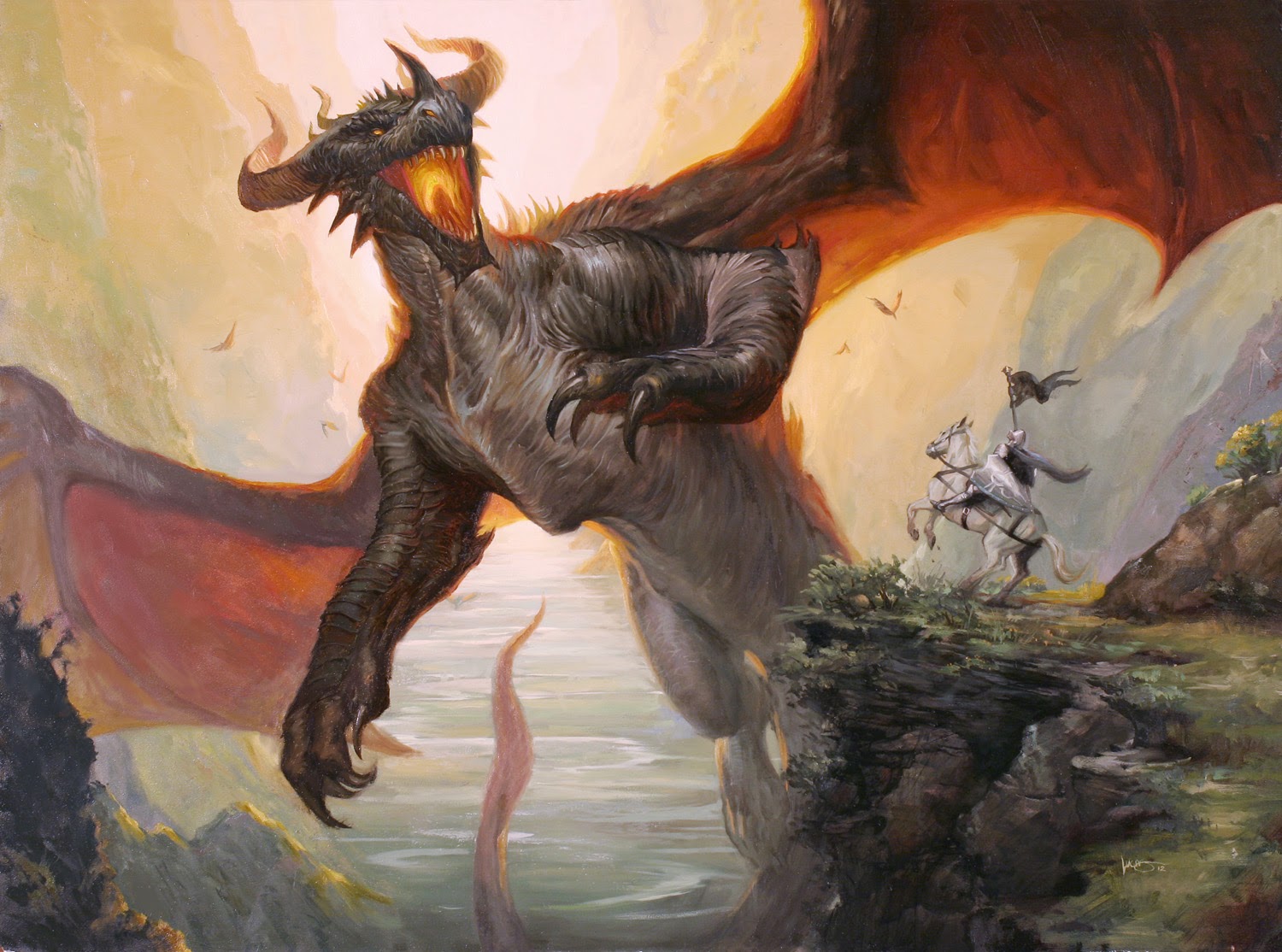
It’s in between rounds at FNM and you’ve got your binder set out in front of you; a hook with which to fish. A young girl, maybe nine years old stops by. She folds her knees underneath her on the chair as she flips page over page. Her mom is sitting at a table on the edge of a room engaged in a Kindle. The little girl stops at a page of red cards, spotting Utvara Hellkite. Her eyes grow wide. She’s giddy. She’s heard about this dragon but has never actually seen the card in real life. “OH MY GOD you have that cool dragon that makes more dragons! That is soooo coool. Will you please trade it to me?” She thrusts an unsleeved pile of cards at you. Amongst the tattered edges of a motley assortment of boosters you spot a fresh Temple of Enlightenment, setting it down on the edge of your binder. “I just opened that earlier. I don’t like blue or white. Those colors are boring. I like dragons.” She’s visibly excited. “Do you think maybe I could give you the land and some other cards for the Hellkite?”

You’ve been that little girl before. Memories of an age of Magic long lost to you shimmer like a heat wave somewhere in the back of your mind. You have a flashback of peers in third grade in awe of Sengir Vampire. It was terrifying. Only one boy in school had it and he never lost a game where he cast it. Everyone coveted it. The thirst to own Sengir yourself is nearly palpable once again. You envy the girl, in a way. She covets this card with a passion you haven’t experienced in years.

The girl’s mother has wandered over. You introduce yourself and tell her that the young woman across from you would like to trade her card for your card, but that her daughter’s card is worth several dollars more than yours is. The mother looks at her daughter, youthful unbridled excitement plainly visible across her face. “I don’t know Sarah. He says your card is more valuable.” “I don’t care. The dragon is so cool. Greg is going to be amazed I have it. Please let me trade it? It’s so worth it!”

******************************************************************************

What is the value of a scooped game? How much is a round one concession worth at FNM? How much is that same act of concession worth to you in the last round of the final GP of the season where you just need a few more planeswalker points to lock up your second bye for the entire next year? How about a concession in the finals of a PTQ?

******************************************************************************

At a Legacy tournament a few years ago, Alex Bertoncini had registered Manriki-Gusari in his sideboard as tech against other Stoneforge decks. This was during the days of three-round byes at SCG events, so Alex used the time to put together his deck. It was common for players to register decklists they didn’t have all the cards for yet. (This still happens today.) He discovered that not a single vendor on site had a copy of the card available. He began asking players on the floor if they had a copy. He eventually managed to find someone that had the card in his binder. “Great,” Alex said. “It’s in my sideboard for the Legacy open and I’ll get a game loss  and lose a sideboard slot without it. What do you want for it?” The player smiled. The card cost maybe $1 on TCG at the time. “Twenty-five dollars.” Alex paid. Was it worth it?

******************************************************************************

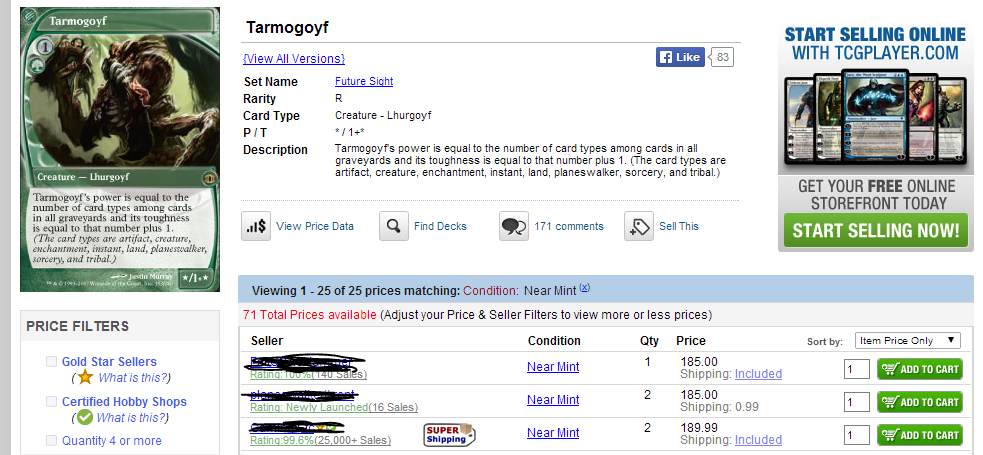
I’m known at my local store as a finance guy, and subsequently get asked how much cards cost frequently. “Travis, how much is Courser worth?” I’m never quite sure how to answer this question. Worth is a funny concept. We’re so used to bandying the term around, but what does it really mean? When I’m asked “how much is Tarmogoyf worth now” what am I supposed to draw upon to answer that? Take a look at the price of Tarmogoyf on Starcity and TCGPlayer.

Capture

Capture1

The exact same card, exact same condition, is $200 at SCG and $185 on TCG. The question remains: it worth $200 or $185? Sitting in front of your computer right now, knowing that the card is available for those two prices, what is the right answer? One could argue that SCG’s higher price reflects their customer service, reliability, and all the other intangibles. But does that affect the actual value of the card? If you’re talking about trading for a Tarmogoyf at a local Modern event should SCG’s additional services dictate that you throw another Courser of Kruphix into the pile?

Why does a Modern Masters Tarmogoyf cost over $165 while a Swordwise Centaur is left behind on card tables worldwide without a single thought given to keeping it? They’re the same quality of cardboard. If you manage to wring all the ink out of the cards you’ll find that neither uses appreciably more. The actual physical presence of the cards, disconnected from whatever demand Magic players place on them, is essentially identical. Without people to place different amounts of external demand on the cards they are worth the same. To say a Tarmogoyf is worth $200 while a Swordwise Centaur is worth $.02 means that there is much more to worth than the physical components. This seems obvious enough, but it has implications that we don’t always appreciate.

Take the young girl from the example above. She wants that Hellkite something fierce. The card represents something that many of us find incredibly difficult to experience after so much time invested in the game. Money means little to her. Cards are valued based on how easily they kill the opponent and how many kids in her grade own a copy. Utvara Hellkite is a card spoken of as a legend amongst her peers. She would immediately have the best deck of all her friends were she to acquire the dragon. The Temple of Enlightenment is essentially valueless. She will never use it. It will collect dust, the edges exposed to wear as it is jostled around in shoeboxes and backpacks. Eventually it will be thrown out when she moves on from the game and her father is cleaning out the attic. To her the dragon is easily worth more than the land. The dragon represents all that is exciting about Magic. But the Temple? What does she care? In her eyes the answer is crystal clear: The dragon is worth far more than the land.

The reason why an object’s worth is so difficult to pinpoint is that it is entirely contextual. If you’re just doing some light trading at an FNM, a Scalding Tarn is probably ‘worth’ the $80 MTGPrice says it is. When it’s early Saturday morning fifteen minutes before the PTQ starts and you still need one for your deck, I bet it’s ‘worth’ more than just the $80 to you. You’d trade $85, $90, maybe even $100 or more for it if it’s necessary for your deck. I remember paying $2 apiece on Might of Old Krosa’s at GP Chicago last year when they were $.40 on TCG because even though I was paying five times what I would online, in that moment they were easily worth the markup because without them I couldn’t play Magic.

Value is found in all of this by identifying what worth means to others. Aside from the most veteran traders, most of us have cards in mind that are worth more than their sticker price indicates. It’s a card we really need to finish foiling an EDH deck or it’s the last dual to finish a playset for an in-the-works Legacy deck. Whatever it is, when we find it we’re often willing to give up more than retail because having the card in our possession is worth more than the markup we pay to acquire it.

Worth is more than the dollar value assigned to a card by any given retailer. Worth includes the time, the day, the location, the temporal necessity, the experience, the story. Understanding in what ways worth is transient and nuanced will help you make better trades and purchases.

Humility is $17.11 on MTGPrice right now. Courser of Kruphix is $16.30. Which card is worth more? Which would you rather have in your binder on Friday at 5:45pm?

Bulking to Buy Lists

By: Jared Yost

I’ve heard others ask me from time to time “What is the best way for me to get rid of all these extra basic lands, commons, and uncommons that I never use!?” Bulking them out to a store that isn’t in driving distance may not occur to them. Believe it or not, there are several ways that you can bulk out pretty much any extra card you might have and still wind up with some value at the end of the transaction. It will require a ton of work on your part, in addition to the massive shipping fees you will incur if you are unable to do this without a local store to get rid of bulk, however it is a way to get rid of your dregs without having to worry that no one is going to buy it.

Many times, players who try to sell their extra cards in bulk to stores will either not be able to sell it or receive an abysmally low offer that barely factors in the time and gas they put into taking the cards to the store. Selling them online is another avenue you can pursue if your local venues for selling bulk are either nonexistent or do not seem appealing. Let me show you some of the prices various buy lists I’ve researched offer.

CoolStuffInc.com 

(Click Magic, then Bulk Magic)

We’re making razor thin margins selling cards to buy lists in the first place, so it is a good thing that CoolStuffInc offers us several ways of organizing our collection so that we can get a little more money for having piles of cards that fit certain criteria that they are looking for. By doing this, they give us an incentive to help better target cards for their store and also reward us by giving a dollar or few cents more per bundle than we otherwise would have gotten if we just bulked them all together into one generic package.

For example, if I had 200 bulk rares from Tempest and Urza’s block I could separate those out and receive $24 for those by themselves. If I just sent in 400 rares without doing this, I would have received only $40 instead of $44. If you’re in the habit of moving large collections a lot then this is a lot of money that is left on the table for something that doesn’t really take all that much time to sort. That extra $4 pays for a good portion of you shipping those cards to CoolStuffInc.

Overall, I like this bulk buy list. If you have experience using it feel free to leave a comment and let me know what was your experience was selling bulk to CoolStuffInc.

ABU Games

Compared to CoolStuffInc, ABU Games doesn’t have a lot of options. This doesn’t mean that it is necessarily bad to buy list at ABU. They do offer 25% trade in value for items in their buy list compared to the normal 20% trade in credit for CoolStuffInc (however, this month CoolStuffInc has a special where they are offering 25% trade in credit).

Since ABU is such a large store they have the option of listing out all the non-foil commons and uncommons they want and just buying those up on an individual basis rather than picking through bulk. The rest they can receive through the sheer amount of product they are opening on a daily basis. I would only recommend using this buy list if there is something you want to purchase at ABU that you can use the trade in value.

One thing I do like about this buy list is that they are buying played cards in bulk. This way you don’t have to worry about not being able to sell cards that aren’t NM if you decide to sell bulk to ABU.

Troll and Toad

I like that Troll and Toad buy common / uncommon mixes by the card rather than per thousand. This way, if I just have a random box of stuff I want to sell them I just have to count up my cards and not worry about sorting them into thousand card piles. It may appear to be a rip-off since they are listing cards at less than one cent each. However, that still gives us $2.50 per thousand with a 25% trade in bonus. Not bad if you have been eyeing something for sale on Troll and Toad and want to make your useless cards help pay for it.

One item to note is that T&T is paying $0.60 per bulk mythic and $1.05 per bulk mythic rare, which is really high compared to most other shops on this list. The other side to this coin is that they only pay $0.07 per rare, which is lower than most vendors would give.

ChannelFireball

Simliar to ABU, ChannelFireball has a lot of stock so they aren’t in the market to pick up commons and uncommons as much as the other stores. They do buy bulk commons and uncommons but for only $1.30 per thousand which is much lower than we’ve seen with other buy lists. Also, they don’t offer their legendary 30% trade in discount to bulk which is disappointing.

Generally, their bulk buy list isn’t anything special. Most prices are the same or worse than other buy lists mentioned so far.

Armadagames

Armadagames has below average bulk prices compared to the other stores I’ve mentioned. No discount that I saw. Not worth it here unless you live close enough to drive to them and drop the cards off yourself. This way, the amount you save in shipping might be worth selling to them lower than you get at another website.

Oasis Games

Oasis offer a pretty decent price for bulk commons and uncommons if you have a lot of them to get rid of with a 15% store credit. The rest of the numbers unfortunately are lacking compared to other vendors.

Millennium Games

Below most other vendors listed with no discount for bulk. Not really a buy list I want to go to but still available if you are within driving distance to where of their physical location.

CCGhouse

CCGHouse buys really old cards at very high bulk prices. Who knew $20 was bulk? Pretty awesome if you’ve got a lot of Alpha rares around just waiting buy listed…

For the rest of us mere mortals who don’t have a ton of Alpha rares, there are other options. Bulk Foil basic lands are $0.10 each which is pretty high. They actually specifically list Time Shifted purple cards as bulk too, in case you happen to have a lot of those.

Their only downside is you don’t get store credit for selling to their buy list. Still, I really like that they break out their buy list so much just like CoolStuffInc. This makes it so that you have opportunity to get value out of organizing your collection.

Hotsauce

Similar to CCGHouse, Hotsauce buys foil basic lands at $0.10 each which is fairly high for that category. Unfortunately, their other categories for bulk are either the same or lower than other vendors.

How to Ship

This article that I found on Quietspeculation.com, though four years old at this point (for example a medium flat rate box is now $12.35 to ship), still provides us with valuable information about how much 1,000 Magic cards weighs and has excellent estimated costs for shipping a collection. I highly recommend that you read this article if you are going to be bulking out 1,000’s of cards at a time to some of the vendors I mentioned above. If you do, you will find the best way to maximize your profit by cutting down on your shipping costs.

Way of the Bulk

Each vendor seems to take their own approach to how their buy list is organized. Vendors like Hotsauce and Millennium Games offer simplicity to out your bulk while websites like CoolStuffInc and CCGHouse are much more in-depth about what they are looking for and are willing to pay you to search through and organize your collection by finding very specific items for you to sell to them. 

Would I recommend this approach over going to a Grand Prix or other large tournament in your area and walking around to each vendor to get the best quote? Yes and no.

I would say yes to this if you have a ton of cards that you know are bad and fit the criteria that falls into each of these buy lists. You know that when you take this box to a dealer at a GP or other large tournament, it is almost guaranteed that they will take a look at the first 100 cards in your box and go “Uh, no thanks.”

The pitfall to this is that your shipping costs are really going to eat at your profit margins when bulking to websites. Though riskier, at least you have a chance of outing your bulk without paying for shipping if you go to a large tournament and try to pass it off to a dealer. You’re still paying for gas and using your time in this case. Yet, time is something you’ll use anyways trying to sort your bulk according to the various ways that the online vendors want them arranged.

What do you guys do when you bulk out cards that you’ll never play with? Have you been using these online sources or doing it mostly in person? What in your experience has been more profitable?

The Foil Gap

By: Cliff Daigle

For many people, there’s no point or value in dealing with foils. They are just shiny versions of a card that is needed for a deck. If you don’t care, though, you’re missing out on a financial opportunity, especially for the casual markets.

Interestingly, foils were introduced before Cubing was invented, and before EDH was formalized…and those formats have really driven foil prices up.

Because two of the major casual formats require only one of a given card, the thinking is that you might as well make it foil. Foiling out a deck or a Cube is an undertaking, a project that people feel passionate about. Combine those factors, add a touch of collector fever, and you get casual cards that are FAR more valuable in foil than regular.

There is another factor at play when it comes to acquiring foils as long-term investments: reprints. The only time that foils were done in large amounts was the Premium Deck Series, and the all-foil Alara packs, ideas that won’t be used again. This means that reprints will either be nonfoil, judge foils, or in new art when they are put into boosters again.

Your investment in foils will be rather safe…and might go up a lot!

kjh

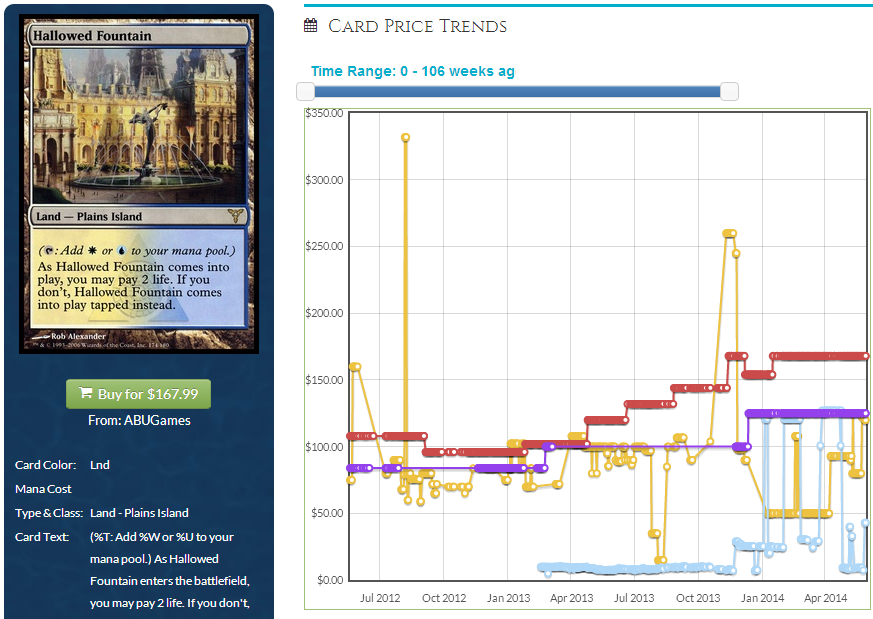
The Fountain was ticking upwards despite being in Return to Ravnica, because the original set foil was that much rarer.

Even Modern Masters hasn’t made a dent in most foils.

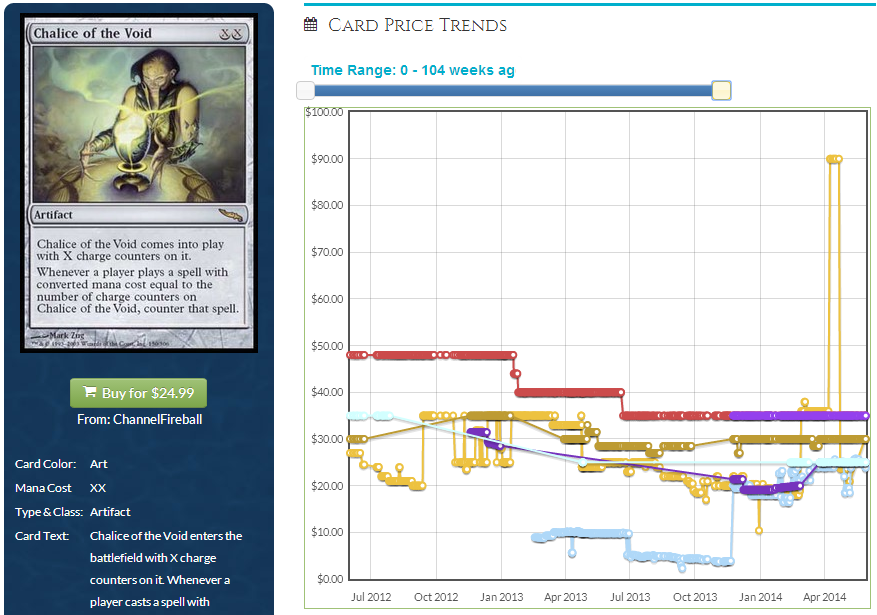
cotv

This is notable because the original set foil has the same art and the same wording…but costs twice as much just for a different set symbol! That’s the power of being a collector.

Generally, the foil to non-foil multiplier is two to three times the price. If a card is $1, the foil should be around $2-$3. Mythics may or may not have a bigger gap. The more formats a card is played in, especially Eternal ones like Legacy, Vintage, or Modern, the more the gap will be due to players wanting to pimp out their decks.

Let’s take a look at one of the biggest gaps in recent years: Abrupt Decay.

The regular one is about $13 right now, while the foil has a value of $90. Ninety dollars. You could have bought this for $30 for more than a year after its debut. I know for a fact that multiple people were trumpeting Decay as a foil spec and now the ship has sailed. This high gap is because of the eternal playability of the card, because it’s nearly universal and dodges all the counterspells that are played in such formats.

Today, I want to go through some cards that have a larger or smaller gap, and explore if that is going to get better or worse over time.

Shocklands ($10-15/$30-50) – Considering that these got a little bit of a bump in nonfoil, thanks to Dragon’s Maze and some Event Decks, the price on foil shocks has not gone up significantly…yet. These are a very good candidate to start an upward trajectory. Not a huge spike, but a gradual increase as they are put into Cubes/Commander decks and kept there, lowering the supply. I’ve been trying like hell to trade for these before they go any higher.

Boros Charm ($3/$10) – The gap is normal, but the use isn’t. This sees a lot of Modern play as a two-mana, four-damage Burn spell. It’s also amazing in casual formats for saving everything of yours from sweepers. I’ve got a spare foil playset in addition to three foils in different decks, and I’m happy with this potential.

Chromatic Lantern ($4/$24) – SHHHHH! Not everyone is aware that this is such a sought-after foil. It’s only the best fixer ever, and colorless, and an accelerator. I’d be on board with picking this up now, as there’s a good chance it clears $30 before the end of summer.

Thalia, Guardian of Thraben ($7/$41) – This little lady sees play all over the place. She’s not an EDH fixture, but there are hatebear decks all over Eternal and this is one of the best, making Brainstorm a 1U spell and adding mana to the ‘free’ cost of Force of Will. This is another that’s only going to go up, because as a small set between two large ones, there’s a rather short supply of her in foil.

Thespian’s Stage ($1.50/$14) – Look at the price difference between the foil and the regular. Nine times the price gets my attention. That’s a sign of strong casual appeal. If you only need one of a card (for an EDH deck or a Cube) then you might as well make it foil. I do not expect this to go much lower, because all of its appeal is casual. Only cards with high prices due to Standard are going to crater at rotation.

Gray Merchant of Asphodel ($.50/$4.50) – Your eyes do not play tricks; that is indeed a $4 foil common. Zombies are one of the most popular casual tribes out there, and this guy is amazing. What makes this stand out just a little more is that Zombies and black decks are very good at mass reanimation, especially in EDH. If the Merchant comes back at the same time as three or four other Zombies, the devotion will be good for seven or so. I’ve drained an EDH game for fifteen each, and it was worth being targeted for the rest of the game. The foil is $4 now, but it’ll creep up over time.

I’m going to leave you with a set of speculations that are rather safe, and have big-time potential. Foil Onslaught fetchlands. If these ever get put into Standard, that makes them Modern legal as well. The old frame will command a premium, and foils of that doubly so. I know there are judge foils out there, and those are spicy too if you don’t want to shell out $400+ for a foil Polluted Delta. The supply on these is very small, and there are already Legacy decks shelling out for these. Even if they never make it into Modern, they are going to be a safe place to stash value for a while.

Join me next week when I cover what you should be going after in Conspiracy!

Magic Online Sucks and You Should Care

By: Camden Clark

I recently booted up a game called Hearthstone.

You may have heard of it like I have. There are thousands and thousands playing this game as we speak. It is made by Blizzard and features similar mechanics and a lot of shared cards with the discontinued World of Warcraft trading card game. However, it is entirely online.

Hearthstone is well designed. It features a well thought out tutorial and a brilliant user interface that is flashy and intuitive. It took me only a few minutes to figure out how to do virtually everything in the game. The crafting interface makes up for a lack of trading and is extremely innovative. “The Arena” is similar to drafting in Magic Online except that you can stop and start in between games and picks and the drafting is single player.

People are flocking to this game in droves. Streams have went from a few hundred viewers to competing with League of Legends. This is astonishing growth for any game and shows how well designed this game really is. Even many Magic Online streamers have moved to Hearthstone.

Magic Online is, by contrast, poorly designed. It never really occurred to me how broken Magic Online really is until playing a better game. The sheer apathy towards improving Magic Online is insulting to everyone who pumps insane amounts of money into the system.

What exactly is wrong with Magic Online?

Event Cancellations

If Magic Online is so broken that their premier tournaments, the Magic Online Championship Series, and the Pro Tour Qualifiers are being cancelled, something is seriously wrong. Many professional players use Magic Online as a platform to play PTQs if there is not one locally. Aspiring players who live in more rural areas may not have an opportunity to play Magic Online.

Read the full announcement here: http://www.wizards.com/Magic/Magazine/Article.aspx?x=mtg/daily/other/03112014/ptqannouncement

One comic line from the release follows:

“our high standard of fidelity”

If you have played Magic Online, you’ve experienced the irony of WOTC’s official jargon. If you have not booted up Magic Online you cannot even fathom the joke that WOTC maintains a “high standard of fidelity” for Magic Online but I hope I can give you even an idea of what long time players have experienced.

Not User Friendly

Imagine you are new to Magic Online. You want to play standard. You boot up Magic Online and sign in.

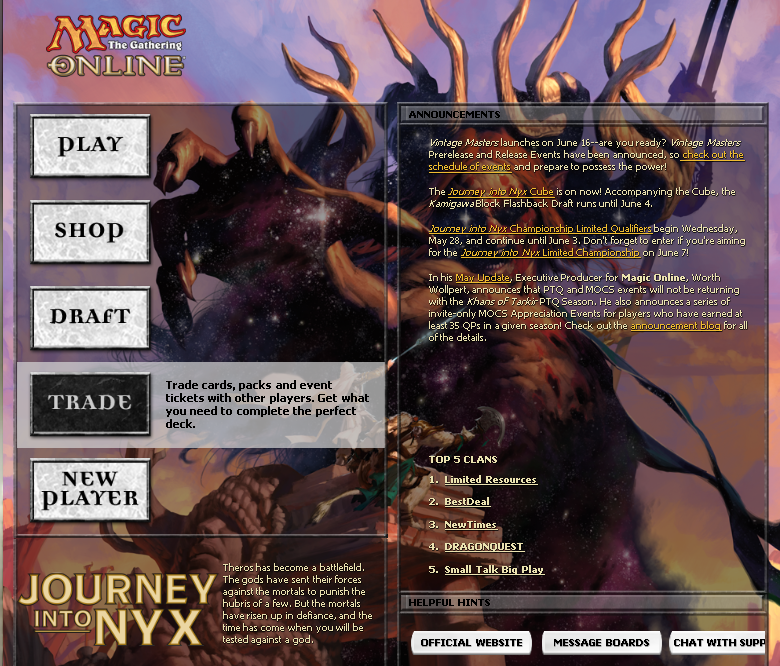
f5bdf22abc7f6fd4d7c8f23853406227

This is what you see when you first log in. You say, “oh, I need to trade for the cards… what do I trade them for? Money?” Eventually, after much googling and asking random people, you realize you have to use the currency of event tickets to purchase cards. Thus, you buy event tickets. Now you are ready to trade with all the other real live human beings on Magic On–

a940219e6fa0fda0f032734e539775b3

-what?

What is this bull? I guess there are bots to get the cards you need but how would you know that? How do I know if I’m not getting ripped off? Are there standard card prices? Can I have a fraction of an event ticket or will the bot store the credit for me? What if the bot runs off with my credit? Do I have to keep credit on a bunch of different bots just to get the cards I need? Can I trade with real people? Are there real people who want to trade with me like in real life?

These are all obvious questions that you would have to ask if you were playing on Magic Online. The only good answers are ones provided by third parties. WOTC, despite incentivizing the use of bots due to the broken and unhelpful trade system, fail to address the obvious issues that a new player would face. They sidestep them and pretend like they don’t exist.

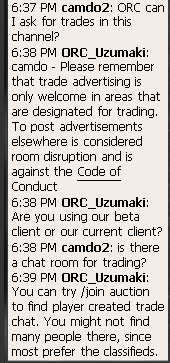
For example, look at this conversation between me and one of the WOTC employees on Magic Online:

3c3d023150575a842f4da05b7244ff19

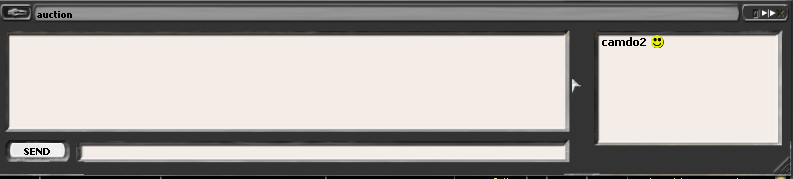
As told, I go to the auction chatroom

4fbe746ad9d5f8292855be399d77ee15

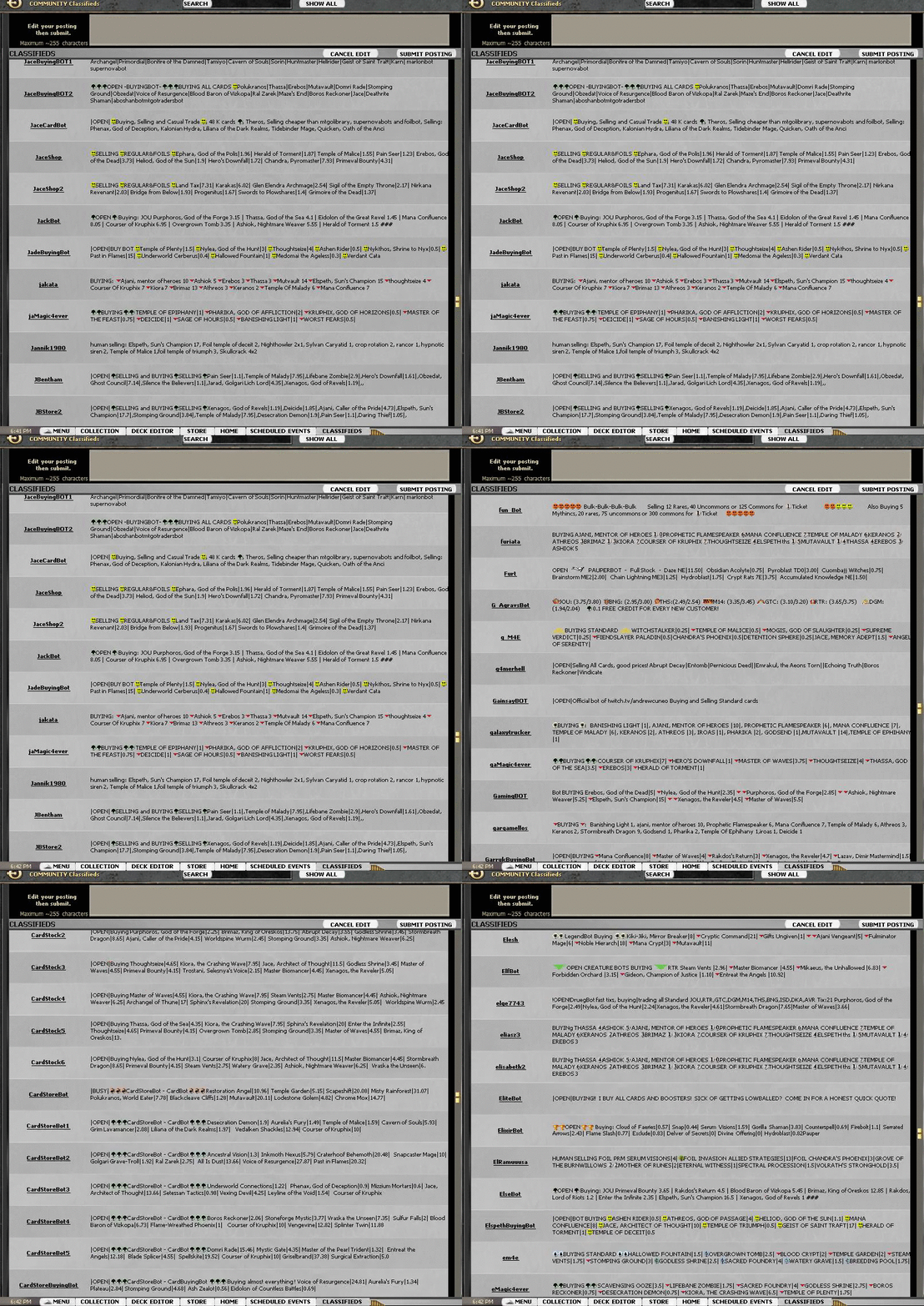
I find nobody. Ok then, I’ll check the classifieds again…

3bc02be8d8b06c29506dac3024841fe5

There are almost no human people trading for cards on Magic Online. You MUST go to the bots or you will never successfully construct a deck.

Why didn’t WOTC create a system to find other people who want to trade the same cards? You could put a “want” list and an “offer” list. It would be simple to program this even with the online currency. However, we are left to sludge through the bots to find all the cards we need. These bots need to turn a profit and therefore cards have a steep markup compared to the buy price from the bots.

A common counter to this argument is “well, card shops are the same way.” Sure they are. But there is almost NO way to get cards by human trading. This turns off many more casual players who just want to build fun decks with their friends. It makes Magic Online a grind and only for the most masochistic of us.

The poor design aspects of Magic Online are very apparent once you consider why Magic was a popular game anyways. People enjoy the social aspect of gaming. They want to hang with their friends and play Magic. They want to build decks and show them off. They want to trade with other players. Magic Online ignores all these elements and supplements a poorly designed interface instead of creating an engaging game.

Worsening Prize Support

I recently vented about the worsening prize supportThere have been so many recent reductions in prize support for events and lowering the amount of events for various formats. The support in the community shows how everyone else is angry about this.

Many say “well, redemption makes it so the heightened prices and low prize support have some paper backing.” However, I can say it no better than /u/falterfire:

“Fine, let’s stop ignoring redemption for a second – Every non-redeemable product is still equal in price to its paper counterpart. Commander decks are still $30. Duel decks are still $20. Heck, Vintage Masters is absolutely completely non-redeemable and is $7/pack.”

It is painfully obvious how this is a big deal. While WOTC cancels many events, they are charging 7 dollars a pack for a brand new product.

The Beta

I wish I could say things are looking better for the Beta. They aren’t.

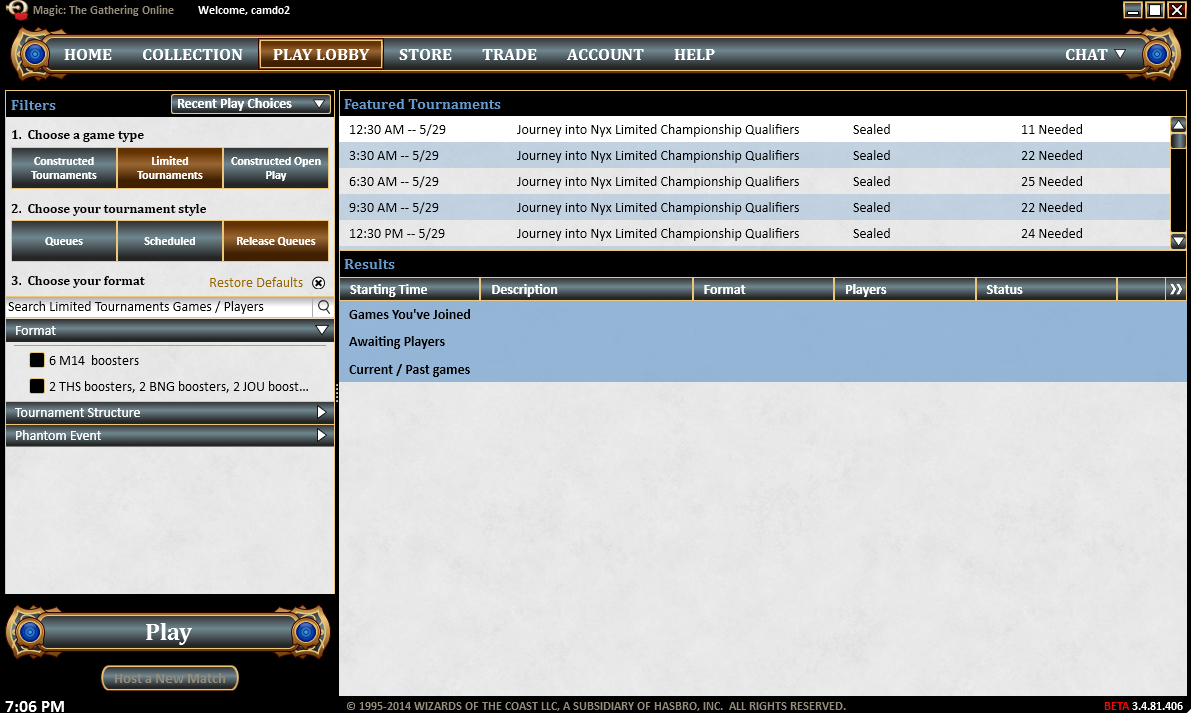
0dd894ae701b5ea68e556f0aa1a9ea15
I just want to play Magic!

Trading is even worse on the beta and virtually impossible for anyone to figure out in less than an hour. You have to “create a trade binder” and fill it with the cards you want to trade. However, you also have to mark it as the “active trade binder” which took me a while to figure out. Then there are the bugs. I know it is in beta but the bugs are astonishing. Cards appearing in double on the trade client is inexcusable and really annoying.

Just about everything with the beta is more annoying or broken. Sure, it looks a little nicer. It still sucks and addresses zero of the underlying problems with Magic Online.

Why You Should Care

It would be nice to say that this is the extent of the problems with Magic Online. In all honesty, I’m barely scratching the surface in this article. People pay so much just to get onto Magic Online that we should be entitled to a working, efficient client.

Ultimately, all of this has a major effect on the paper market as well. Magic Online is where many of the professional players test their decks and test the new drafting formats. If less people are playing PTQs online there is less obvious experimentation with the format. This means there are less opportunities.

It also looks really bad on the game. The relationship between WOTC’s client and Hearthstone are analogous to the differences between a Geocities blog and Twitter. WOTC’s client really looks like trash. It looks like a ten year old designed it (perhaps that is insulting to ten year olds, they would probably design a better system). It is the laughing stalk of the gaming world. Yet, WOTC makes bank off of people who sludge through the embarrassing client just to play the awesome game that Magic is.

If Magic Online plays poorly, less people will want to play because the testing platform is annoying. The fundamentals of Magic Online’s design were all wrong.

This is why I wanted to create an initiative to boycott MTGO until the issues are addressed. There was a lot of support from the community and if you want to participate be sure to follow: https://twitter.com/mtgoboycott

Magic Online shouldn’t suck, but it does. The long and short of it is that it is an embarrassment to anyone who has ever played Magic, especially when compared to its main competitors. What issues have you had with Magic Online? Leave it in the comments.

MAGIC: THE GATHERING FINANCE ARTICLES AND COMMUNITY