Editor’s Note: Hey everyone, Corbin here. Keeping up with your Magic is a serious commitment, and isn’t cheap. While this is a fun article that pokes fun at some of the “mtgfinance” stereotypes, there are a lot of useful tools and helpful authors to help keep you ahead of the game when it comes to maximizing your money in Magic. We do a lot that here on MTGPrice, but we know that taking a step back and laughing is healthy as well. With that in mind, enjoy!
*This is intended as satire of the current state of MTGFinance. All views expressed are 100% true. If you feel like complaining, feel free to let me block you on Twitter @xemitsellsmagic. I would also like to thank Nick Becvar and the Cartel Aristocrats for contributing to this manure masterpiece*
Hey Guys! I’m sure the title of this article grabbed you guys faster than an underpriced Ebay auction. I’m here today to write a piece about why you should be working for a real company instead of trying to make mtgfinance millions on cardboard crack. After a recent debate on Twitter, I decided to write a short piece about why it’s much better to be a cubicle monkey than risk it all grinding the tables of a GP or trying to hit the next big spec.
1. 401ks and Health Coverage.
Should you decide to risk your future grinding Magic, there’s a couple things about reality that are going to slap you in the face. You know that sweet 400% return you just made on Worldbreaker? Well, you’re going to need to sell a couple hundred copies to pay for that cavity you got while eating convention center food and forgetting to brush your teeth the last 300 days.
Also, who needs a retirement fund? Well, actually everyone. You can’t guarantee that Magic will still be around in 50 years and that GPs will still exist in their current form. They might even release Version 5 of MTGO by 2065!
2. Profit Margins
Let’s say that Otto Ogre sells $4,000 of magic cards a month with a profit margin of 20% on those cards. Congrats! You make poverty wages while the IRS thinks that you’re making quite a bit more before you show them receipts of what you spent! Oh wait, you didn’t keep your receipts? Looks like penalties and audits have Storm in the real world!
On top of that, what if you have a bad GP experience? I don’t think the phone company accepts bulk rares, and you can’t buylist a bunch of cards to many shops in your area for real prices. Have fun waiting 10 days for Channel Fireball to process your cards and send you a check in the mail. And don’t forget what can happen if your cards aren’t Near Mint!
3. Wages
It’s great that you traded up $750 in a weekend at a GP. However, you still need to get money for those cards, which in most cases leaves you with selling back to a vendor. Plus how many hours did you put into trading over the weekend? Forty-five hours? You could’ve saved yourself a drive and made more working for the Golden Arches instead of trading for those Golden Myrs. I enjoy counting pennies as much as the next person, but the only thing you’re going to be counting is food stamps if you choose to live life as a GP Grinder.
4. Failed Specs
You know that one card that your buddy was testing for a Pro Tour? Well now you’re sitting on a couple hundred copies of Mana Bloom and you still need to pay rent for that place that doubles as a Magic card closet.
Not every card can be a Sphinx’s Revelation, but you should have had a revelation by now that speculating isn’t easy money. The only thing you’ll be seeing is your profit going red with your bills blooming out of control. The next thing you know, all the “hard” work that you put in will have crumbled to dust.
5. Social Life
You know what really impresses people? Telling them you hustle cardboard in a sweaty , crowded convention center every weekend. I hope that gets you really far in your dating life as well, because you’re going to need a really heavy Briber’s Purse to keep that relationship going with a Muggle. Your kids are going to really look up to Daddy being gone every weekend, trying to Becvalue his way to extra diapers for them.
6. Living an independent life
It’s great that you don’t want to be Cubicle Carl for the rest of your life; I admire you for your dedication of sleeping on floors and couches every weekend. Feel free to be a sovereign citizen in the 20 hours you spend every weekend driving to a different city. You know who actually can do MTGFinance right? The people who own their own shops, and they’re not making money hand over fist either! The owner of The Card Nexus had a good point when he said that “I think way more people like the IDEA of being their own boss than the reality of what that entails.”
But you could get lucky! If you somehow get demoted to being a buyer for a store at a GP, you could get McDoubles instead of a single cheeseburger for every meal! What a truly generous feast. In all seriousness, for all of the basement dwellers reading this article, you should go to college. .001% of all people reading this “article” on MTGPrice can actually do MTGFinance for a full-time living. Save your parents another four years of disappointment and work on a career, and not delusions of “MTGFinance job”.
Choosing MTGFinance is like selling cards at SCG Prices. It feels bad, and you look bad. Saying that you’re self-employed is almost as bad as an idea as buying 200 foil Illusionist Bracers. Work on investing in better cards, and work on investing in a better future for yourself. I hope you have enough cards to put a down payment on a house, or car. You also can have fun looking through job websites with nearly no marketable skills after your six-month stunt lands you into declaring a Chapter 11 (hint: that’s bankruptcy).
7. Conclusion
To summarize, stop refreshing the #mtgfinance tag on Twitter and incessantly checking MTGStocks. You guys are already smarter for having read this “article.” Take a deep breath, think your options over, and stop living in Dominaria. Otherwise, you’re in for a truly Gruuling life.
In early 2012, when Modern was still in its infancy, then-Wizards developer Zac Hill wrote this article (cached version linked because—surprise, surprise—the Wizards website is giving me an error code when I try to go to the live article) previewing Cavern of Souls. This section of Hill’s article single-handedly convinced me that I was never going to play Standard again once Scars of Mirrodin rotated:
One of the problems is that Mana Leak is simply a much more powerful card than we would be comfortable printing under modern development rules. Similar to why the Swords are so powerful—their costs were locked in before people really understood how to price Equipment—Mana Leak is a relic of a bygone era.
Now, I get into arguments whenever I make a claim like this, because it’s difficult to see. I can’t tell you how many times I have been in a conversation of the following form:
“You guys are power creeping so hard.”
“Hmm. I don’t think we are. After all, there are all kinds of spells that we would never print nowadays that ran rampant in old environments, such as Compulsive Research, Force Spike, Remand, ‘Signets,’ etc.”
This statement bothered me because Mana Leakand Remand are two of my favorite Magic cards, but what really blew my mind is that Hill cited Signets as being too good for Standard. Remember that this was just a few months before Return to Ravnica‘s release, and this was one of the first indications that the set was going to power down the format in a big way compared to the original Ravnica—except for the creatures, of course.
Seeing the direction that Standard was heading, Modern seemed like the only reasonable choice for competitive Constructed on a relatively small budget.
The rest of this content is only visible to ProTrader members.
Social media has transformed the MTG finance pastime. What used to be a mysterious field of insight and connections has since evolved into a public event. The “group think” nature of MTG finance leads to rapid price corrections and manipulations, manifested in the form of buy-outs and price spikes.
Sometimes these moves make sense – World Breaker received positive camera time at the SCG Open in Atlanta yesterday, and it sent the card higher. The flow of logic is simple: players witness the card on camera, talk about it on Twitter and Reddit, players blindly follow suit, and the card jumps in price. The fact that artificial scarcity is at play here on this brand new mythic rare only means the price can shoot even higher before enough product is opened to meet surge in demand.
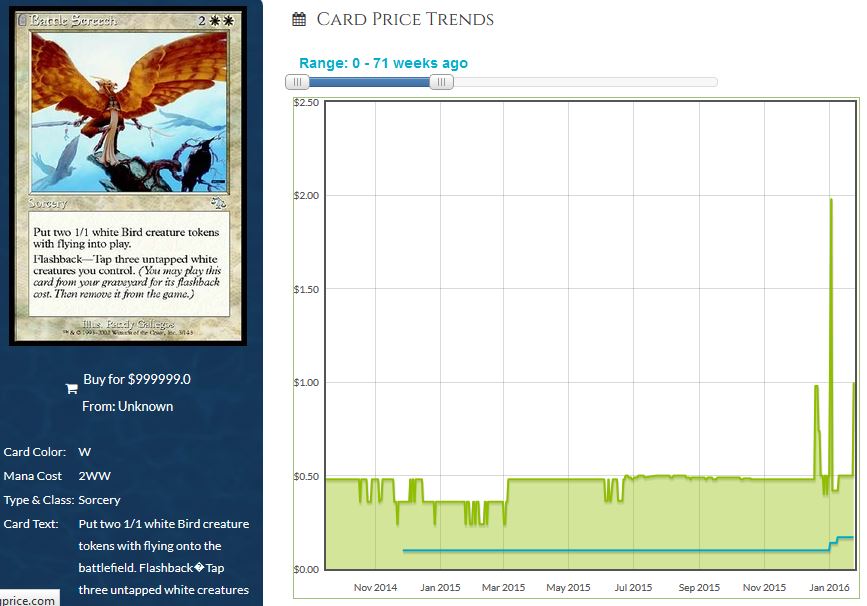
Other times the move makes little sense to the community. Mindslicer was a recent example, and this morning I woke up to another perplexing jump: Battle Screech.
While I will confess I’ve played Battle Screech in a casual Birds tribal deck for over a decade now, someone’s going to have to explain this sudden movement to me.
But the story and catalysts are still the same here, regardless of root cause. A card gains traction, earns some discussion (wouldn’t surprise me to see someone ask about this on Twitter today), and drives the price higher in a matter of hours. The fact that this was the number one Interest on mtgstocks.com only means this move will get even more attention.
The Old and Obscure
It may come as a surprise to you that some price spikes actually occur under the radar, despite all the openness of social media. It’s actually quite impressive when you step back and consider this notion. Cards can still gradually or rapidly increase in price without taking the notice of the hive mind in MTG finance. Despite our best efforts, a card can still move in value without our knowing. I guess with over 10,000 unique cards, this really isn’t that hard to believe, is it?
The rest of this content is only visible to ProTrader members.
Oath of the Gatewatch follows through on the promises of Battle for Zendikar in a big way, rounding out the potential of the Eldrazi tribe with a cadre of fantastic creatures stretching right up the curve. Via the continuing Expedition lottery tickets, Wizards of the Coast continues their (by all accounts successful) bid to boost set sales while lowering the cost of playing Standard.
So what does this mean for those of us looking to make some money on Oath?
First off, now is the time to sell Oath if you’re selling. If you intend to crack cases and sell singles, you should already have them in hand, as within two weeks or less you’ll be facing a saturated market and prices that have fallen to local lows as much as 40-50% below starting prices.
Secondly, this is a small set packed with great cards with a lot of potential both mid and long term, which places it in the same realm as Magic: Origins, a set that should lead to $160-200 boxes within a couple of years as it goes out of print and the cost of Jace, Vryn’s Prodigy stops repressing the price of the double fistful of Modern/Legacy playable rares in the set currently under $3.
Finally, the Expeditions are less desirable, but there will also be less of them, as Oath will only enjoy about six weeks in the spotlight before previews for Shadows Over Innistrad takes over.
Here, presented in order of likely upside, are my picks for the cards in Oath of the Gatewatch most likely to reward timely speculation, with all target prices assumed to be possible during 2016 unless otherwise noted:
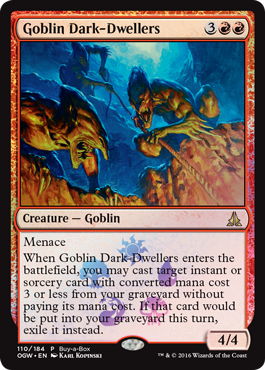
1. Goblin Dark Dwellers (Buy-a-Box)
If there’s a rare that seems to be getting lost in the shuffle thus far, this has to be it. It’s worth remembering that Buy-A-Box promo status is often an indication of quality, a la Supreme Verdict and Sylvan Caryatid. Let’s compare this guy to Snapcaster Mage. Snaps is 1U for a 2/1 Flash body that requires you pay the cost of the spell you want to recast. So Snapcaster Mage into Bolt is a total commitment of three mana, but Snaps into Kolaghan’s Command is five mana. On the other hand, GDD at five mana gives you +2/+3 and menace on your threat in exchange for flash. Perhaps more importantly, GDD gives Grixis control decks a great top end in Modern, allowing them to run a package of sweet spells that all double up off of 4 copies each of Snapcaster Mage and Jace, Vryn’s Prodigy, with Goblin Dark Dwellers appearing as a likely 2-of. As a five-drop creature there are no guarantees the card is fast enough, but I will certainly be testing to figure out if he makes the cut.
In standard Goblin Dark Dwellers, could easily end up as a 4-of in a great deck that leverages Crackling Doom and Commands of various flavors to create an impenetrable wall of recursive control elements.
A Kenji Tsumura brew to consider.
The buy-a-box version has stunning art and looks incredible as a foil, and I see this as an easy double up given enough time. The fact that you get these free when you buy a box means there are a lot of copies, but it also means that your buy-in cost can be zero if you’re cracking boxes and willing to hold for a while. As for additional copies, I’d be targeting them around $6-7.
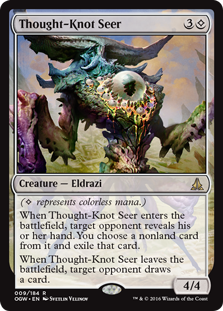
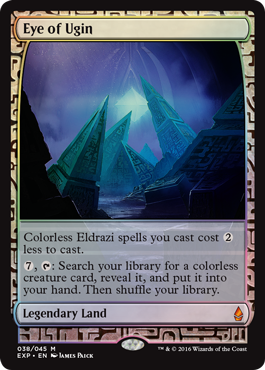
Yeah, this isn’t an under the radar pick. In fact, these foils are already sitting around $25, which is pretty high for a new rare that hasn’t won anything yet. That being said, I see this monster as the spiritual cousin of Goblin Dark Dwellers. As GDD is to Snapcaster Mage, so to is this card to Vendilion Clique. It’s slower, but you get a bigger body and they don’t get a (random) card back until they manage to kill it. The real driver here however is the busted combination of Eye of Ugin and Urborg, Tomb of Yawgmoth, which turns Eye into a better land than the hallowed Mishra’s Workshop.
In magical Christmas land you drop 4x Eldrazi Mimic off of Eye on Turn 1, and follow up on Turn 2 with Thought-Knot Seer, clearing away their solution card, and attacking for 16. (Alternatively, drop Vile Aggregate off a Mountain and attack for 20.) Even when you have normal hands, TKS is going to come down early, mess up their plans and set the stage for Reality Smasher and Ulamog to finish things off. His power level and flexibility in Standard is on par with Siege Rhino, so I expect this to be a 4-of in multiple formats. Also, the foils are incredible, especially in Japanese, Korean, and Russian. I suspect you’ll see some deals around $20 as we hit peak supply so have your funds at the ready.
A word of warning, however. If an Eldrazi build in Modern dominates the tournament and makes Top 8 at Pro Tour: Oath of the Gatewatch next week, don’t be surprised to see Eye of Ugin get banned to bring the deck back down to a reasonable power level. Losing Eye could relegate Eldrazi to Tier 2/3 in Modern and slow or reverse growth.
Now: $25 (try to acquire around $20 at peak supply) Target: $40+ (if Eye of Ugin isn’t banned) Timeline: Mid-Term (6-12 months)
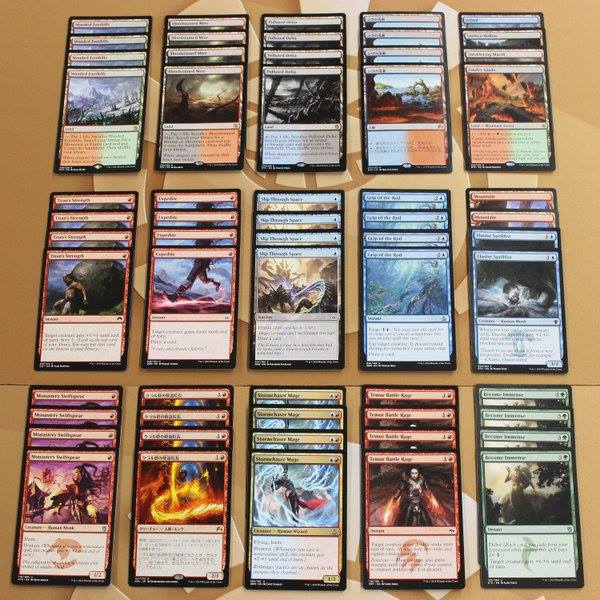
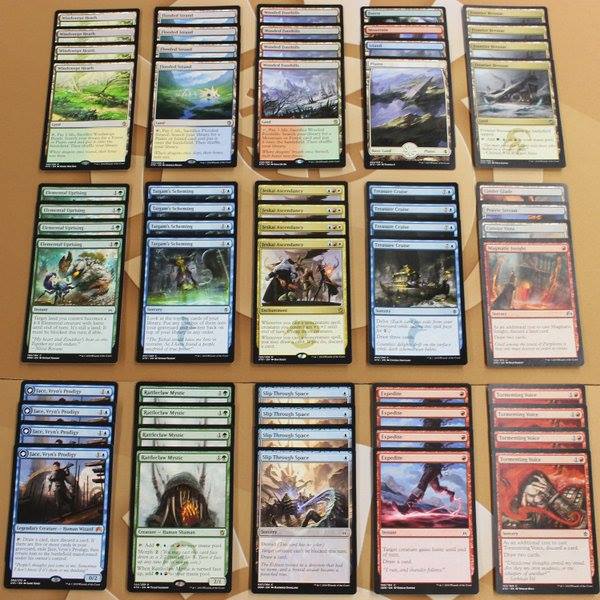
3. Expedite/Slip Through Space (Foil)
These guys are probably under your radar, but let me get you up to speed. One mana cantrips are dangerous cards, and ones with effects that enable combo or aggro strategies are well worth paying attention to as foils, even if they’re commons. Both of these cards can be found in foil for under $1.50 at present, but Expedite has implications in Jeskai Ascendancy and UR Aggro builds for both Standard and Modern. Slip Through Space may also find a home in Modern Infect as a 1 or 2-of since it can help get through the final few points of infect damage and close out the game.
Here are a couple of Standard deck shells to drive home the potential.
Note the use of cantrips with Prowess and Delve to end things fast.Jeskai Ascendancy will come out on top again, sooner or later. The card is insane.
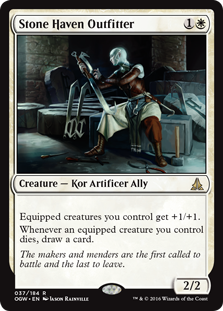
I’ve already bought 60 copies of this guy around $0.75 and I intend to go deeper if he bottoms out under $.50. This card has all the hallmarks of a role player that is waiting for its’ deck to hit synergistic critical mass. He passes the vanilla test with flying colors, providing a Crusade style effect to equipped creatures and yields card advantage if they choose to let him live to deal with the equipped threat. Once he’s the last man standing, he can even suit up and enjoy his own bonus.
There are already plenty of interesting comrades for this card. Have a look at just some of the options that may one day make this a card worth having stashed away in the long term spec box:
While his fellow rare teammates Thought-Knot Seer and Reality Smasher soar on early hype at $15 and $7.50 respectively, the lowly Eldrazi Mimic isn’t even commanding the regular 2x foil multiplier, with regular copies at $2 or so and foils around $3.
This seems out of wack to me, given the number of broken hands this card can lead to without even thinking too hard about it. Consider the following (utterly unlikely) opening hands:
Yeah, you’re taking 16 on Turn 2, and having your solution stripped.
Now you’re taking 20 on Turn 2. How’d that taste? Now how about some Legacy action?
Know what that hand means? It means you’re probably dead at the hands of a one mana 12/12 trampler by Turn 4.
All of these hands are pretty unlikely, but none of that changes the fact the Mimic represents an open ended amount of synergy with big colorless creatures that can enter play cheaply. At $3 for foils on a potential 4-of in Modern or Legacy or casual decks, I’m in for $100 worth right off the bat.
Now: $3 (foil) Target: $10+ (foil) Timeline: Mid Term to Long Term (6-12 months+)
This subtly powerful land has all the makings of a long-term all-star. With Expeditions and so many potential 4-ofs in this set set to make a splash, cards like this that will be played as 1-of or 2-of and slowly acquired for Cube and EDH, will enjoy repressed prices for a while.
You aren’t likely to make much on this card in 2016, but I’ll be looking to get in at peak supply for around $2 for regular and $6 for foils on the assumption that I’ll be putting 50 or 60 copies away for a couple of years waiting for the inevitable 100% spike on TCGPlayer as people realize there aren’t that many copies lying around in inventory after all.
7. Nissa, Voice of Zendikar (maybe..)
I opened a Nissa at the Pre-Release and she was a solid lynchpin in my Scion focused deck trying to go wide, but she never felt back breaking even when she was giving three to four creatures a +1/+1 counter. As such, I’m not convinced that this is a card whose ascendancy you want to assume.
That being said, she is a 3-mana planeswalker, a gang that has been traditionally known to run the streets. At that casting cost, she could be run as a 4-of in a planeswalker/oath synergy based build like that proposed by Kenji Tsumura today.
Kenji does super friends for standard…
I’m holding off on Nissa, but as a mythic, this is a card you will want to watch out for Nissa to show up in a sweet deck at SCG Atlanta this weekend. If she makes a good showing there, expect her to gain some ground. If she doesn’t find a moment in Standard, she falls to below $12, and you get the chance to stash some away for the long haul, where she is fairly certain to end up a $20+ casual all-star.
The time is not yet right, but in the next couple of weeks, the prices on the best of the Oath Expeditions will be injured by peak supply and you will get your chance to load up. Keep in mind that Oath Expeditions are naturally more rare than their fall release counterparts, as the winter set sales will not match BFZ, no matter how cool the set is.
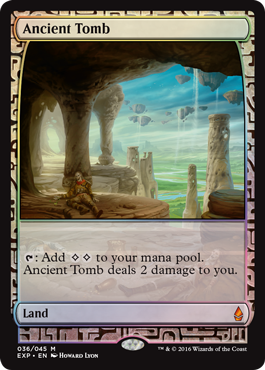
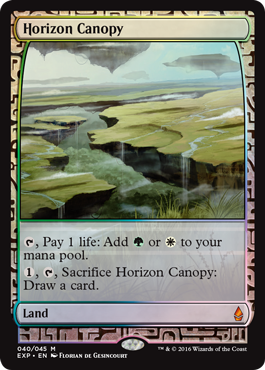
Of the three high demand ones, I’d recommend chasing Horizon Canopy before the others. Eye of Ugin has the biggest growth potential, as fear of banning will likely drag the price down closer to $125, whereas not getting banned could result in a high demand 4-of land with stunning art having been under-priced early on. My guess is that WOTC lets the Eldrazi get freaky for at least a year before banning Eye of Ugin, but let’s see how the Pro Tour shakes out. If an Eldrazi deck fails to Top 8, the coast may be clear to move in.
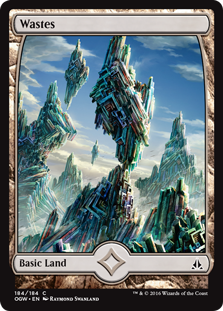
In opening my four boxes of Oath of the Gatewatch, I took note that the total # of Wastes lands per box was roughly one for every four packs, or 9-10 per box. This is a pretty low number. The total number of foils wastes I opened alongside 10 foil full art basic lands? Exactly zero. This leads me to believe that foil Wastes, and especially the preferred Kozilek version (#184) will be in very high demand down the road a piece.
These cards are currently available in the $10-15 range, but there really aren’t that many out there yet, so you may get a shot in the $8-12 range. Give it a year, I would guess these will be over $20 so long as the Eldrazi deck sets up shop in Modern and Eye of Ugin doesn’t get banned. Either way, I still like these a lot longer term assuming they don’t start printing them regularly.
Now: $10-15 Target: $20+ Timeline: Mid-to-Long Term (6-12+ months)
Cards You Should Be Selling
Lesser Expedition Lands ($50-80)
The rest of the Expeditions are not likely to see high demand, and though they will rise over time, at current pricing you can pay for most of a box or pick up some key cards you need by trading them out. Get it done.
2. Kozilek, the Great Distortion ($20)
As with Ulamog before him, the new incarnation of Kozilek is a great long term mythic that is likely to bottom out closer to $12 before he rises again. I have to yet to be convinced that Kozilek is preferable to just running 4 Ulamog, The Ceaseless Hunger in Standard or Modern, and I suspect this mythic will get played almost exclusively in the sideboard of the Standard Eldrazi deck, or at best as a 1 or 2 of. That’s not enough to hold position as the 2nd most valuable card in the set, especially with so many good 4-of rares nipping at his heels. Sell or trade out now, and seek a low entry point.
Note: Now foils on the other hand are just awesome long term holds. Just go ahead and stash those away and check in in 2019 when they are over $100.
3. Kalitas, Traitor of Ghet ($8)
If Drana was any indication, this kind of legendary mid-range Standard only role player isn’t likely to make a huge splash. He’s hovering around $7, which is already low for a mythic, but I don’t see this doing much in the short term. You should be able to score copies for the long term around $4-5, at which point I like it on casual demand alone. Also, he works with zombies and vampires and we’re headed to Innistrad, so heads up.
Battle for Zendikar Upate
In Digging for Dollars: Magic Origins, I called out the following specs as undervalued cards with some chance of financial success (shown with original and current pricing):
Drana, Liberator of Malakir: $15 to $8 (-47%)
Oblivion Sower: $5.50 to $8.75 (+60%)
Retreat to Corelhelm (Foil): $12 to $4 (-67%)
Woodland Wanderer: $4 to $1 (-75%)
Emeria Sheppard (Foil): $8 to $4 (-50%)
Painful Truths: $1.50 to $2 (+33%)
Bring to Light (Foil): $16 to $6 (-63%)
So far, this list isn’t doing very well. Let’s see what’s going on.
In many ways Battle For Zendikar has played out as we predicted. The presence of some very expensive lottery tick – er, I mean Expeditions has held down the price of most of the cards in the set, and if it weren’t for fetch/battle lands driving insane mana bases, Standard would have been pretty affordable this season. Those Expeditions found their lows during peak supply in late November, and have since rebounded, just as I expect the Oath ones to. Moving forward it will be worth keeping an eye on Expedition pricing, as boxes of BFZ around $90 may get pretty tempting next fall if the prices climb enough.
Drana, Liberator of Malakir is a great card that simply hasn’t found a home. I’ve been running two copies in my WB Aggro/Control build in Standard for months, but most players find her to have too little board impact in a format that is contending with perfect mana and multi-format all-stars like Siege Rhino and Jace, Vryn’s Prodigy. Moving forward, as both an ally and a vampire, and given that we’re headed back to Innistrad and more vampires later this spring, Drana may find fresh legs, but I have trouble recommending you buy in until something definite develops, since further lack of play could push her into bulk mythic territory around $5-6 and signal a long term buy plan.
Oblivion Sower is on the cusp of finding a home in both Modern and Standard decks, so I feel confidant he’ll keep moving in the right direction despite the dual printings so long as Eye of Ugin doesn’t get banned. Woodland Wanderer looks like the Savage Knuckleblade of BFZ; a big, bad boy that can’t get no respect in the face of even larger Eldrazi. Once Siege Rhino rotates out, he may find his path, but I’ll hold off on $1 copies until I see some camera time at this point.
On the long term side, the Retreat to Corelhelm deck hasn’t posted a big result in Modern yet, but that’s a good thing here because you can now get in on the prospect of this busted card eventually doing big things for just $4 per foil. I love that price. Emeria Sheppard foils are down to $4 as well, and I endorse stashing some of those away for future EDH/Casual angel gains. Painful Truths is up a bit, and Bring to Light has collapsed, but both cards have foils carrying a whopping 10x foil multiplier, a sure sign that people expect them to do big things moving forward. Both cards are seeing experimental play in Modern, and some enterprising pros are already swearing by Truths in Legacy, so grabbing a bunch of these at current pricing for long term gains seems reasonable.
Magic Origins Update
In Digging for Dollars: Magic Origins, I called out the following specs as undervalued cards with some chance of financial success (shown with original and current pricing):
Nissa, Vastwood Seer: $26 to $18 (-28%)
Erebos’s Titan: $8.40 to $1 (-87%)
Abbot of Keral Keep (Foil): $13 to $11 (-15%)
Evolutionary Leap (Foil): $15 to $6 (-60%)
Harbinger of the Tides (Foil): $18 to $6 (-67%)
Demonic Pact: $3.75 to $3 (-20%)
Animist’s Awakening: $10 to $4 (-60%)
So far, the only solid win from the list was Abbot of Keral Keepfoils, if you rode the earlier spike above $20. I correctly identified that the card was Modern-playable and likely to rise on demonstrative play. As it turns out, the card is seeing play in both Grixis and Temur decks in Modern, including the innovative Temur Prowess deck recently played to a solid finish by Patrick Chapin. Since the fall spike noted in our last check-in, these foils have fallen back to $12 or so as the price of Jace has continued to rise. I’d recommend moving in on the card at this price if you haven’t already, as I still predict a future price over $20 on further Modern play.
As for the rest, Erebos’s Titan and Pact look dead for a standard career, but Abbot, Leap and Harbinger all represent excellent long term value. Of the three, Harbinger and Abbot are the most proven, so focus on those.
So there you have it. Anything I missed that you’re on top of? Logic to kill one of the specs? Have at it. Let’s figure it out!
James Chillcott is the CEO of ShelfLife.net, The Future of Collecting, Senior Partner at Advoca, a designer, adventurer, toy fanatic and an avid Magic player and collector since 1994.
MAGIC: THE GATHERING FINANCE ARTICLES AND COMMUNITY