PROTRADER: Economic Analysis on Zendikar Fetches

Which would you rather have? A 50% chance of winning $10 or a 100% chance of winning $5?

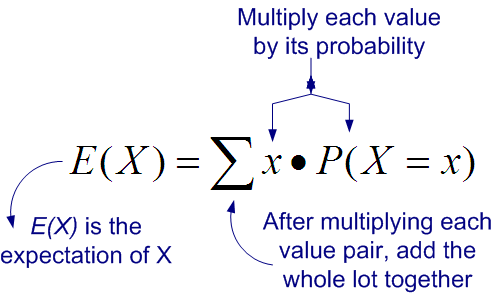
This kind of question can mean very different things depending on who you ask. Pure economists would say that the “expected value” of each option is identical. In the long run if you made the same choice over and over – no matter which choice it was – you’d net out with approximately $5 per iteration.

Naturally, things become convoluted when you introduce emotions and behavioral economists. They’ve done studies that reveal human tendencies to avoid risk and take the sure thing. On the other hand, there are also studies that indicate with small bets like five or ten dollars, people are more open to the risk than with gigantic bets like one hundred thousand dollars. I may be willing to risk $5 to win $10 more readily than I’d be willing to risk $50,000 to win $100,000.

But let’s put behavioral economics aside for a change, and focus on true expected value using pure economics. I believe I can apply this fundamental theory to an interesting situation in MTG Finance. Allow me to explain.

Real World Example

When trading stocks on Wall Street, the concept of expected outcomes is often used to evaluate a stock’s potential price. For example, analysts may evaluate the percent likelihood a small pharmaceutical company will have a successful phase three trial for their breakthrough drug, and then use that determination to estimate a stock price target. Through tireless research they determine a successful trial is 70% likely and would result in a $50 stock valuation while a 30% chance of failure would mean a $5 stock valuation. Doing the numbers, they’d therefore buy the stock if it’s below the expected value, 50*75% + 5*30% = $39, and sell if it exceeds this price.

Granted this is probably an oversimplification, but it illustrates the point. Recently I keep hearing that interest rates are pricing in a 70% chance of a federal reserve rate hike in December. To me, this means bonds are trading using a similar expected value calculation based on likelihoods.
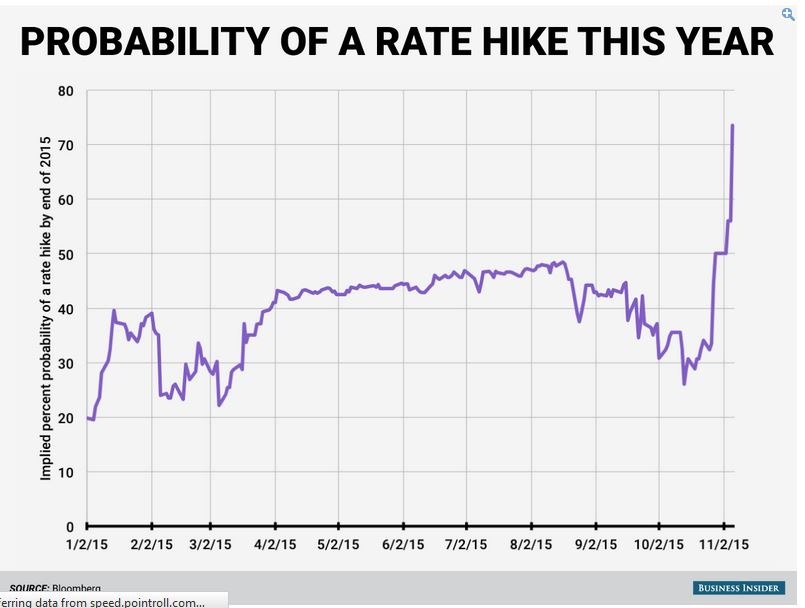
Source: Bloomberg
Source: Bloomberg

As an investor, I believe the chance of a rate hike in December is even higher, and I’m buying certain stocks accordingly. Financial companies tend to do better when rates are rising, for example. (Disclaimer: This is not investment advice, you should do your own research before making an investment decisions.)

From RL Finance to MTG Finance

I believe this concept of expected value can be reapplied to a very special group of cards in the MTG Finance world. I’m talking about Zendikar Fetch Lands.

When Battle for Zendikar was announced, the enemy colored Fetch Lands faced tremendous headwinds from a price appreciation standpoint. While many other Modern cards were rallying, it seemed the original Zendikar fetches were stagnant…and for good reason. After seeing Shock Lands get hammered by a reprint in Return to Ravnica, many players applied a high percent likelihood the same would happen to Zendikar. Then once the set was spoiled and there were no Zendikar fetches, prices spiked.

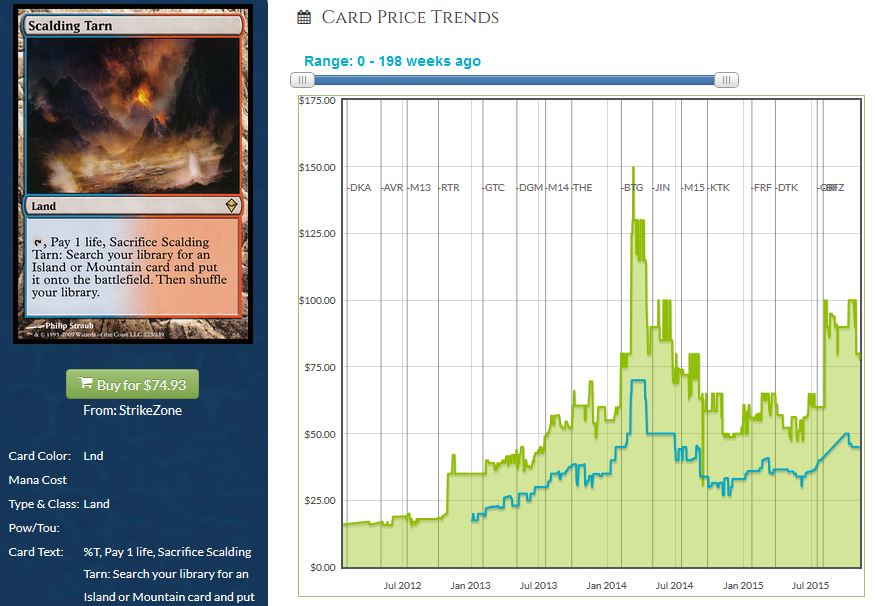
I’ll use Scalding Tarn as a case study as it’s the most expensive fetch today.
Tarn

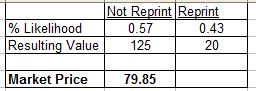
For ease of calculations, let’s assume that at its peak, Scalding Tarn was priced to have 0% likelihood of any pending reprint. We can then assume that the “right” price at maximum Modern hype for Scalding Tarn assuming no reprint is roughly $125. Of course, the card moved off that crazy high when Modern hype relaxed some. When hype subsided, players began pricing in a reprint in some set. If we assumed Scalding Tarn would drop to $20 if it was reprinted, we can back calculate and determine that the market was pricing in a 60% chance of a reprint in the near future at this time.

Then in March 2015, Wizards announced Battle for Zendikar. At that time, the value dropped from $60 to $50. This drop in price was likely related to adjustments to reprint expectations. Perhaps the chance of a fetch reprint went from 60% to 70% at that time, explaining the $10 price drop.

Then when Battle for Zendikar was fully spoiled and it became clear Zendikar fetches were safe, prices shot up dramatically again. Scalding Tarn peaked at around $100, indicating the chance for a reprint in some upcoming set (such as the new Commander decks) dropped all the way back down to 20%. Of course that hype didn’t last, and before long Scalding Tarn dropped back down to where it is today, at about $80. As of today my calculations dictate that the market is pricing in a 43% chance of a Scalding Tarn reprint in the near future.
Calc

The Opportunity

Here’s the thing: I believe the likelihood of a Zendikar fetch land reprint is much less than 43%. We just received the full set list of the Commander 2015 products and to few people’s surprise, there were no fetches included. I’ll admit I was momentarily frightened because of the enemy-colored nature of the decks. But after listening to rationale on Brainstorm Brewery, my fears were allayed significantly.

Without reprint in Commander decks, I question when the next possible opportunity is to see Zendikar fetches. They won’t be in Oath of the Gatewatch. I don’t think they really fit in with Shadows over Innistrad – after all, the return to Innistrad will be excitement enough to sell this set. Wizards won’t need to reprint fetches to help sell it because the horror theme is so beloved by players already.

If I had to place my bets, I’d say we won’t see a reprint of Zendikar Fetch Lands until the block after Shadows over Innistrad or in Modern Masters 2017. That’s a long ways away. I believe the percent likelihood of a Zendikar Fetch Land reprint should be more in the 10-20% range. Using my basic spreadsheet, that yields a price range of $104-$115 for Scalding Tarn – a hefty premium to where it is today!

Based on all of this data, I pose this bold prediction for open consideration: by the time Modern season rolls around in early 2016, Scalding Tarn will return to its former “hyped” highs, roughly around $115. With a roughly $75 price tag today, that’s a 50% increase in value – quite the reasonable return on investment potential!

Naturally, the same exercise could be repeated on the other four enemy colored Fetch Lands. They would each have some expected value based on reprint likelihood, leading to a new price projection based on reduced likelihood. Therefore, I leave you with this thought: if you need Zendikar fetches for the upcoming Modern season, I recommend purchasing them as soon as feasible. We had a nice little pullback from the recent spike, but I believe the reprieve will be short lived.

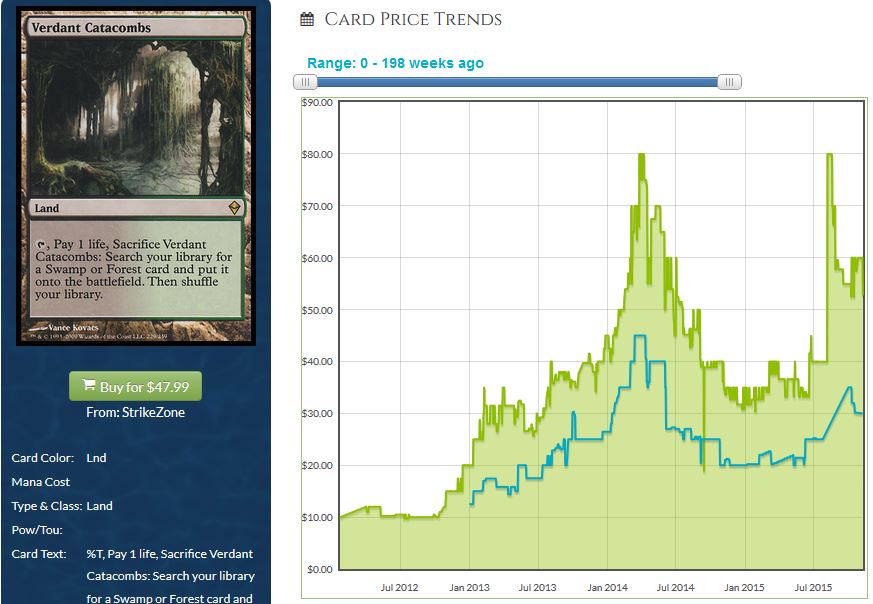
If you’re looking for a place to invest some extra funds, I actually like Verdant Catacombs as an alternative to Scalding Tarn.
Catacomb

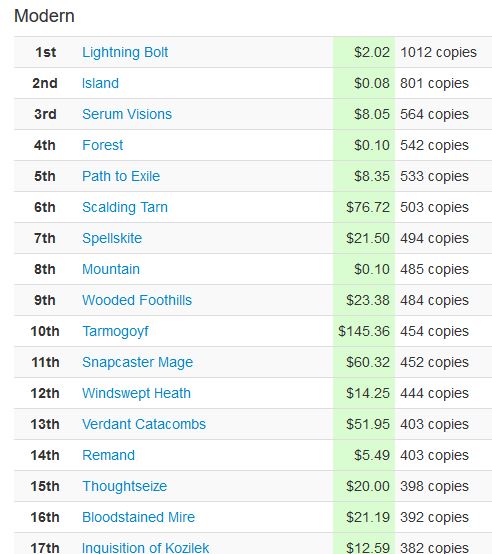
It’s not blue, but Green/Black combine very nicely in Abzan and Jund strategies. Catacombs is actually the second most played Zendikar fetch land, according to mtgstocks.com, and it’s the thirteenth most played card in all of Modern.
Modern

In terms of potential, Verdant Catacombs offers nice upside with a slightly more tolerable entry price compared with Scalding Tarn. Scalding Tarn will remain number one in the enemy fetches as long as Splinter Twin stays so powerful. But in terms of robustness, I like Catacombs for its potential growth.

Wrapping it Up

Much like interest rates, I believe the market is miscalculating the likelihood of a Zendikar Fetch Land reprint. In both cases I am investing my funds accordingly. In the stock market I am overweighting my portfolio in financial stocks, and not long ago I picked up the Scalding Tarns I needed for Legacy along with a set of Verdant Catacombs as an investment.

The more I think about it, the more I believe I should be stepping up my investment in Zendikar fetches. While my risk aversive personality precludes me from buying in deeply (there’s always that lingering risk of a reprint), I should probably put emotions aside and make the economically logical bet. Since I am so risk averse, Behavioral Economics probably dictates I’m more likely to avoid the gamble by buying more fetches. But you know what? I believe that’s the wrong choice. I believe I should listen to pure economics on this one and step up my position.

So that’s what I’m going to do. I’d recommend you consider my rationale and likelihood calculations and determine for yourself if it’s also the right move for you. After all, this is merely a thought exercise leading to a potential conclusion: by combining our thought processes, hopefully our collective reasoning can help benefit all of us speculators in making the right investments. So please do share your thoughts in the comments section and let’s make some money!

Sig’s Quick Hits

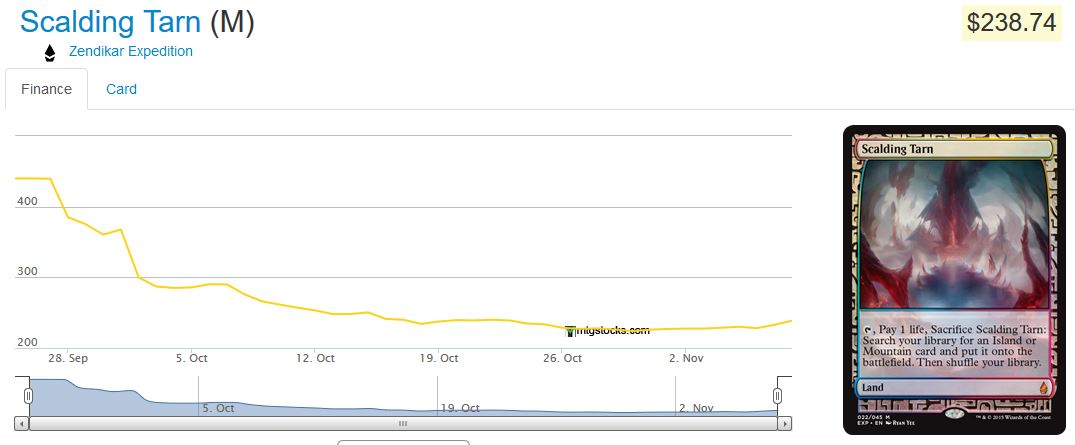
  • I think Expeditions may be bottoming. While the price chart on this site is still a little choppy, the chart at mtgstocks.com reflects the bottoming trend I’m seeing. And while only a few copies are sold out on Star City Games, I’m seeing some compelling buy lists for the rare cards.  But I should express some caution here because we’re going to get more Expeditions in the next set, Oath of the Gatewatch.  While unique versions won’t increase the supply on something like Scalding Tarn, I still fear that a general limitation to players’ budgets may hold down prices in the short-term.  I’d enter this space carefully and with discipline if you want to mitigate risk.
Look at that nice bottom forming.
  • Leyline of Anticipation recently hit an all-time high. Once near bulk, the enchantment now retails for $6.59 at Star City Games. There aren’t many in stock, and with only the single printing it’s easy to conclude that the older the card becomes, the more value it should gain. Only a reprint would bring downside.
  • While I hate buyouts of older cards, I feel obligated to alert everyone to the recent price movement in City in a Bottle. The Arabian Nights rare is nearly sold out all over the internet. Star City Games recently upped their price on the artifact to $69.99, meaning the price movement is likely going to stick. The fact that their sold out tells me the price jumps may not be over on this one, either. This is exactly why I emphasize that if you want any older cards for personal use or collections, think about prioritizing those sooner rather than later. But please don’t speculate on these by buying out the market – it’s unnecessary and leaves a terribly sour taste in the mouths of those who want copies to play with.
Commander 2015 – Legacy Initial Thoughts

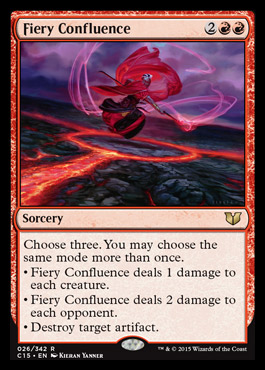
Now that all the Commander 2015 spoilers have been revealed, I can’t help but notice that this year’s set is feeling pretty underwhelming to me. In fact, all things considered I can’t think of a previous Commander product that had less desirables from a Constructed standpoint. The Confluences are the closest thing to Legacy playable – if they weren’t all four mana or greater in casting cost.

I mean, think about it – even the red Confluence (Fiery Confluence) would be INCREDIBLE in Legacy if it cost just one mana less at three mana, even if that cost were 1RR. For its effect and limited amount of formats it sees play in I don’t think it would have been much to ask. However at four mana it might not be able to get there. Out of all the Confluences, I think it has the highest chance of seeing Legacy play but the jury is still out on the Confluences until results roll in.

Other than the Confluences, I’m not seeing anything pop out to me immediately as Legacy format staples like we have in the past releases (Containment Priest, True-Name Nemesis, Flusterstorm). These cards were all built with Legacy in mind, and everyone knew it even as the cards were being spoiled. I’m sure something from this set will make its way into Legacy or Vintage, so let’s take a look and see if we can make the case for any other cards in the set. First though, I want to finish my thoughts on Fiery Confluence.

Fiery Confluence

If any card makes the cut in Legacy, I think it is going to be this one since it is the cheapest. It is extremely versatile in the format and will shine best in Burn decks alongside of Eidolon of the Great Revel, though maybe out the sideboard more than the main deck since this card has more options for handling a wider range of decks. I’ve briefly mentioned some of my other thoughts on this card (and all the Confluences in general) above so let’s move along to my next pick on power level in Constructed from this set.

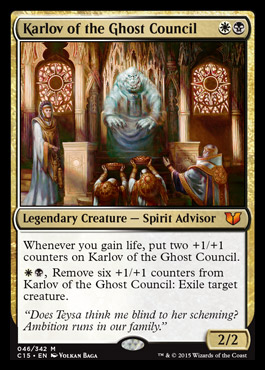
Karlov of the Ghost Council

This card feels like it is going to get out of hand very fast in the right deck. Unfortunately, Legacy ‘life gain’ isn’t really thing – yet. I wonder if it might slot into something like Deadguy Ale and totally transform the deck around the incredible ability.

Not only does the card get bigger, but you can eventually use those +1/+1 counters later in the game to get rid of any creature on the battlefield! All for two mana. Definitely feels like Legacy to me.

The downside to Karlov is his Legendary status, so that limits the amount of copies you could see in a deck. Still though, Karlov interacts with cards that randomly gain you life like Umezawa’s Jitte and might slot into Death and Taxes in the right metagame. I really think you need a deck built around him to make full use of his ability. Only the future will tell!

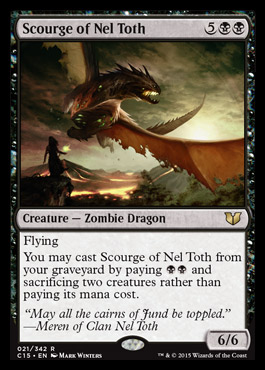
Scourge of Nel Toth

This card seems like it takes too much work to get online, but you never know. Dredge might be able to take advantage of a card like this in the right situation.  It reminds me of a cross between Tombstalker and Delraich, though better in both cases. Not only is this card a 6/6 flyer, but you only need to sacrifice two creatures rather than three black creatures.

It does take some work to get online, so Legacy might not appreciate this card immediately. We may not see it in the format, but if more support in the future is printed we could very well see this in a deck at some point.

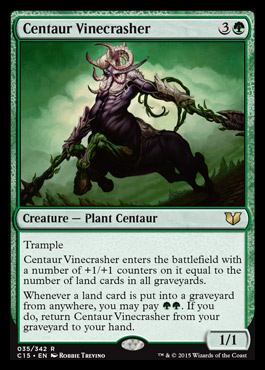
Centaur Vincrasher

Yes, I realize that this card isn’t Dark Depths however I still feel like it could fit into Life from the Loam strategies quite well in Legacy. Lands might even be able to make use of this card, maybe out of the sideboard if the opponent still expects the Dark Depths strategy to take over the game.

Actually, now that I think about it this card could also probably fit into other green Legacy decks as well – the centaur’s recursion triggers when any land is put into any graveyard, and fetchlands are so rampant in Legacy that it might be worth it for slower green decks to play. This guy quickly becomes huge while also having built-in recursion, which isn’t something we see very often.

I’m sure people will experiment with this card, and I really hope this breaks into Legacy because Loam decks should be able to capitalize on the card’s great recursion, along with other decks that seek to create grindy matchups where there is a ton of removal.

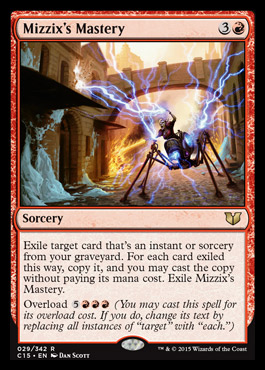
Mizzix’s Mastery

This card blows Past in Flames out of the water! Being able to straight-up cast all the instants and sorceries in your graveyard rather than give them flashback is so, so much more powerful. The best part is that you can also cast it for the regular cost if you need to recast an instant/sorcery in a pinch.

I definitely think that Storm now has a new tool to play around with, and I believe it will replace the single Past in Flames copy in the deck since it is so much easier to re-cast your whole graveyard once you overload this pseudo-Yawgmoth’s Will.

An Aside – Legacy’s Future

With SCG restructuring their tournament series, in both rebranding the series and cutting back on Legacy events, it is starting to feel like more and more like Legacy is slowly going away.

Not only are the events being cut back, but we also constantly have to worry about counterfeits entering the community. I feel like we’re going to see more announcements like the one that happened this weekend at GP: Seattle as the counterfeits continue to enter the market and community at large. How many people do you think were playing with counterfeits and didn’t get caught? How many people do you think weren’t even intentionally playing with counterfeits and went unnoticed, and are even unaware of it themselves until someone with a discerning eye gives them the unfortunate news? It’s definitely a wake-up that yes, your older, reserved list cards are being created as knock-offs for fractions of the price. With such easy access to these proxies and the improvement of the creation process, I feel like more and more players are going to start to become attracted to playing with proxies as the price of the reserved list staples increases.

I think this is why Star City Games is cutting back on Legacy, as players will have less incentive to purchase these proxies if they don’t need them for a tournament setting. It sucks to think about but I think it makes the most sense. Even if it decreases the market prices of cards like dual lands, the rise of Modern as the eternal format of choice (which guarantees reprints) and the continuation and improvement of Chinese (and other) proxies means that less Legacy support makes sense in order to prevent the mass purchases of these cards for tournament play.

It will be interesting to see how it all shakes out in the future, but problems always have creative solutions. I’m sure if Legacy is demanded by enough players then exceptions will be made, one way or another, to keep the format alive. Let me know your thoughts in the comments!

Opening Commander 2015

By: Cliff Daigle

The new set of Commander preconstructed decks is coming out next week. The MSRP is going to be $34.99 and I’m here to tell you to stay away.

The only reasons to buy them are:

  1. You have a small collection and want to have more cards for your decks to choose from.
  2. You and others agree to use these as-is or some league-type variant with minimal changes.

There is not going to be money up for grabs in Commander 2015. At best you’ll acquire $40 or so in value, but retail value isn’t going to get it done.

If you are a professional at this, you don’t need me to tell you this information. But maybe you are new at this. Maybe you haven’t been exposed to what these decks mean.

There is not money to be made in anything but the original Commander set. Keep in mind, that was printed in 2011. The player base was significantly smaller, the format had just begun to take off, and then they waited two years to do it again.

If you look at the prices of the cards from that set, you notice how much more expensive they are. This is only due to scarcity. The cards are good, don’t get me wrong, but what made Scavenging Ooze a $45 card briefly was the very small number in circulation.

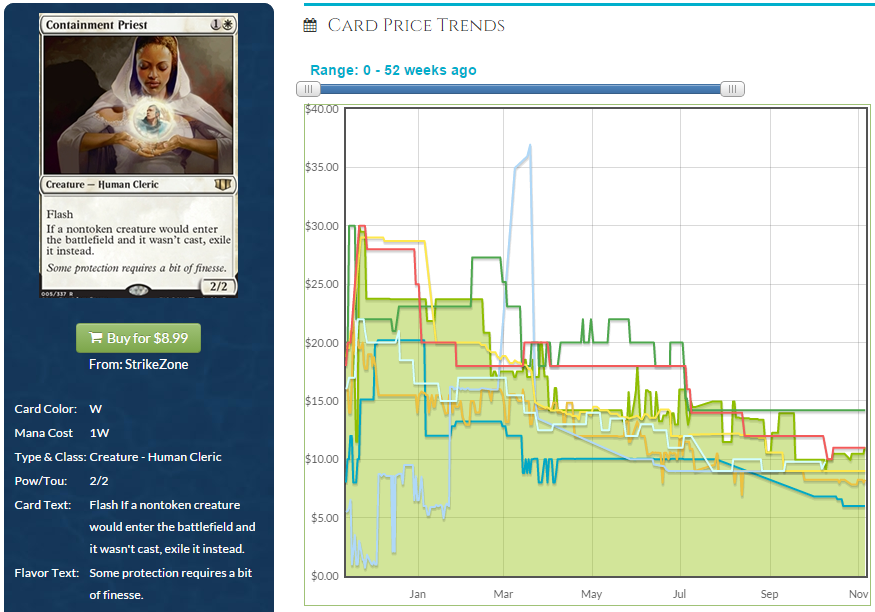
Let’s look at some examples. Containment Priest was infamously being bought for $40-$50 on the floor of GP New Jersey, as people sought sideboard options for Legacy Sneak and Show-type decks.

Capture

And now it isn’t. $11 and falling.

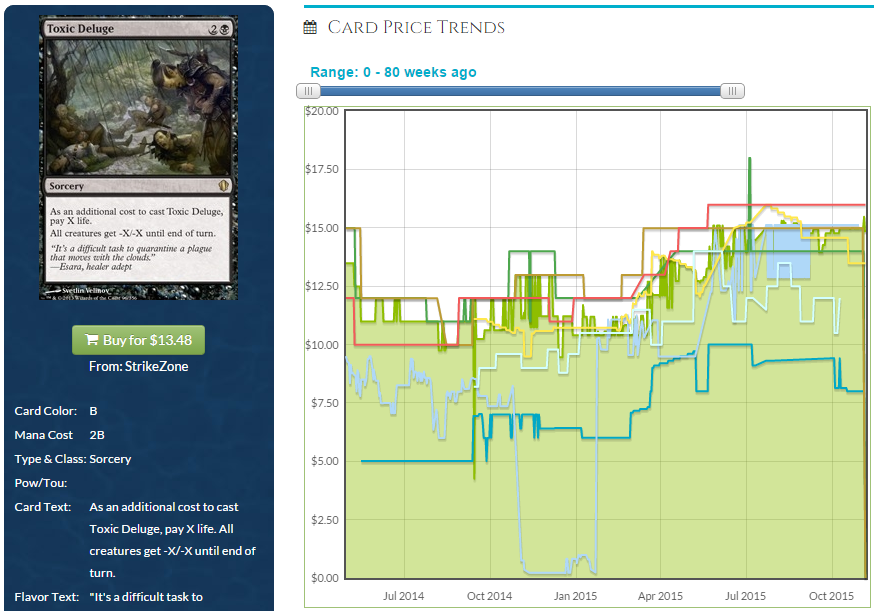
As time passes, the unique effects of a card can cause the price to go up. This is the case with Toxic Deluge:

Capture

It has yet to be a four-of, as for one more mana you get Damnation, but that mana is important! It’s creeping upward for about the past year, and this is unlikely to get a Standard printing.

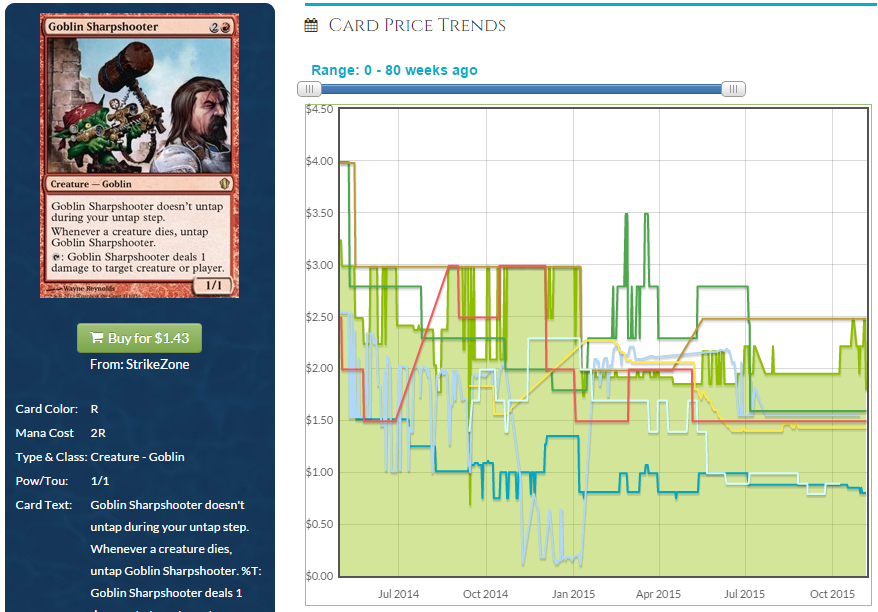
Here’s the scenario I warned you about a couple of weeks ago, where casual cards get reprinted and never recover their value: Goblin Sharpshooter.

CaptureIt lost half its value almost immediately, and then had further to fall. Black Market was spoiled this week, as I warned you about, and that’s the trajectory I’d expect it to follow.

It is going to be hard for you to take my advice. The first few days, the prices will be crazy. PucaTrade Will be full of people who want certain cards. I am advising you, very strongly, to not throw $40 away in the quest to make $46.

One of my very first articles for this site, printed more than two years ago, told you to be patient. This is advice I stand by. You will lose money and value trying to be the first one to get the new toys. All you need to do is wait 3 to 4 weeks.

Don’t bother with the reprints either. In the 2013 and 2014 releases, there has been exactly one card that has gone up in value: Wurmcoil Engine.

I want to repeat myself: I’m not saying these decks are bad to buy. What I am saying is that these decks will not have a strong return on your investment if you are trying to sell or trade them to other people.

Please do not bring up True-Name Nemesis. There was a time where you could buy the deck, sell that card, and then keep the remaining value.

Wizards’ stated goal is to keep this a casual product. When Legacy players bought the decks up, they made sure that the second printing had extra copies of Mind Seize.

We have the example and we have the history. I will be spending probably $15 (tops) worth of Pucapoints to get the few cards I want. I think that too many people fixate on the original Commander product, without understanding the numbers and time involved. You can still find Built from Scratch in stores and on eBay for MSRP, and that has a Wurmcoil in it!

If you look at the buylist prices for the last two Commander releases, you’ll see that they are proportionally lower than most other cards, because stores know they can get these cards just by opening a package.

Let’s be specific for a moment. Let’s say you want five of the cards in a given Commander deck, so you buy the deck and get your cards. Great! Now you have 60-80 other cards as trade bait, depending on how many of them you want to keep. Selling them is going to get you about 30-40 percent of the trade value, and trading them is going to take forever. My favorite example was Mind Seize, because people took out 2-3 cards and sold the rest on eBay for $10 or less.

So, just to sum it up for you: You should only buy the new Commander decks if you want to use most or all of the cards in the deck. If you want a few choice singles, you’ll be best served by waiting a couple of weeks and trading for/buying the singles.

Oh, and make sure you look at your deck and decide what you’re taking out first. If you can’t decide, don’t get the new card. Simple way to save a little hassle.


Point-Counterpoint: Is Legacy Running out of Fading Counters?

I’m not going to call it a death knell. I’m not going to say the sky is falling. I’m not going to call it the hammer that shatters the format. But I’m also not going to shy away from it and what it indicates.

If you don’t know what I’m talking about, Star City Games made some very large waves Monday afternoon when it announced changes to its Organized Play system. Not only has the Open Series been renamed the “SCG Tour”—a weak imitation of the Pro Tour for sure, but still a positive development overall for Magic — and announce changes to some prizes and events, but it absolutely gutted its schedule of Legacy events.

To be sure, there’s a lot to digest from the full announcement, and I highly recommend reading it in full. Before I get into today’s full topic, I’ll touch on one thing I’m not concerned about: the slightly reduced number of events. SCG follows Wizards of the Coast in this regard, and while it does likely mean we haven’t had the explosive growth in the playerbase we had during the five previous years, tournament Magic is still incredibly healthy. SCG expanded its offerings at the lower levels, and the truth is that no matter how many people play Magic, the ecosystem can still only support so many events. With SCG and Wizards both lumping so many onto the schedule, it was bound to hit a wall sooner or later. Prize support is still strong across the board—heck, Wizards increased the prize for winning a GP to 10 grand—so this doesn’t throw up any flags for me.

But what does hit a few is the dearth of Legacy events on the first part of the schedule. I’ve had a few conversations on Twitter and elsewhere about what exactly this means, and there are a ton of ways to interpret it, but all readings try to answer one basic question:

Is Legacy Dying?

I’m approaching this from a neutral perspective, and I want to make that clear before I dive in. There are a ton of heated opinions on both sides of the aisle here, and truthfully, no one can say for sure what the future holds. So sitting here and just throwing my opinion out at you like it means anything more than the next players’ simply because I have a platform would be, frankly, arrogant of me. But what I can do is present the evidence we have, and allow all of us to draw our own conclusions.

With that said, let’s dig in.

Point: Star City Games has Functionally Dropped Legacy Support

For years, Star City’s Open series was the heart and soul of Legacy. Every Saturday would be a boring Standard format, but on Sunday we’d all have fun watching or playing Magic’s most exciting and diverse format. Survival-Vengevine broke out and broke the metagame, though it was ultimately a blue-black Merfolk deck that won the Grand Prix where Survival emerged.

This was of huge interest to the community at-large, and Survival of the Fittest began to inexorably take over the format. I played a lot of Legacy during this time, and when Survival was ultimately banned, I split the finals of an Open with Merfolk, kicking off what became the second-best romantic relationship of my life. I say this not because it’s hugely relevant to SCG’s actions, but to show that I’m not some shadowy finance guy who doesn’t know anything about the community; instead, I was as keyed in then as I am now, doing regular coverage.

So Legacy was huge then, and we saw rapid growth on a lot of cards in the format, or cards that might break out. So much so, in fact, that growing concern over the Reserved List became a huge, contentious issue again. Ultimately, this played into the creation of Modern, which both served as a replacement for the lagging Extended format and gave Wizards an eternal format not constrained by cards that wouldn’t be reprinted.

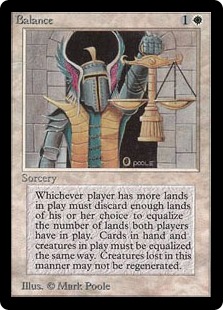
balance

At first, SCG ignored the fledgling format, and even Modern 1Ks on Sunday failed to generate huge interest. I recall a conversation I had with a senior member of SCG around 2012 where he told me very simply how the company felt about Modern:

“You can see how we feel about it based on the schedule.”

At the time, that meant the company was fully committed to Legacy, which continued to be heavily supported. Today, we have just one Legacy event on the schedule for the first four months of the 2016 season.

Counterpoint: This is a Small Sample, Not a Mission Statement

It may seem from this that SCG is just off of the Legacy train. But let’s not forget that the company has always led the way when it comes to Legacy support, and it wasn’t that long ago that Grand Prix New Jersey completely ran the Legacy hype train off the rails—people were talking of taking freaking Standard decks to the event just to be there and get the playmat and deckbox and signed Brainstorm paraphernalia. Excitement ran wild, and the event ended up drawing more than 4,000 players, an incredible number for any event.

That’s hardly the sign of a dying format. Sure, SCG has pulled support of Legacy in their Open Series early in the year, but it doesn’t have a Legacy Grand Prix on the schedule this year. Why would a company support a format that ultimately ends up promoting someone else’s GP instead of its own? In this context, it makes sense why SCG would instead throw its support to other formats.

Point: Modern has Eclipsed Legacy as the Eternal Format of Choice

If there’s ever a contentious point to make, it’s this. But at the same time, this seems to certainly have evidence to support it. It’s evident in SCG’s scheduled events, in WOTC’s schedule events—including the Pro Tour—and Modern certainly generates more headlines. These days, it’s very rare when new cards come out that we talk about their Legacy playability; instead we’re much more interested as a community in how they’ll do in Modern. Because of this, there’s always something new to consider with the format, and every few months we see something new break out.

This speaks to how Modern—with its carefully curated banned list—is viewed by the majority as a more exciting format. I see a ton of players come into my store hoping to gets certain cards to break into Modern, but almost never does someone come looking for Legacy cards. Nearly every LGS around here has weekly Modern events, but none of them carry Legacy events. While this isn’t the same throughout the country or world—at least in the U.S., the coasts have more Legacy players than the Midwest or South—it’s certainly part of a larger trend.

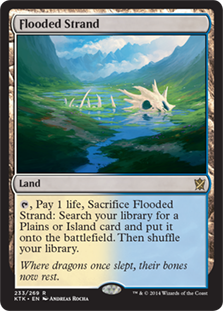
Flooded Strand

And while we talked about how Grand Prix New Jersey hit big numbers, it failed to surpass Grand Prix Richmond, which is still the third-largest Grand Prix to date, with only the two Modern Masters Vegas events passing it. In this world, if you’re not growing, you’re dying, and these things seem to indicate that Modern is growing and Legacy is not. Legacy is not irrelevant because of these things, but Legacy has become to Modern what Vintage is to Legacy—existent with a passionate community but ultimately less relevant.

Counterpoint: Modern and Legacy Can Coexist Peacefully, and It Doesn’t Have to Be One or the Other

Everything said about Legacy and Modern—that one is less prevalent than the other on the schedule, one generates more day-to-day social media interest and headlines—can be said about Modern compared to Standard, as well. After all, no format is more played than Standard, and it dominates the Pro Tour schedule, not to mention being the LGS format of choice by and large. If we were to sample a given time period’s top headlines, it’s highly likely Standard would dominate Modern in those regards. But I don’t think anyone would say Modern is dying because these facts hold true, so why is it used to say that Legacy is dying?

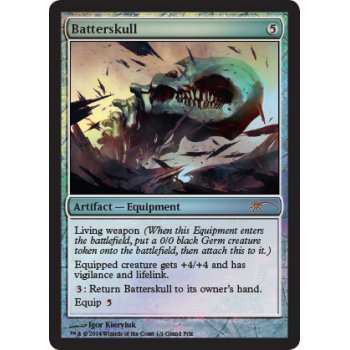
batterskull

Furthermore, fewer events doesn’t mean less interest—it simply means more pointed interest. The fact that Legacy doesn’t change as often as Modern is seen by many as a benefit since the deck you build today is less likely to get banned or hated out when you do get to play it. Legacy’s metagame doesn’t change as much as Modern’s simply because there are more cards legal, and this fact will automatically generate fewer day-to-day headlines. But that doesn’t mean people care about the format less, it just means there’s no need to obsess over it every day. And because the schedule isn’t saturated with events, the ones that do happen will have more success thanks to the condensed air time. No one gets tired of Legacy when you don’t have it shoved down your throats every week; can the same be said of Modern?

There’s more to a format than number of events and Reddit upvotes. Legacy has a thriving community and is in no way falling off.

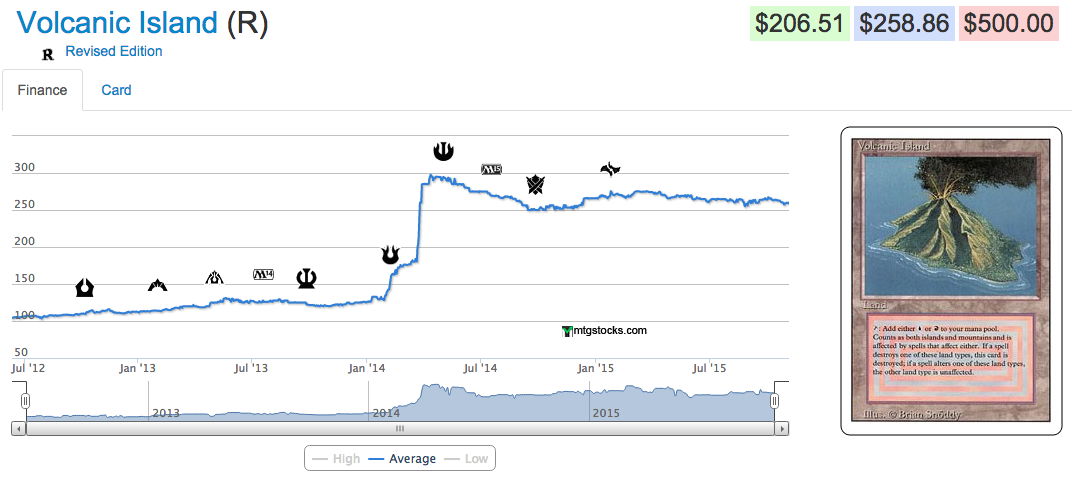
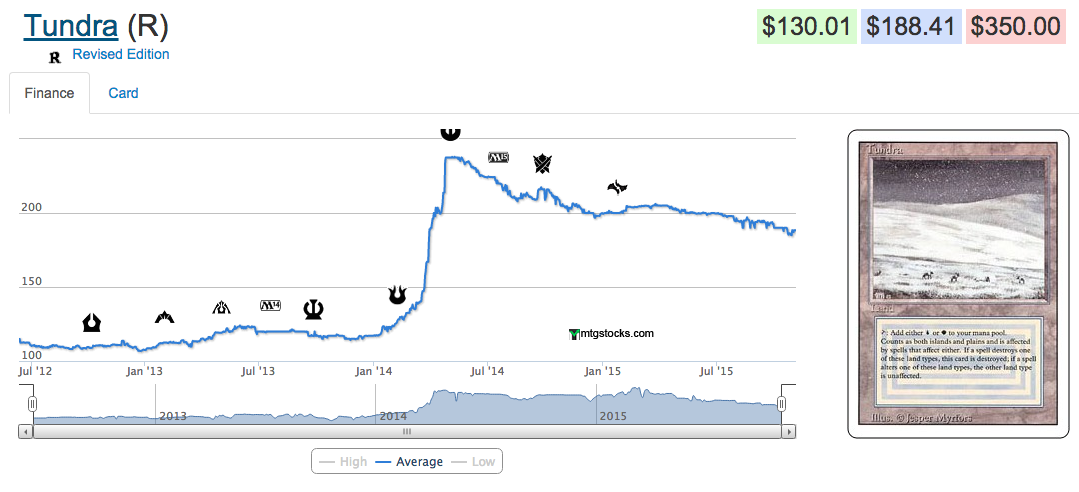
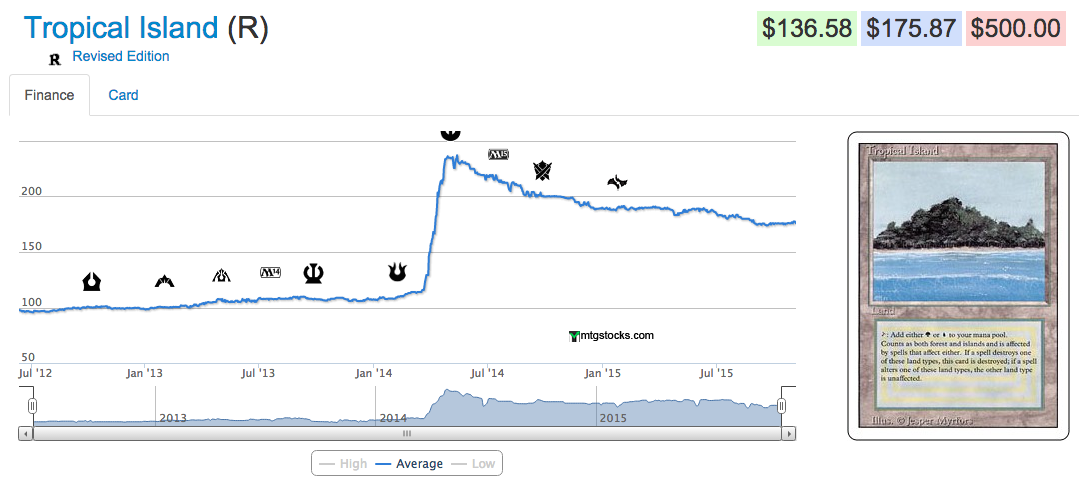
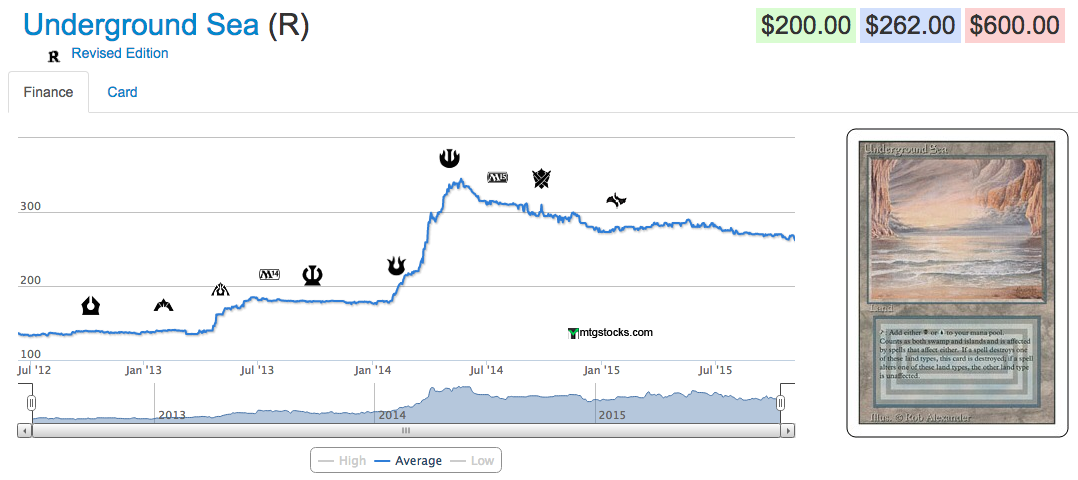
Point: Legacy Prices on Staples Flatlined or Declined in 2015

Allow me a few graphs to illustrate this point.

Screen Shot 2015-11-04 at 2.06.14 AM Screen Shot 2015-11-04 at 2.06.56 AM Screen Shot 2015-11-04 at 2.07.27 AM Screen Shot 2015-11-04 at 2.07.59 AM

That’s a lot of downward movement, and it’s certainly atypical from what we’ve seen in the past, where Legacy seemed to be a growing format rather than a stagnating or declining one. I spend more time tracking price movements of cards than 99.9 percent of people who play this game, and I can tell you that it’s extremely rare that I see Legacy cards make it onto the weekly or monthly interests page.

When I started playing this game seven years ago, there were always Legacy movements happening. A new deck would break out at an event, and cards would shoot up. Even if there wasn’t a new event, the substantial growth of players getting into the format would increase prices steadily enough to frequently make new cards worth watching. These days, that’s left solely to the purview and Standard and Modern.

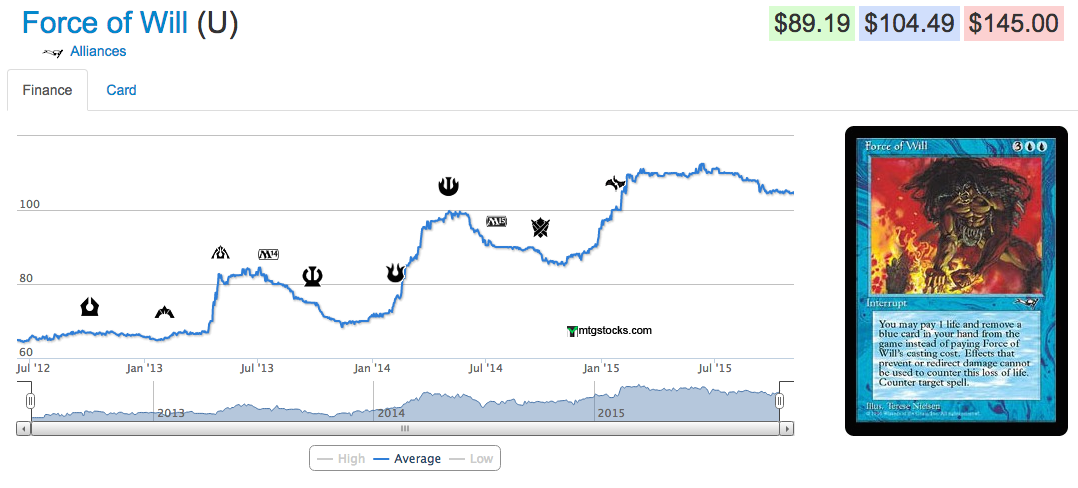
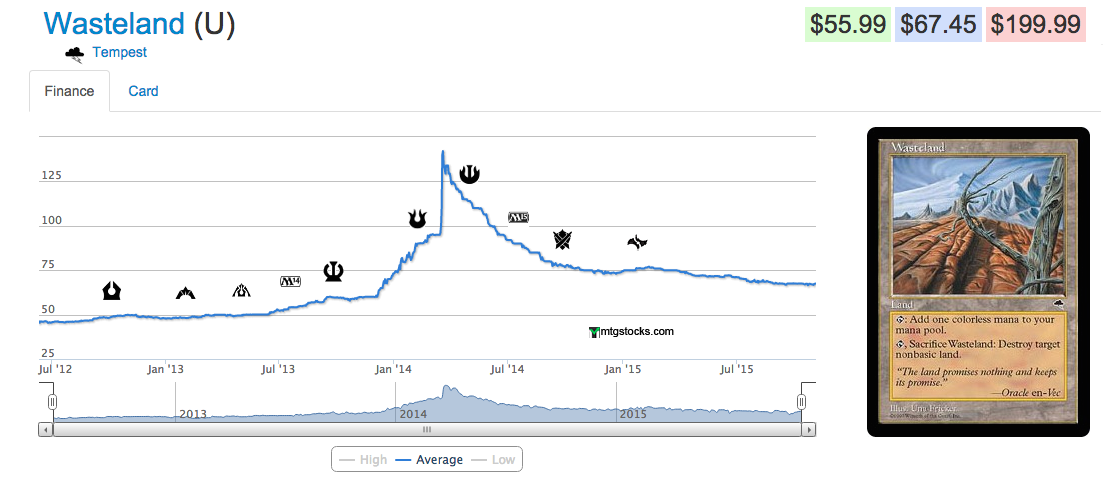
Modern prices have, as a whole, increased despite reprint pressure in Modern Masters 2015. The reason is that more people want to play the format and are willing to purchase the cards, which moves the price up, regardless of card prices beforehand. If the same were true in Legacy, we’d see duals rising. Instead, they’ve fallen flat, and despite 2015 being another banner year for Magic, some of its most iconic cards couldn’t keep up with the growth. If Legacy were truly still growing, why wouldn’t this be the case? Even the most stapleish of all staples—Force of Will and Wasteland—experienced a flat or slightly negative 2015.

Screen Shot 2015-11-04 at 1.05.19 AM Screen Shot 2015-11-04 at 1.05.25 AM

Even if you want to suggest that the movement in duals is tied to playability, it’s hard to make the same argument about these two cards, which are perpetual must-haves of the format. If Legacy were truly growing rather than fading, these graphs would look far different.

Counterpoint: Sure, 2015 Was Weak, but These Cards Are All Still Higher than They Were Two Years Ago

For a game that’s been around for nearly 25 years like Magic, taking one year of price movement to try and illustrate a trend for an eternal format is silly. No one claims the stock market is dying because it experiences a bad year or two. Trying to draw blanket conclusions from Legacy based on 2015 alone is a wasted exercise.

And if the format were truly fading, why are prices still far higher than they were two years ago, in many cases? The run-up was so much, so fast it’s natural to expect some settling, and these will rebound in the future.

Not to mention, there are a ton of factors that explain why prices didn’t move besides claiming the format is dying. It’s no secret Star City Games leads the market in these cards, and the run-up to Grand Prix New Jersey was a result of great advertising and market influence by SCG. Given that the company doesn’t have a GP this year to draw people to, why would it need to buy staples so aggressively? When the market leader has a Grand Prix-level reason to support these staples again, the movement will pick right back up.

Point: The Reserved List Exists, so Legacy Will Never Be Able to Be Played by Anything More than the Most Hardcore of Players

It’s a simple concept. There are exactly X number of dual lands on the market, and that number decreases every year as copies are lost or destroyed. Furthermore, because there will never be reprints of these cards, there is a hard cap to the number of players who can play top-tier Legacy decks at any given time. How can a format be anything but dying when the copies of cards needed to play literally die off more and more every year?

gaea'scradle

Even if we don’t reach the “hard cap” in Legacy, there’s a reason Reserved List staples have trended up over the last few years: only the most dedicated and well-off financially will be able to play. More and more players are priced out of the format every year, and they give up and sell their finite copies of dual lands, which go to players buying in who are willing and able to pay a premium for the chance to play Legacy. It’s very much a luxury among luxuries; after all, we see NBA teams get sold for more and more every time one comes for sale, but I still count only 30 teams in the league. It’s hard to call that “growing,” and as we established earlier, if you’re not growing, you’re dying.

Counterpoint: These Factors Have Been True for Years, and Haven’t Stopped Legacy’s Growth

Continuing the NBA example, it’s also hard to call that “dying,” either. If people are willing to pay more and more to buy in, what is that if not a sign of the format’s popularity? And given that popularity, how can you say that Legacy is dying?

Also, I haven’t seen TCGplayer sell out of dual lands recently. As of this writing, there are more than 100 copies of even the most popular blue duals available. If this “hard cap” was so dangerous, why haven’t we seen the market sold out yet? And for every dual that becomes “lost,” another becomes found. People are still turning up collections from the ’90s that are loaded with duals, and the number that are actually destroyed is so minuscule it doesn’t affect the overall market.

A fraction of the money cards.

Attendance at Legacy events has continued to be strong, and players find ways to play even if it’s not with the most expensive duals. And when Standard can cost over $700, how is using the price of Legacy staples — that don’t rotate — a point against the format?

Conclusion

I have to say, I feel like both sides of these arguments have merits, and the truth likely lies somewhere in between. For me, the problem lies in the question itself: so many people are worried about proclaiming the “death” of Legacy because it’s a flashy headline, but the truth is that Legacy doesn’t have to be in the spotlight every single weekend to be relevant.

But no matter how I evaluate each individual point, it all comes back to one simple question for me: is Legacy more relevant today than it was five years ago? Will it be more relevant five years from today than it is now? I think it’s hard to argue that it will be. Wizards of the Coast has proven that it’s Modern that will be getting the support, both in reprints and in events, and over time, the format will continue to eclipse Legacy.

Yes, it will be fun whenever we get a Legacy event or there’s one on Twitch, just like it’s fun when Vintage occupies that niche now. There are way more cards out there for Legacy, so it will never truly be as rare or expensive as Vintage, but it will continue to be pushed into that corner, where it’s a luxury hobby within a luxury hobby. I don’t think this constitutes dying or even “fading,” but it’s hard to see Legacy being more relevant five or ten years from now than it was five or ten years ago.

Future_Sight_640

That will mean something different to everyone, and the most important thing to consider moving forward is how you plan to interact with the format. If you want to be a hardcore Legacy player, I suggest looking toward local and regional events—many of which are already springing up to fill the void SCG left—and finding ways outside of SCG to support that hobby. If you’re a casual fan who enjoys watching the format, this will make those events we do get all the more exciting. If you’re someone who wants to get into competitive Legacy, this may make the transition a little bit easier in the coming years.

For all of us, what’s far more important than worrying about whether or not Legacy is “dying” is worrying about how you want to go about enjoying it. Because it is a fun ride, and that’s never fading away.


Thanks for reading,

Corbin Hosler

@Chosler88 on Twitter/Twitch/YouTube

MAGIC: THE GATHERING FINANCE ARTICLES AND COMMUNITY